
Non-HDL cholesterol calculation: formula and target ranges
Sheenam Midha · Health writer

On this page
Non-HDL cholesterol calculation is simple: subtract HDL cholesterol from total cholesterol. The result represents cholesterol carried by LDL and other potentially atherogenic particles, giving a broader view than calculated LDL alone.
Why non-HDL cholesterol matters
LDL is important, but it is not the only particle that can carry cholesterol into the artery wall. Non-HDL includes LDL plus very-low-density, intermediate-density, remnant, and lipoprotein(a)-associated cholesterol.
This broader total can be particularly informative when triglycerides are elevated, diabetes is present, or calculated LDL is less certain. The NHLBI lists non-HDL as a useful lipid-panel value.
How to calculate non-HDL cholesterol
Non-HDL cholesterol = total cholesterol − HDL cholesterol
Example:
- Total cholesterol: 210 mg/dL
- HDL cholesterol: 55 mg/dL
- 210 − 55 = 155 mg/dL non-HDL cholesterol
The same subtraction works in mmol/L when both inputs use mmol/L. Do not mix units or combine results from different dates.
What is included in non-HDL?
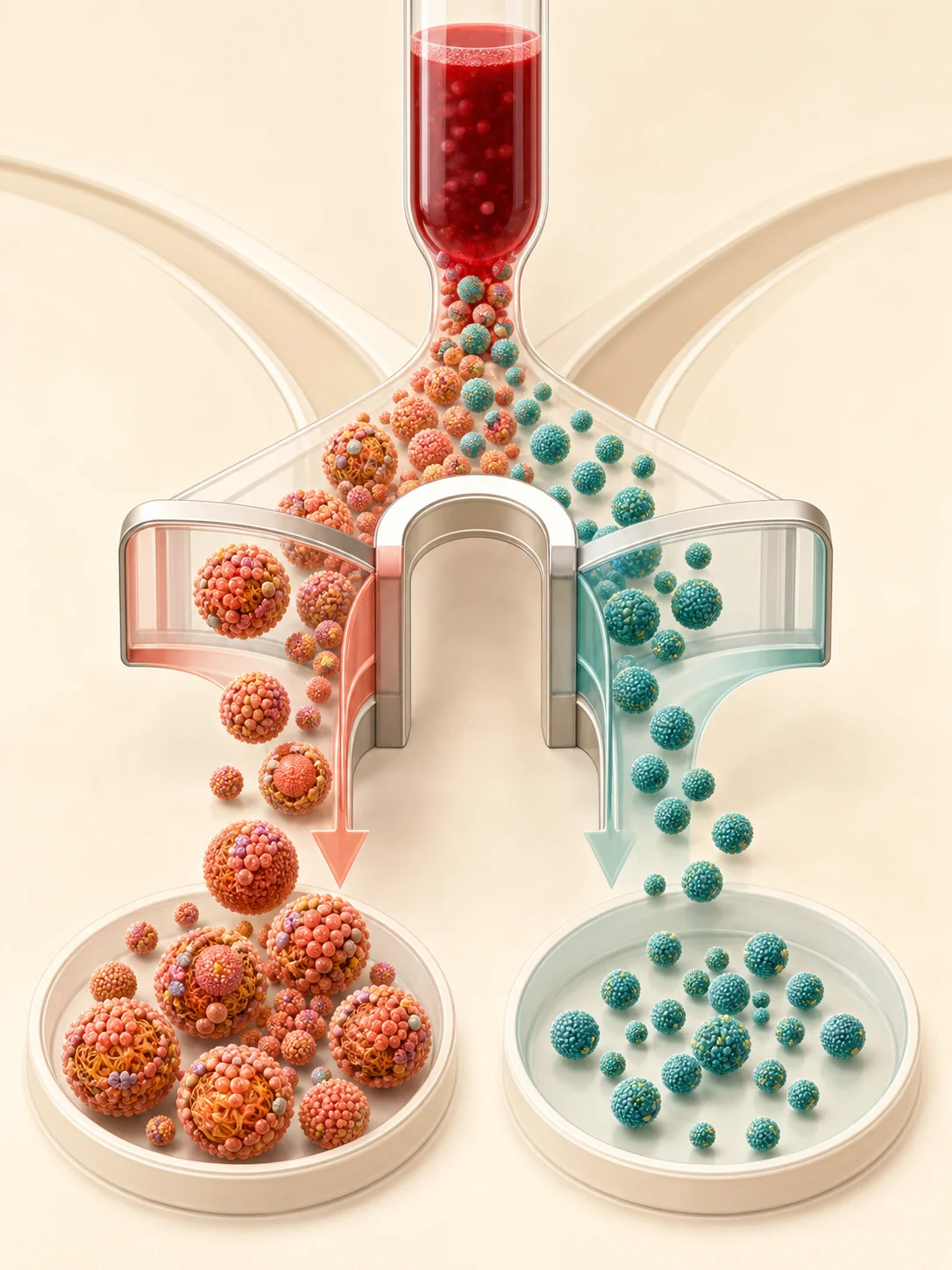
HDL is removed from total cholesterol. What remains includes cholesterol carried by LDL, VLDL, intermediate-density lipoproteins, remnant particles, and lipoprotein(a). These particles contain apolipoprotein B and can contribute to plaque formation in artery walls.
The calculation tells you how much cholesterol is carried across the group. It does not tell you how many particles are present or how the cholesterol is divided among them. Two people can have the same non-HDL result with a different mix of LDL, remnants, and lipoprotein(a).
That distinction matters when triglycerides are elevated. A standard calculated LDL may be uncertain, while non-HDL still captures the cholesterol outside HDL using two directly measured values. It remains a simple, stable cross-check on the panel.
Non-HDL is not “total bad cholesterol” in a literal sense. Lipoprotein biology is more complicated than good and bad labels. The practical point is narrower: cholesterol in apoB-containing particles is relevant to atherosclerotic cardiovascular risk, and non-HDL groups it into one available number.
Worked examples in both unit systems
For a panel reported in mg/dL, total cholesterol of 240 and HDL of 45 gives non-HDL of 195 mg/dL. LDL might be 150, but the non-HDL result shows another 45 mg/dL of cholesterol is carried outside both HDL and the reported LDL fraction.
If treatment lowers total cholesterol to 185 while HDL remains 45, non-HDL falls to 140 mg/dL. The change is 55 mg/dL. That comparison is more useful than calculating a total-to-HDL ratio alone because the absolute burden stays visible.
For a panel reported in mmol/L, total cholesterol of 5.5 minus HDL of 1.4 gives non-HDL of 4.1 mmol/L. The subtraction is identical; only the units differ.
Do not subtract a value from a different date. HDL and total cholesterol need to come from the same sample. Do not convert mg/dL by dividing by 18, either. That rule belongs to glucose, not cholesterol.
Why the target changes with cardiovascular risk
The general reference of non-HDL below 130 mg/dL is a useful orientation point for a healthy profile. It is not a promise that every result below 130 is safe, and it is not the treatment goal for someone with established cardiovascular disease.
The 2026 AHA guideline uses lower LDL and non-HDL goals as risk rises. In secondary prevention, someone who has already had an atherosclerotic cardiovascular event may have a non-HDL goal far below the general reference. The exact target depends on whether risk is high or very high and on the person’s treatment plan.
For primary prevention, a clinician considers age, blood pressure, smoking, diabetes, kidney disease, family history, and other risk information. Lipoprotein(a), apoB, or coronary artery calcium may help in selected situations. A calculator cannot collect that whole picture from two cholesterol values.
This is why online color bands can mislead. A number may appear only mildly elevated on a general chart but remain well above the goal for a person with prior stroke or heart attack. Conversely, an isolated result just over a reference line does not automatically mean medication is required.
When LDL and non-HDL disagree
Most of the time, LDL and non-HDL move in the same direction. Discordance means one appears relatively favorable while the other is higher than expected. Elevated triglycerides, diabetes, insulin resistance, and some inherited lipid patterns can make this more likely.
Suppose calculated LDL is 92 mg/dL and non-HDL is 145 mg/dL. The 53 mg/dL gap includes cholesterol carried in particles outside reported LDL. Ignoring the non-HDL result would lose that information.
The opposite pattern can also raise questions, especially if laboratory methods changed or a calculated LDL is unreliable. Review triglycerides and the method used for LDL before deciding that the numbers conflict biologically.
ApoB may clarify whether there are many cholesterol-poor atherogenic particles or fewer cholesterol-rich ones. The 2026 guidance notes particular value for apoB testing when triglycerides exceed 200 mg/dL, diabetes is present, or achieved LDL is low. It is a separate blood test, not a number a website can infer exactly.
Does fasting change non-HDL?
Non-HDL can be calculated from a fasting or nonfasting lipid panel. This is one of its practical strengths. Total cholesterol and HDL usually change less after an ordinary meal than triglycerides do.
Still, fasting status is not irrelevant to the rest of the panel. If triglycerides are very high, calculated LDL may be unreliable and a clinician may request a fasting repeat. Acute illness, heavy alcohol intake, pregnancy, uncontrolled glucose, and medicine changes can also alter results.
Compare repeat tests under similar conditions when possible. A small day-to-day difference may reflect ordinary biological and laboratory variation. Look for a sustained direction across time rather than treating every single-point change as success or failure.
How to lower non-HDL cholesterol
The plan depends on the cause and the person’s risk. Food changes often focus on replacing saturated fats with unsaturated fats, increasing soluble fiber, and reducing excess refined carbohydrate or alcohol when triglycerides are part of the pattern. Regular activity, tobacco avoidance, blood-pressure care, and glucose management support the wider cardiovascular plan.
For many higher-risk people, lifestyle changes and medication work together. Statins are a foundation of lipid-lowering treatment, while other medicines may be added when the goal is not reached or a statin is not tolerated. Do not change a prescribed dose because of one self-calculated result.
Repeat testing should answer a question: Did the chosen treatment lower the value enough? Was the medicine taken consistently? Did triglycerides or another condition change? Bring the previous and current reports so the method, units, and individual components can be compared.
If family members have very high cholesterol or early heart disease, mention it. An inherited disorder can require earlier assessment and more intensive treatment than a general lifestyle article suggests.
General non-HDL ranges and personal targets
For a generally healthy profile, NHLBI lists non-HDL below 130 mg/dL as a useful reference. That is not the correct goal for everyone.
The 2026 AHA dyslipidemia guidance uses lower goals for people with established cardiovascular disease or very high risk. For example, secondary-prevention goals can be far below the general reference range. Diabetes, kidney disease, previous heart attack or stroke, age, blood pressure, smoking, family history, and other results all change the conversation.
Do not change medication because an internet table places you in a color band. Ask which goal applies to your risk group and why.
Non-HDL versus LDL cholesterol
Calculated LDL tries to estimate one cholesterol fraction. Non-HDL directly subtracts two measured values and includes a wider group of particles. When triglycerides are high, that difference can be meaningful.
Use our LDL calculator and read the Friedewald formula guide to see why calculated LDL becomes less dependable in some samples.
Non-HDL versus apoB
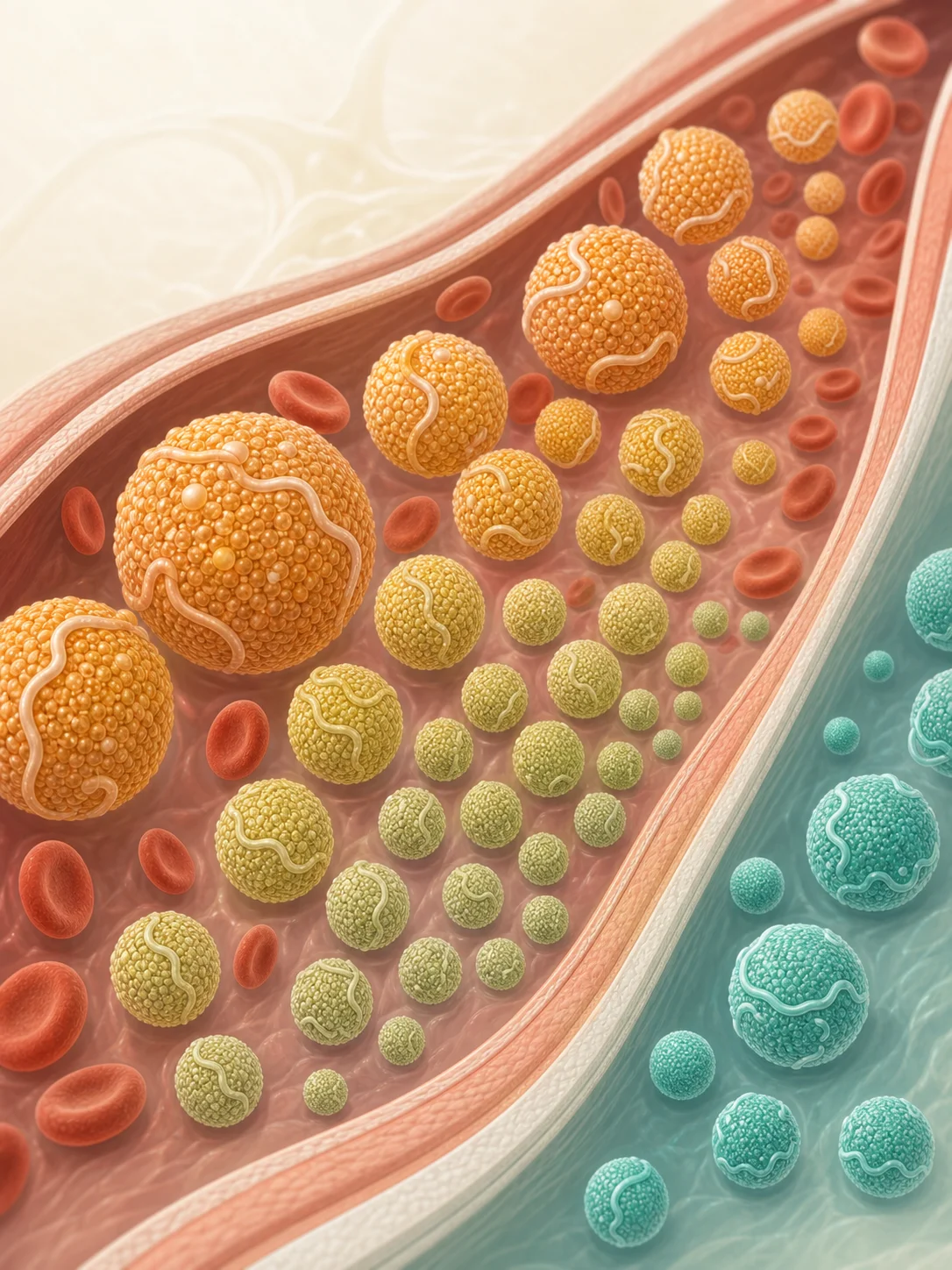
Non-HDL estimates cholesterol mass carried by atherogenic particles. ApoB estimates the number of those particles because each major atherogenic particle carries one apoB molecule. The two often agree, but they can be discordant.
Current guidance considers apoB especially useful in selected people with triglycerides above 200 mg/dL, diabetes, or very low achieved LDL. It requires a separate laboratory measurement; it cannot be reconstructed exactly from the standard lipid panel.
How to use the result
Track it alongside LDL, triglycerides, HDL, blood pressure, glucose, and overall risk. Compare repeat tests under reasonably similar conditions. Our cholesterol ratio chart and TG-to-HDL guide explain the related calculations without making them the main treatment target.
Write the personal non-HDL goal next to the result. That one note is more useful than relying on a general laboratory flag whose range may not match your risk category.
Remember that non-HDL can change because total cholesterol, HDL, or both changed. If total falls by 20 mg/dL while HDL falls by the same amount, non-HDL stays unchanged. If HDL rises while atherogenic cholesterol is stable, the subtraction may look better without a matching fall in LDL or apoB. Check the components before crediting a medicine, supplement, or diet for the difference.
Simple calculation, personal goal
Non-HDL is one of the most useful numbers already hiding in a standard lipid panel. The arithmetic is universal; the target is personal.
Evidence and review
How this article was checked
Formula and interpretation checked against NHLBI and 2026 AHA dyslipidemia guidance. Targets require cardiovascular-risk context. Evidence last reviewed Aug 4, 2026.
- NHLBI - Blood Cholesterol Diagnosis - Definition, calculation, and general healthy-profile context for non-HDL cholesterol.
- AHA - 2026 Dyslipidemia Guideline Summary - Current LDL and non-HDL goals based on cardiovascular risk.
- American Heart Association - Cholesterol Levels - Patient-facing explanation of the lipid-panel components.
FAQ
Frequently asked
Answers
Frequently asked questions
What is the non-HDL cholesterol formula?
Subtract HDL cholesterol from total cholesterol. Use values from the same blood test and the same unit.
Is non-HDL cholesterol better than LDL?
It answers a broader question because it includes cholesterol carried by all potentially atherogenic particles. Clinicians often use it alongside LDL rather than as a universal replacement.
Do I need to fast for non-HDL cholesterol?
The calculation itself does not require fasting, but your clinician may request a fasting panel when triglycerides are very high or another result needs clarification.
Share this article