Benefits of aronia berries: the tart little chokeberry worth knowing
Sheenam Midha · Health writer

On this page
TL;DR: The benefits of aronia berries (also called chokeberries) come mostly from their very high anthocyanin and antioxidant content. Early research points to support for heart health, blood pressure, blood sugar, eyes, digestion and immunity. Many findings are still from lab and animal studies, so think of aronia as a helpful food, not a cure. It is tart and astringent, and works best in smoothies, juices, jams and baked goods.
Have you ever heard of aronia? In this piece you will learn the benefits of aronia berries, a quiet little fruit that looks a lot like acai. Aronia berries, also called chokeberries, are a superfood filled with antioxidants. According to early studies, chokeberries may support heart health and other parts of the body, largely thanks to their deep purple pigments.
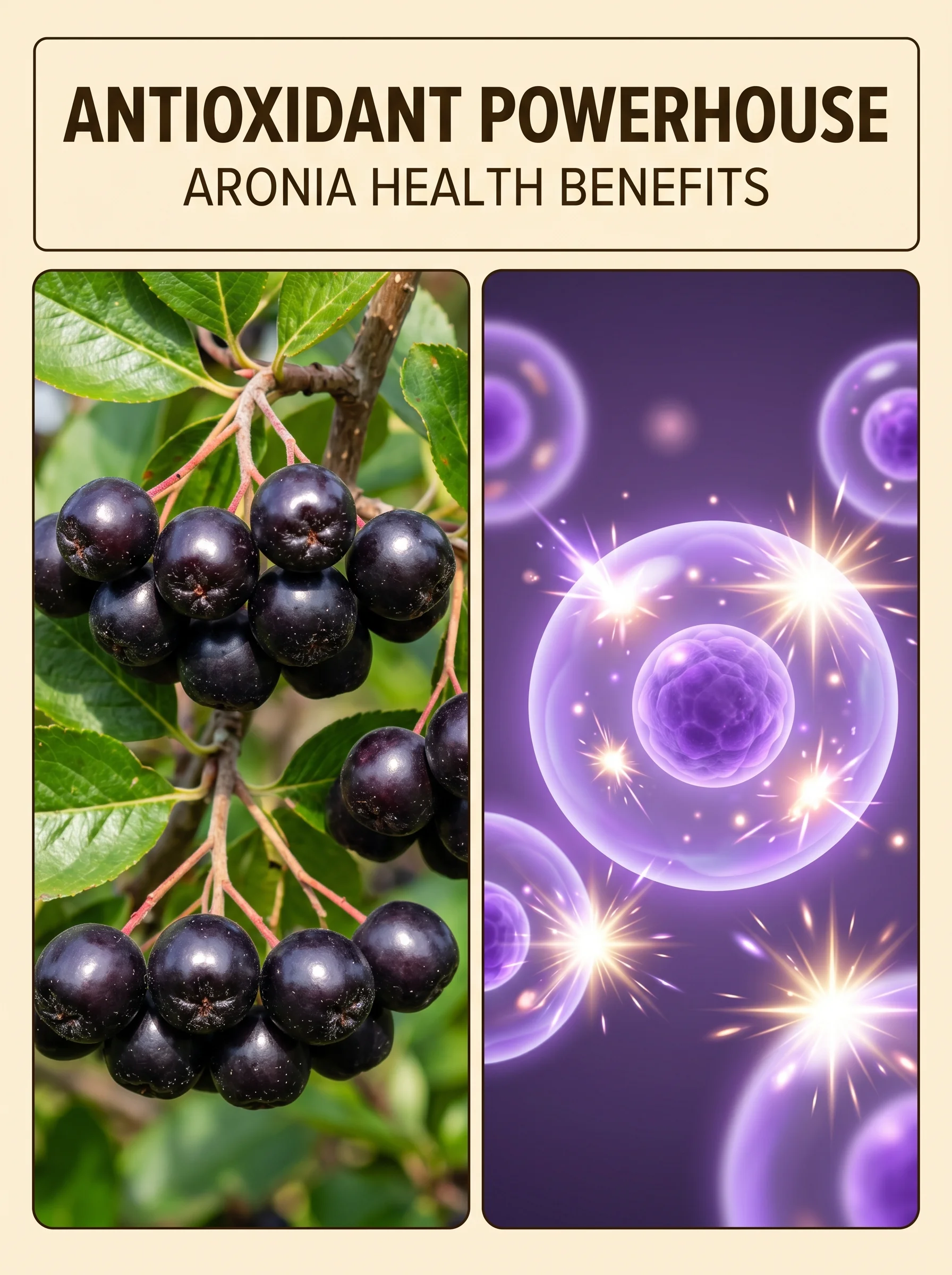
Native to North America, aronia is a hardy berry packed with nutrients, especially powerful plant compounds called anthocyanins. It is known for its astringent, mouth-puckering flavor and can be found in woodlands and swamps. Aronia usually grows in three varieties: red, purple and black. They are grown as food and as ornamental plants.
So how do you eat such a bitter berry? You rarely eat a handful raw. Chokeberries shine in bread, cakes and other baked goods, or as a topping for ice cream. They are also turned into wines, juices, syrups and teas, where a little sweetness softens the pucker.
What are the benefits of aronia berries?
The short answer: aronia berries are one of the richest known sources of anthocyanins, the antioxidants that give the fruit its dark color. Those compounds are linked in early research to lower inflammation, healthier blood vessels, steadier blood sugar and better eye protection. Most of these benefits of aronia berries show up consistently in the lab, with growing but still limited human evidence, which is exactly why it is worth eating regularly rather than treating it like medicine.
How do the benefits of aronia berries reach the heart?
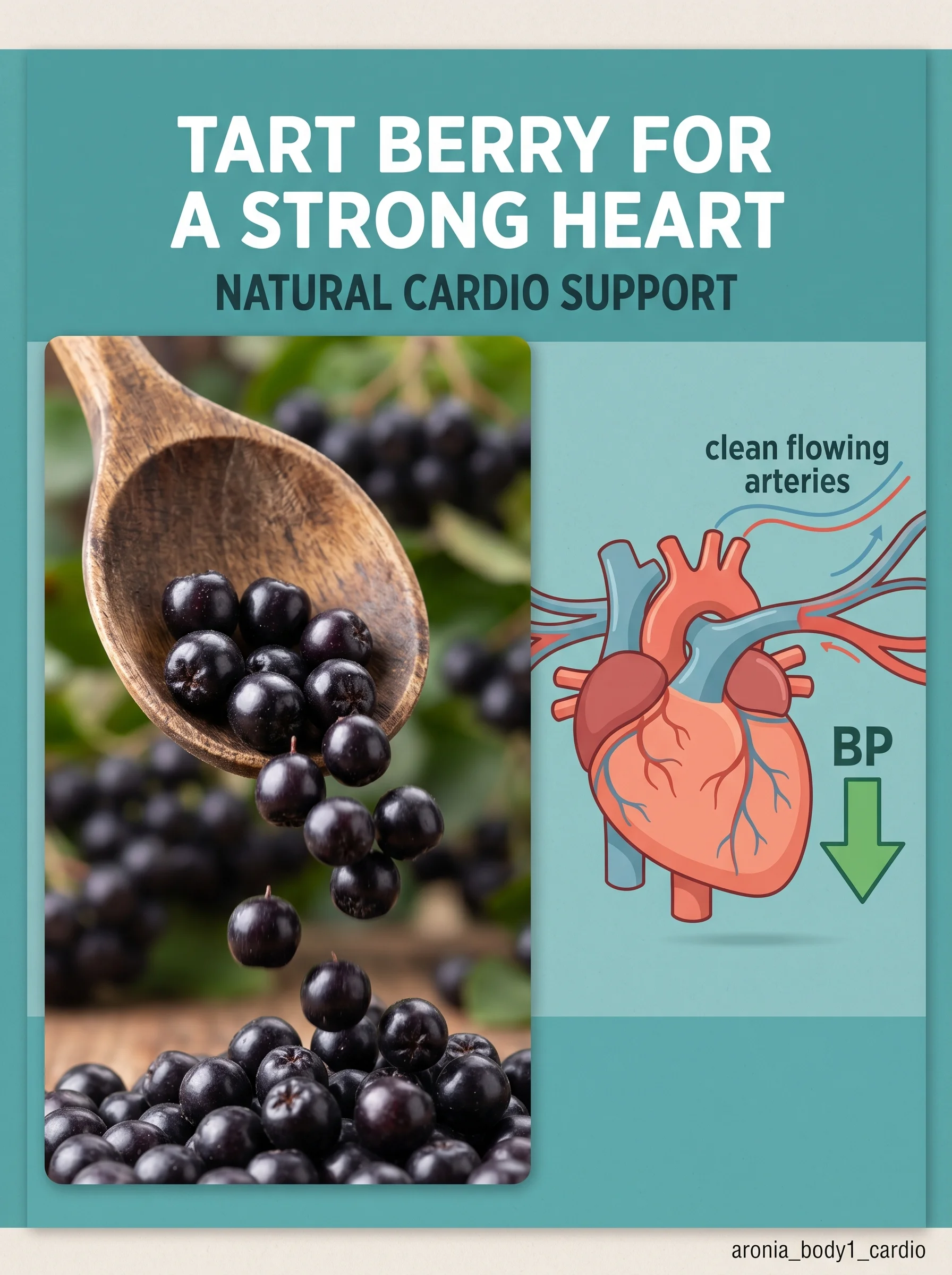
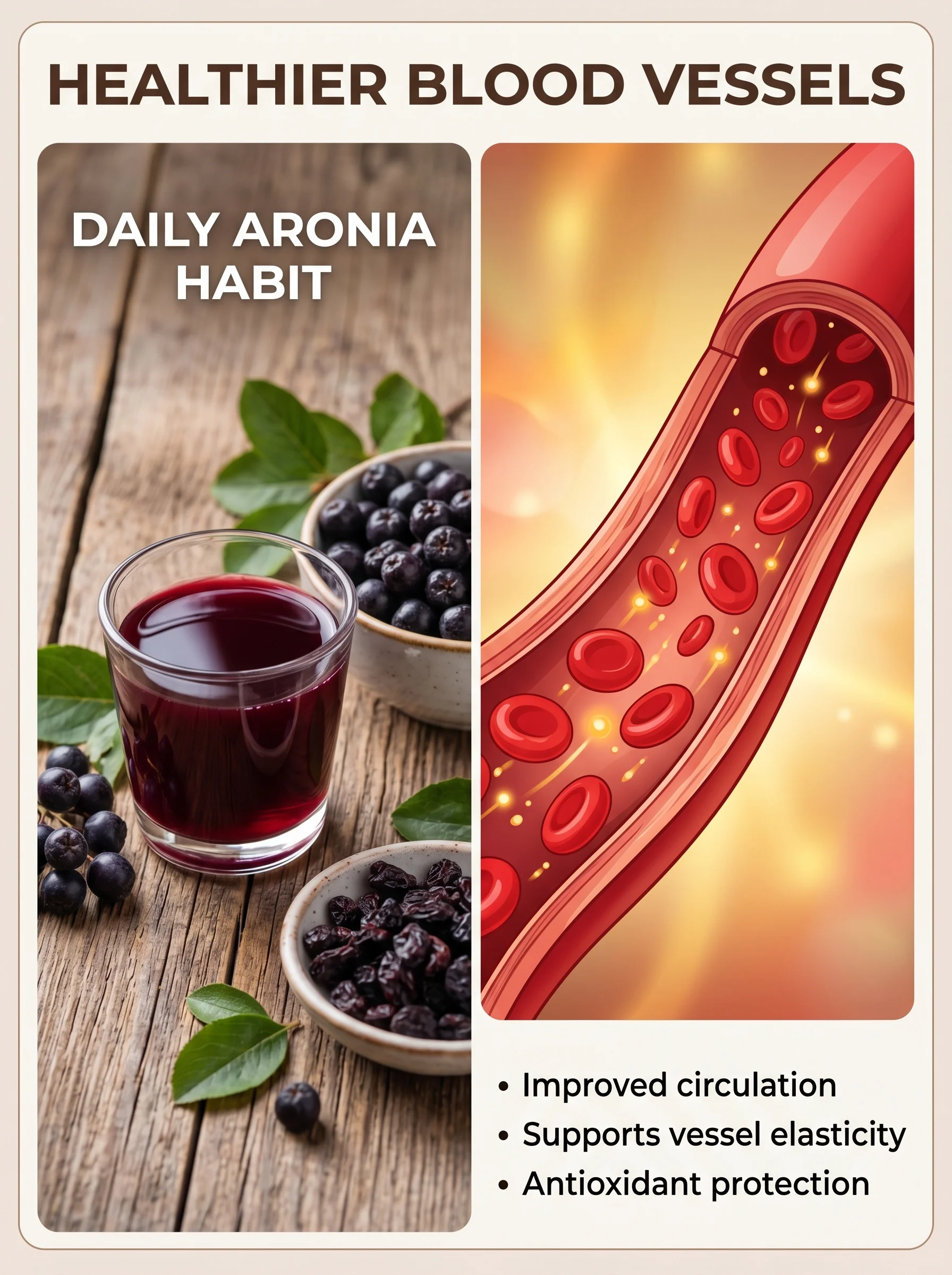
Aronia helps support blood flow and the health of your blood vessels. Studies suggest chokeberry may help protect the heart in several gentle ways. Its compounds help calm inflammation in the artery walls, and they may help keep LDL cholesterol from building up and forming blockages over time.
Think of it as one small habit among many. If you are building heart-friendly routines, aronia sits comfortably next to simple daily habits that keep your heart healthy and other antioxidant-rich foods like apples for your heart and cholesterol.
Can aronia berries help lower blood pressure?
This is one of the trending reasons people are reaching for aronia. The same anthocyanins that calm inflammation may also help blood vessels relax and stay flexible, which is part of healthy blood pressure. Human evidence here is still early and modest, so aronia is best seen as a supportive food, not a replacement for anything your doctor has prescribed. If blood pressure is on your mind, you might also enjoy beetroot juice to lower blood pressure as part of the same gentle approach.
Does aronia berry help the brain?
Thanks to its antioxidants, chokeberry may help support memory and protect brain cells. A small body of early research suggests chokeberry compounds could be helpful in the broader study of neurodegenerative disorders, such as Parkinson’s, Alzheimer’s and other forms of dementia. This is hopeful, early science rather than a promise, but it adds to the picture.
Healthy eyes
Chokeberries are kind to the eyes. They contain carotenoids that help shield the eye’s cells from damage. And thanks to their antioxidants, these berries may help protect against age-related eye problems like macular degeneration and cataracts as the years go by.
Aronia and digestion
Aronia is a good source of fiber, which is a friend to your digestive system. Eating chokeberry may help keep bowel movements regular and ease common complaints like constipation and irritable bowel. Traditionally it has also been used to soothe stomach upsets. If you are tending to your gut, aronia pairs nicely with other gentle helpers like black tea for your gut and heart.
Can aronia berry help with colds and flu?
Adding chokeberry to your routine may help you stand up to the common cold and flu. Alongside vitamin C, this berry shows antiviral and antibacterial activity in lab studies, including against bacteria like E. coli and Staphylococcus aureus and against a type A cold virus. As ever, this is supportive, not a shield. It is one more reason to keep colorful fruit on hand through the cold months.
What do aronia berries do for blood sugar?
Blood sugar support is one of the most talked-about benefits of aronia berries. Its active compounds may help moderate blood sugar and support how the body uses insulin. In an older study, people with diabetes drank about 7 ounces of aronia juice with no added sugar each day for three months, and researchers noted a drop in their fasting glucose. It is a small, promising signal. If steady blood sugar is your goal, you may also like reading about berberine for blood sugar, and please keep any prescribed medication exactly as your doctor advises.
Urinary tract health
Aronia may also be a friend to the urinary tract. Urinary tract infections are common and uncomfortable, with pain during urination and a constant urge to go. Like cranberry, aronia’s compounds may make it harder for bacteria to cling to the bladder lining, so they are flushed away in the urine before they can take hold.
Are the benefits of aronia berries proven in humans or just lab studies?
Here is the honest part. Many of aronia’s most exciting claims still come from test-tube and animal research that needs to be confirmed in people. The human studies we do have are small and early, even if the direction is encouraging. So enjoy aronia as a genuinely nourishing food and a smart swap for less colorful snacks, but be wary of anything online that calls it a miracle cure or a reason to stop your medicine.
How to actually eat aronia berry
You can find chokeberries, fresh or dried, in natural health stores and online. Dried aronia berries are an easy, shelf-stable way to start, and they soften beautifully in oatmeal or baking. The key with such a tart berry is to pair it with sweetness or blend it in rather than eating it plain.
- Try the berries raw if you are brave, or use the powder for jams, purées and homemade syrups.
- Blend them into smoothies or juices with bananas, strawberries and vegetables.
- Stir dried aronia into oatmeal, or fold them into bread, cakes and other baked goods.
- Use them in wines, juices, syrups and teas, where a little sweetness tames the pucker.
A gentle closing thought
Aronia is not a miracle fruit. It is a quiet one: astringent, unfamiliar, easy to miss on a shelf. But if you can find it, it earns its place. A little heart support, a little help for eyes and digestion, and a gentle hand with blood sugar. If you want more little-known foods like this, subscribing to the newsletter is the easiest way to keep them landing in your inbox every Friday.
Frequently asked questions
What are aronia berries good for?
Aronia berries, or chokeberries, are prized for their very high antioxidant and anthocyanin content. Early research links them to heart support, healthier blood vessels, steadier blood sugar, eye protection, better digestion and stronger immunity. They are best enjoyed as a regular nourishing food rather than a cure.
Are the benefits of aronia berries proven in humans?
Partly. Some human studies show encouraging results for blood sugar and heart markers, but many aronia claims still come from lab and animal research that needs confirmation in people. The evidence is promising and growing, so treat aronia as a supportive food and never as a replacement for prescribed treatment.
How do you eat such a bitter, tart berry?
You rarely eat aronia raw by the handful because it is astringent. Instead, blend it into smoothies and juices, cook it into jams, syrups and baked goods, or stir dried aronia into oatmeal. A little natural sweetness from banana or other fruit tames the pucker beautifully.
Can aronia help people with diabetes?
Aronia’s compounds may help support healthy blood sugar and insulin use. In one older study, people with diabetes drank about 7 ounces of unsweetened aronia juice daily for three months and saw their fasting glucose fall. It is a small, promising result. Keep any prescribed medication exactly as your doctor advises.
Does aronia berry help lower blood pressure?
The anthocyanins in aronia may help blood vessels relax and stay flexible, which supports healthy blood pressure. Human evidence is still early and modest, so aronia works best as one helpful habit among many, alongside a balanced diet and anything your doctor recommends, rather than on its own.
Are dried aronia berries as healthy as fresh?
Dried aronia berries keep most of their antioxidants and are a convenient, shelf-stable option. They are more concentrated, so a small spoonful goes a long way in oatmeal or baking. Just check the label and choose dried aronia with no added sugar to keep the benefits intact.
Share this article