
Waist-to-hip ratio chart: how to measure and read your result
Sheenam Midha · Health writer

On this page
A waist-to-hip ratio chart helps interpret where body size is carried, not just how much a person weighs. The calculation is easy, but accurate tape placement and consistent technique determine whether repeat measurements are comparable.
Use the waist-to-hip-ratio calculator after recording both circumferences in the same unit.
Why waist-to-hip ratio matters
More fat carried around the abdomen is associated with cardiometabolic risk. Hip circumference adds context by comparing central size with the lower body. The ratio can reveal change even when body weight is stable.
It cannot identify visceral fat precisely or diagnose diabetes, fatty liver, or heart disease.
How to measure waist and hips
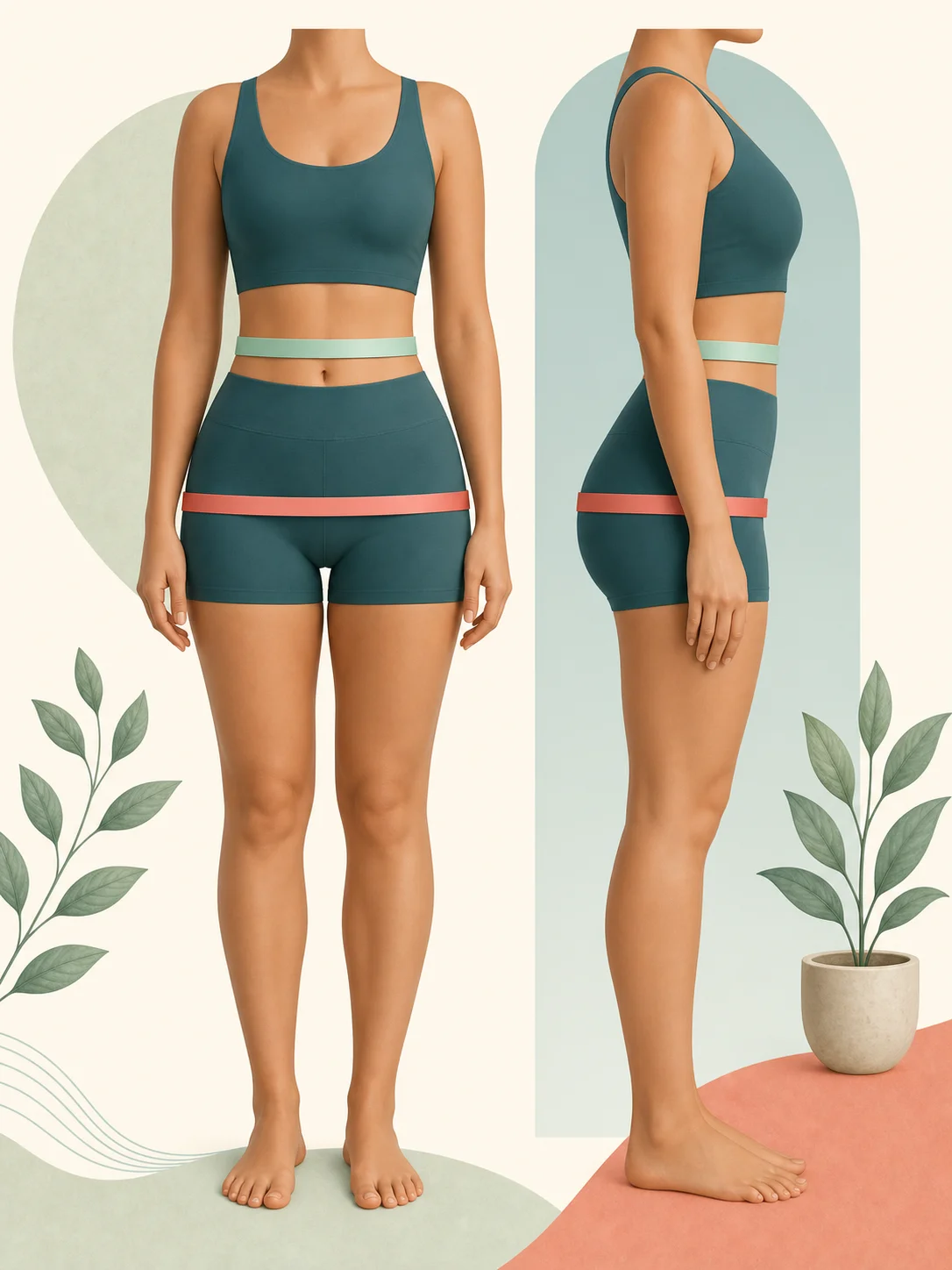
- Stand relaxed with feet together and clothing moved out of the way.
- For the waist, find the midpoint between the lowest rib and top of the hip bone.
- Wrap the tape horizontally without compressing the skin.
- Measure after a normal exhale.
- Measure hips at the widest point of the buttocks with the tape level.
- Repeat and use the same landmark next time.
Waist-to-hip ratio = waist circumference ÷ hip circumference
Example: 80 cm waist ÷ 100 cm hips = 0.80.
A measurement session that you can repeat
Use a flexible, non-stretch tape. A builder’s metal tape and a fabric tape that has stretched out both create avoidable error. Measure against skin or thin clothing, not a belt or thick waistband.
Find the bony landmarks with your fingers before wrapping the tape. For the WHO waist protocol, use the midpoint between the lowest palpable rib and the top of the iliac crest. This may not be the navel or the narrowest visible part of the torso.
Keep the tape horizontal all the way around. A mirror or another person can help. Let the abdomen relax, breathe normally, and record the waist after a normal exhale. For the hip, find the greatest circumference over the buttocks and check that the tape does not tilt upward at the back.
Some clinics measure the waist at the navel. That’s a different protocol and gives a different number, so don’t mix the two. The WHO point often sits an inch or two above the navel. Trust the bones, since the navel sits at a different height from person to person. For the hip, standing side-on to a mirror makes the fullest point easier to find; it’s usually near the top of the thigh rather than the belt line. Measure over thin underwear or light leggings, not jeans or shapewear.
Read the tape at the end of a gentle breath out, not at full inhale and not after forcing all the air out. The tape should be snug with room for one finger and no slack loop. If it leaves a mark on your skin, it was too tight. Record to the nearest 0.5 cm or quarter inch.
Take two measurements. Two readings a minute apart should agree within about 1 cm. If they differ noticeably, reposition and take a third. Use the middle value rather than choosing the smallest. Write down the exact landmarks and protocol for next time.
Morning is convenient but not mandatory. The more important rule is consistency. A large meal, bloating, or heavy clothing can change the waist reading, so compare similar conditions.
Waist-to-hip ratio chart
Common WHO risk bands are:
| Risk band | Women | Men |
|---|---|---|
| Lower | 0.80 or below | 0.90 or below |
| Increased | Above 0.80 | Above 0.90 |
| Substantially increased | Above 0.85 | Above 1.00 |
Thresholds do not perform identically across every ancestry, age, or body type. They are screening guideposts, not a diagnosis.
Worked examples and what they do not tell you
A woman with a 76 cm waist and 98 cm hip measurement has a ratio of 0.78. A man with a 92 cm waist and 100 cm hip measurement has a ratio of 0.92. The arithmetic places them in different chart bands, but neither result is a medical diagnosis.
Now imagine the first person’s waist rises to 82 cm while hips remain 98 cm. The ratio becomes about 0.84. That change may reflect more central size, but it could also be exaggerated if the second waist was taken at the navel instead of the WHO midpoint.
The denominator matters too. If hip circumference falls during weight loss while waist changes little, the ratio can rise even though body weight fell. This is why the raw waist and hip values should be saved beside the ratio.
A person with both waist and hip measurements shrinking proportionally may see almost no ratio change. That does not mean nothing happened. Waist circumference, weight trend, strength, and health markers may tell the story more clearly.
Use the calculator for division, not interpretation in isolation. Keep the context that produced the number.
Waist-to-hip ratio versus waist circumference
Waist circumference asks how large the abdomen is. Waist-to-hip ratio asks how the abdomen compares with the hips. They overlap, but they are not interchangeable.
A high waist deserves attention even when a larger hip circumference produces a ratio below a threshold. On the other hand, a smaller person can have a relatively high ratio because the hips are narrow. Both measures may add information when interpreted with height, sex, ancestry, and overall risk.
Guidelines sometimes use waist circumference because it is simpler and does not depend on a second measurement. Waist-to-height ratio is another research and screening measure. There is no need to calculate every available ratio at home. Pick the measures that your clinician or program will actually use.
BMI remains useful at a population level and can help identify weight-related risk, but it does not show fat distribution. A muscular person and a person with lower muscle mass can share the same BMI. Adding waist information helps, though it still cannot measure visceral fat directly.
Common measurement mistakes
Measuring at the narrowest visible waist one day and at the navel the next can create a false trend. Pulling the tape tight, holding the breath, measuring over bulky clothing, or angling the hip tape also changes the result.
Record the landmark and time of day. Small differences inside the likely tape error should not drive major decisions.
Another mistake is mixing units. The ratio is the same when both measurements use centimeters or both use inches. A 32-inch waist divided by a 40-inch hip is 0.80. Dividing 32 inches by 102 centimeters creates a meaningless number.
Rounding too early can also shift a result near a boundary. Record one decimal place for each circumference, divide, and round the final ratio to two decimal places. Do not treat the last decimal as medically precise.
Pregnancy, recent abdominal surgery, fluid buildup, large hernias, and conditions that change body shape may make routine thresholds inappropriate or measurements impractical. Ask what assessment is suitable instead.
Why ancestry and life stage matter
The relationship between body size, fat distribution, and metabolic risk differs across populations. A single chart threshold cannot perform equally well for every ancestry. Some groups develop diabetes or cardiovascular risk at lower BMI or waist levels than others.
Age changes muscle mass and body shape. Menopause can shift fat toward the abdomen. Pregnancy and postpartum recovery require separate context. For an older adult, strength, mobility, and unintentional weight loss may be more urgent than reaching a lower ratio.
Sex-specific rows in the chart reflect population patterns, but they cannot address every individual, including people receiving gender-affirming hormone therapy. A clinician can decide which measures and reference points best fit the medical question.
These limits do not make the tape useless. They mean the result is one part of screening rather than a universal score.
How to improve the trend safely
There is no exercise that selectively burns waist fat. Abdominal exercises can strengthen the trunk, but fat loss location is influenced by genetics and overall energy balance.
If fat loss is appropriate, use a sustainable eating pattern and regular activity. Resistance training helps preserve muscle, while aerobic movement supports cardiovascular fitness and energy expenditure. Sleep, alcohol intake, tobacco exposure, blood pressure, glucose, and lipids belong in the same plan.
Measure every four to eight weeks rather than every day. Waist size changes with food, bowel contents, and fluid. A longer interval makes it easier to see a real direction.
Avoid crash diets. A rapidly falling hip measurement from muscle loss can worsen the ratio, and loss of strength is not a good trade for a smaller scale number. For nutrition planning, the macros-for-weight-loss guide explains how to start with a moderate estimate.
When the tape trend needs medical context
A gradually rising waist can prompt a routine review of blood pressure, glucose, lipids, sleep, medicine, activity, and family history. It is useful information, not an emergency by itself.
Seek medical assessment for rapid or unexplained abdominal enlargement, persistent pain, swelling, shortness of breath, unexplained weight change, or other new symptoms. Those changes should not be assumed to represent ordinary fat gain.
If measurement causes shame or compulsive checking, stop. Health can be followed with performance, blood pressure, laboratory results, and daily function instead. A screening tool should help a decision, not take over the week.
How it fits with body fat and BMI
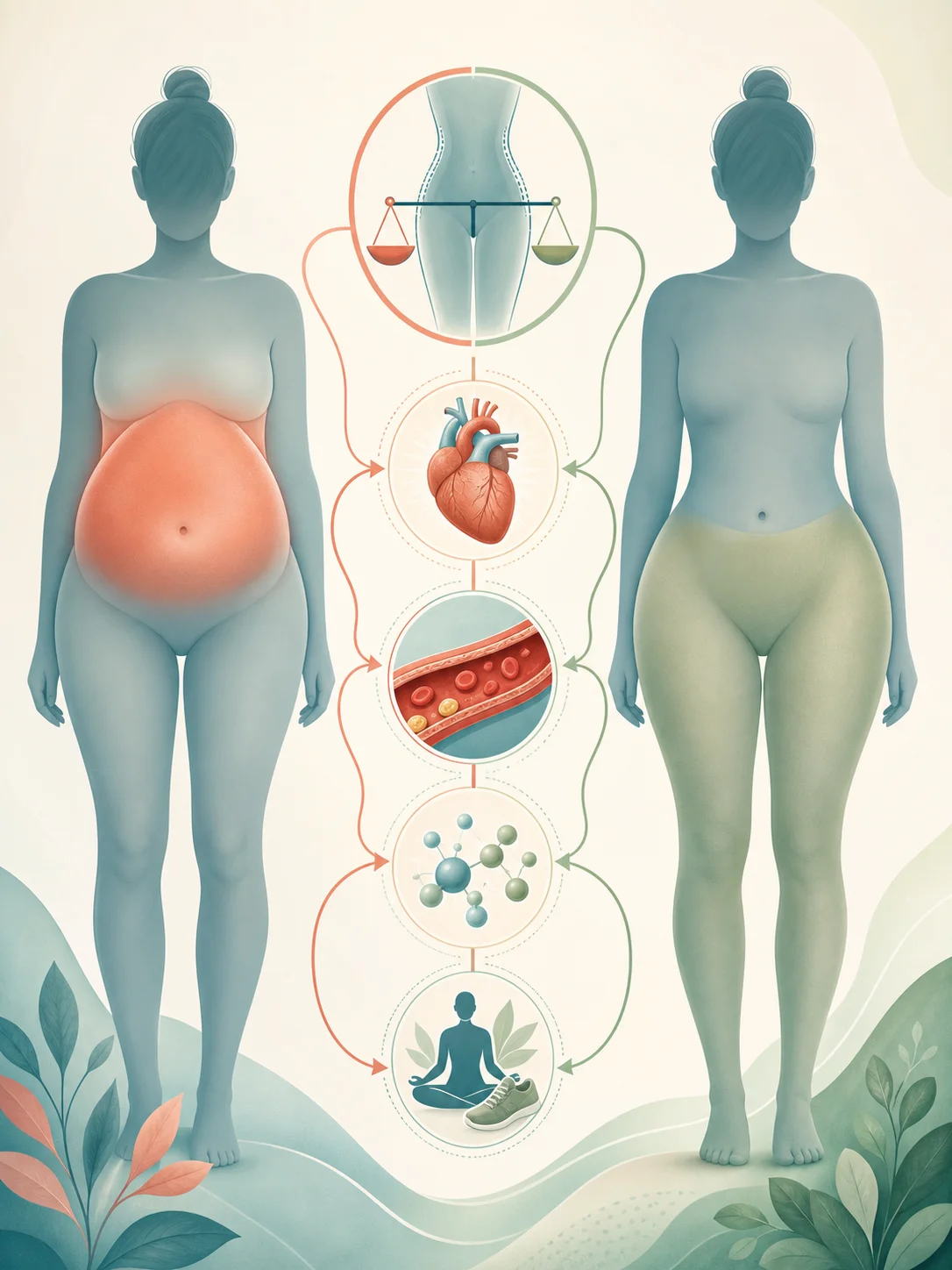
BMI describes weight relative to height. Body-fat percentage estimates composition. Waist-to-hip ratio describes distribution. Use our body-fat percentage chart and body-shape calculator as complementary tools.
Our body fat chart has age bands for both women and men.
When to discuss the result
Bring a rising waist trend or high ratio to a routine health visit, especially with high blood pressure, elevated glucose, abnormal lipids, sleep apnea symptoms, or family history. The response should focus on sustainable habits and overall risk, not shame or crash dieting.
Measure the trend, not your worth
Waist-to-hip ratio is inexpensive and informative when measured well. Its strongest value is as a consistent trend alongside other health markers.
Evidence and review
How this article was checked
Measurement method and commonly used WHO risk thresholds checked against WHO and current AHA patient guidance. Evidence last reviewed Aug 4, 2026.
- WHO - Waist Circumference and Waist-Hip Ratio - Measurement protocol, evidence review, and commonly used risk thresholds.
- American Heart Association - Know Your Numbers - Current context for waist size, BMI, and cardiometabolic risk.
- NHLBI - Assessing Your Weight and Health Risk - Use of waist measurement alongside weight and health risk factors.
FAQ
Frequently asked
Answers
Frequently asked questions
How is waist-to-hip ratio calculated?
Divide waist circumference by hip circumference using the same unit for both.
Where should I measure my waist?
WHO guidance uses the midpoint between the lowest rib and top of the hip bone, measured after a normal exhale. Use the same landmark each time.
Is waist-to-hip ratio better than BMI?
It adds information about fat distribution, while BMI describes weight relative to height. Neither is a diagnosis, and they can be used together.
Share this article


