Prostate cancer symptoms men miss: the quiet early signs worth watching for
Sheenam Midha · Health writer
On this page
TL;DR: Prostate cancer often grows quietly, and early on it usually causes no symptoms at all. The prostate cancer symptoms men most often miss show up later: trouble starting urination, frequent night-time bathroom trips, a weak stream, a not-quite-empty bladder feeling, blood in urine or semen, pelvic or lower-back pain, erectile changes, and unexplained fatigue or weight loss. Most urinary changes turn out to be a benign enlarged prostate, not cancer, but they are still worth checking. Age, family history, diet, weight, smoking, alcohol, and chemical exposure all shift the risk. Two home juices, Prostate Super Juice and Anti-Inflammatory Carrot-Apple Juice, offer gentle, supportive backup.
Did you know one of the quietest threats to men’s health is prostate cancer? The tricky part is that early prostate cancer often has no warning signs at all, and by the time things feel “off,” the disease may already be more advanced. So the question worth asking is simple: which prostate cancer symptoms should men actually watch for, and when is it worth getting checked?
Have you ever felt a change while urinating, found yourself rushing to the bathroom more often, or noticed an ache low in your pelvis or back? These can be easy to brush off. Many men do, especially the kind of warning signs men over 40 tend to ignore until later. Noticing them early, and asking a doctor, is one of the kindest things you can do for yourself.
What is prostate cancer, and why is it called the invisible enemy?
Prostate cancer is the most common cancer among men, particularly those over 50. The prostate is a small gland that sits just beneath the bladder and helps make part of the semen. The trouble starts when prostate cells begin growing in an uncontrolled way and form a tumor. That growth is often slow and silent, which is exactly why it earns the “invisible enemy” nickname.
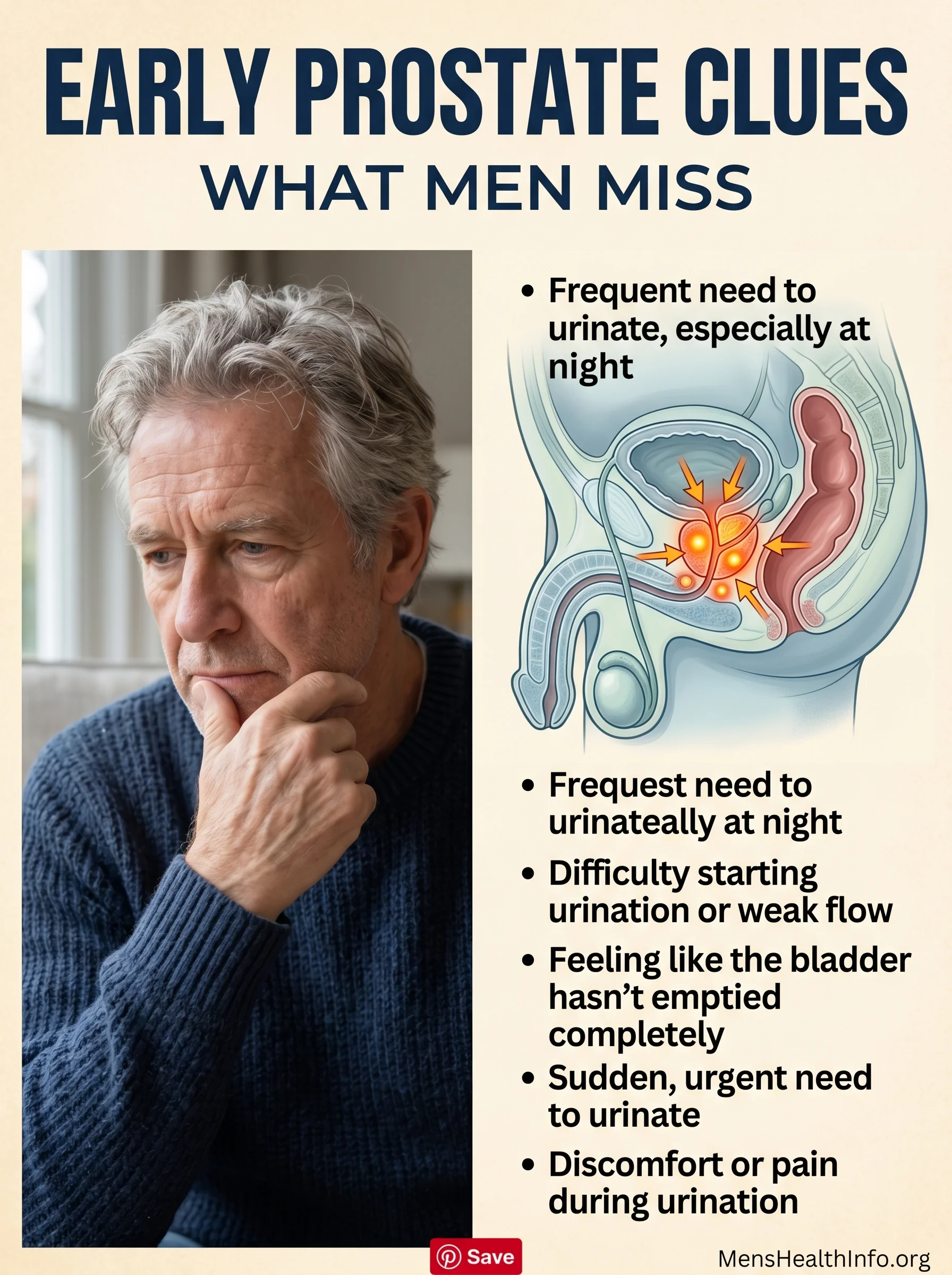
Here is the honest nuance: the earliest prostate cancer is usually asymptomatic, and when urinary symptoms do appear, they are far more often caused by a benign enlarged prostate (BPH) than by cancer. That is reassuring, not a reason to panic. But it also means you cannot feel your way to a diagnosis. The same way people learn the early signs of cancer that are easy to ignore, knowing your body’s signals here simply tells you when a conversation with a doctor is worth having.
What are the early prostate cancer symptoms men often miss?
Many men confuse the early prostate cancer symptoms with everyday things like a urinary infection or “just getting older.” For instance, if you find it hard to start urinating even when your bladder feels full, or you struggle to keep a steady stream, those are worth noting. This can happen when an enlarged prostate presses on the urethra, the tube that carries urine out.
If that sounds familiar, it is worth seeing a urologist, who can do a rectal exam and a PSA blood test. Sometimes imaging like an ultrasound or MRI is added to get a clearer look at the prostate. None of that means cancer. It simply rules things in or out so you are not guessing.
Does frequent nighttime urination mean prostate cancer?
Frequent bathroom trips, especially at night, are one of the lead symptoms men notice. The catch is that on their own they usually do not mean cancer. Pressure from an enlarged prostate can make the bladder feel full when it is not, and that is most often benign. Still, a clear change in your urination pattern is worth flagging. Simple urine tests and an ultrasound can help pin down the cause.
Another quiet sign is the feeling of an incomplete bladder. If you finish but still feel like there is more, that can point to a partial blockage. It can also set you up for urinary infections, so it is worth checking. Depending on what is found, options range from medications that relax the prostate to other treatments in more involved cases.
Blood in urine or semen, and pelvic pain
Blood in your urine or semen deserves prompt attention. If you spot any unusual coloring, see a doctor soon rather than waiting it out, since it can signal bleeding somewhere in the tract. Tests like a cystoscopy or a prostate biopsy help identify what is going on so the right plan can follow.
Persistent pain in the pelvis, lower back, or hips is another signal not to ignore, as it can occasionally mean prostate cancer has spread. This kind of pain tends to feel deep and may not ease much with ordinary pain relief. If discomfort lingers, ask for an evaluation. Imaging such as a CT scan can show whether cancer has moved beyond the gland.
Erectile changes, weight loss, and unexplained fatigue
Some men notice erectile dysfunction, meaning trouble getting or keeping an erection. Because the nerves involved sit close to the prostate, a tumor can sometimes affect them. There are many ordinary causes too, so this on its own is not a verdict. It is just a reason to talk with a specialist about evaluation and options.

Unexplained weight loss and fatigue, with no clear reason behind them, are signs worth taking seriously, since they can point to disease spreading. If you drop weight suddenly or feel wiped out for weeks, blood tests and imaging can look into it. These same kinds of vague-but-persistent signals show up across many of the early signs of cancer worth knowing, which is why “tired for no reason” is never silly to mention.
Even when these symptoms turn out to be something minor, and they often do, it helps not to wait for them to grow. The earlier prostate cancer is found, the better the odds of treating it well. Regular check-ins with your doctor and steady preventive habits are quietly powerful here.
What raises the risk of prostate cancer?
Age is the big one. Men over 50 are more susceptible, and the risk climbs further after 65. You cannot pause the calendar, but steady check-ups let you stay ahead of it. There is also growing awareness that prostate cancer is showing up in some younger men, including men under 60, so symptoms are not something only “older men” should think about.
Family history matters too. If a father or brother has had prostate cancer, your own chance roughly doubles, and it rises further with several relatives affected. In that case it is wise to start regular exams earlier, around age 40, and to ask your doctor about genetic testing.
Certain inherited genes add to the picture as well. Changes in genes like BRCA1 and BRCA2 can raise prostate cancer risk, especially in families with a history of breast and ovarian cancer. If that fits your family, a conversation about genetic testing can guide closer, calmer monitoring.
Diet, weight, and lifestyle factors
What you eat plays a real role in prostate health. A diet heavy in saturated fat and processed food can fuel low-grade inflammation, which is not friendly to long-term health. Leaning toward fruits, vegetables, whole grains, and lean protein helps. Foods rich in lycopene, like tomatoes and watermelon, are often singled out as especially prostate-friendly, and you can read more about food choices and cancer risk if you want ideas.
A mostly sedentary routine nudges the risk of many conditions upward, prostate cancer included. Aiming for about 30 minutes of movement a day supports your overall health and helps with weight, which matters because carrying extra weight is linked with more aggressive forms of the disease. If you want a gentle place to start, these simple daily habits that protect your health stack up over time.
It is also worth looking honestly at alcohol and smoking, both tied to a higher risk of several cancers. Cutting back on alcohol and quitting smoking improve your health on almost every front. And for anyone working around toxic chemicals like pesticides or heavy metals, good protective gear and routine check-ups are simply common sense.
Two home juices for gentle prostate support
Here are two home juices that lean on anti-inflammatory, nutrient-dense ingredients to support overall and prostate well-being. A quick, honest note first: these are supportive extras, not treatments, and they do not replace screening or any medication your doctor has prescribed. Never stop a prescribed medicine on your own. Think of these as a tasty bonus on top of good care.
Prostate Super Juice: half a cup of fresh kale leaves, half a cup of fresh spinach leaves, half a cup of sliced carrots, a quarter cup of unsweetened pomegranate juice, a quarter cup of canned diced tomatoes (with their juice), an eighth teaspoon of salt, and half a cup of water. Blend everything in a high-speed blender until smooth, about 1 to 2 minutes. Serve it right away.
Anti-Inflammatory Carrot-Apple Juice: one cup of diced sweet apple (unpeeled, such as Pink Lady), half a cup of sliced carrots, a quarter cup of fresh orange juice, a small piece of peeled fresh ginger (about a quarter teaspoon), a quarter teaspoon of salt, an eighth teaspoon of ground turmeric, and a quarter cup of water. Blend until smooth for 1 to 2 minutes, then serve cold.
Folding either juice into your week can be a pleasant, easy way to support your prostate health alongside the basics that matter most.
A gentle closing thought
You now know the early prostate cancer symptoms men tend to miss, the main risk factors, and two home-juice recipes for everyday support. Most urinary changes are benign, screening choices are personal and best made with your doctor rather than out of fear, and catching anything early is what truly tips the odds. Take good care of yourself. If pieces like this are useful, the newsletter lands every Friday with more.
Frequently asked questions
What are the earliest prostate cancer symptoms in men?
Often there are none. Early prostate cancer is usually silent. When signs do appear, men may notice trouble starting urination, a weak stream, frequent night-time trips, a not-fully-empty bladder feeling, or blood in urine or semen. These are worth checking, even though most turn out to be benign.
Does frequent nighttime urination mean prostate cancer?
Not usually. Waking to urinate often is most commonly caused by a benign enlarged prostate, bladder habits, or fluids before bed, not cancer. Still, a clear change in your pattern is worth mentioning to a doctor, who can use simple urine tests and an ultrasound to find the cause.
Are urinary symptoms always a sign of prostate cancer?
No. Most urinary symptoms in men come from a benign enlarged prostate (BPH) or infections, not cancer. The symptoms overlap, which is why you cannot tell from feeling alone. A PSA blood test and a doctor’s exam are how you separate harmless causes from ones that need follow-up.
At what age should men start PSA testing?
For most men, conversations about PSA screening begin around age 50. If you have a close relative with prostate cancer or a known genetic risk, starting nearer 40 is often suggested. Screening is an individual decision best made with your doctor, weighing your own risks rather than acting from fear.
Which foods help support prostate health?
A diet rich in fruits, vegetables, whole grains, and lean protein supports prostate health. Foods high in lycopene, like tomatoes and watermelon, are frequently highlighted. These foods are supportive, not a cure, and work best alongside regular check-ups and a generally active, balanced lifestyle.
Can erectile dysfunction be a sign of prostate cancer?
It can be, but it usually is not. Because the nerves involved in erections sit near the prostate, a tumor can sometimes affect them. Far more often, erectile changes come from other causes like circulation, stress, or medications. If it is new or persistent, ask a doctor for an evaluation.
Share this article