7 silent colon cancer symptoms that need immediate attention
Sheenam Midha · Health writer
On this page
TL;DR: Colon cancer develops quietly and often has no symptoms in the early stages. But the body does send warnings, and seven of them are worth memorizing: changes in bowel habits, blood in the stool, ongoing abdominal pain, deep fatigue, persistent bloating, unexplained weight loss, and the feeling that your bowel never fully empties. Caught early, it is highly treatable. These silent colon cancer symptoms are easy to dismiss, which is exactly why they matter.
Are you ignoring these 7 silent colon cancer symptoms? They might seem harmless, but they could signal something far more serious. Colon cancer can develop quietly over time, and by the time symptoms appear, it’s often advanced. The good news is, if you catch it early, you can stop it from becoming life-threatening.
Let me tell you about a close friend of mine. She was 45 years old, full of energy and life. She was always careful with her health, but a few months ago, she started feeling a slight discomfort in her abdomen. Nothing major, she thought it was just gas or indigestion. We’ve all been there, right? But as the months went on, the discomfort didn’t go away. It got worse. Eventually, she decided to see a doctor, and that’s when the news hit, she had bowel cancer, already in an advanced stage. If she had known about these 7 symptoms earlier, her story might have been different.
Colon cancer, also known as colorectal or bowel cancer, is one of the most common cancers in the world. It’s often slow to develop, which means many people don’t realize something’s wrong until it’s progressed. But the body does send warning signs, subtle ones that are easy to overlook, but critical to recognize.
What are the silent colon cancer symptoms that need urgent attention?
The seven silent colon cancer symptoms to watch for are: changes in bowel habits, blood in the stool, persistent abdominal pain, unusual fatigue, ongoing bloating, unexplained weight loss, and the feeling that your bowel never completely empties. Any one of these, especially if it lasts more than a couple of weeks, is worth a conversation with your doctor.
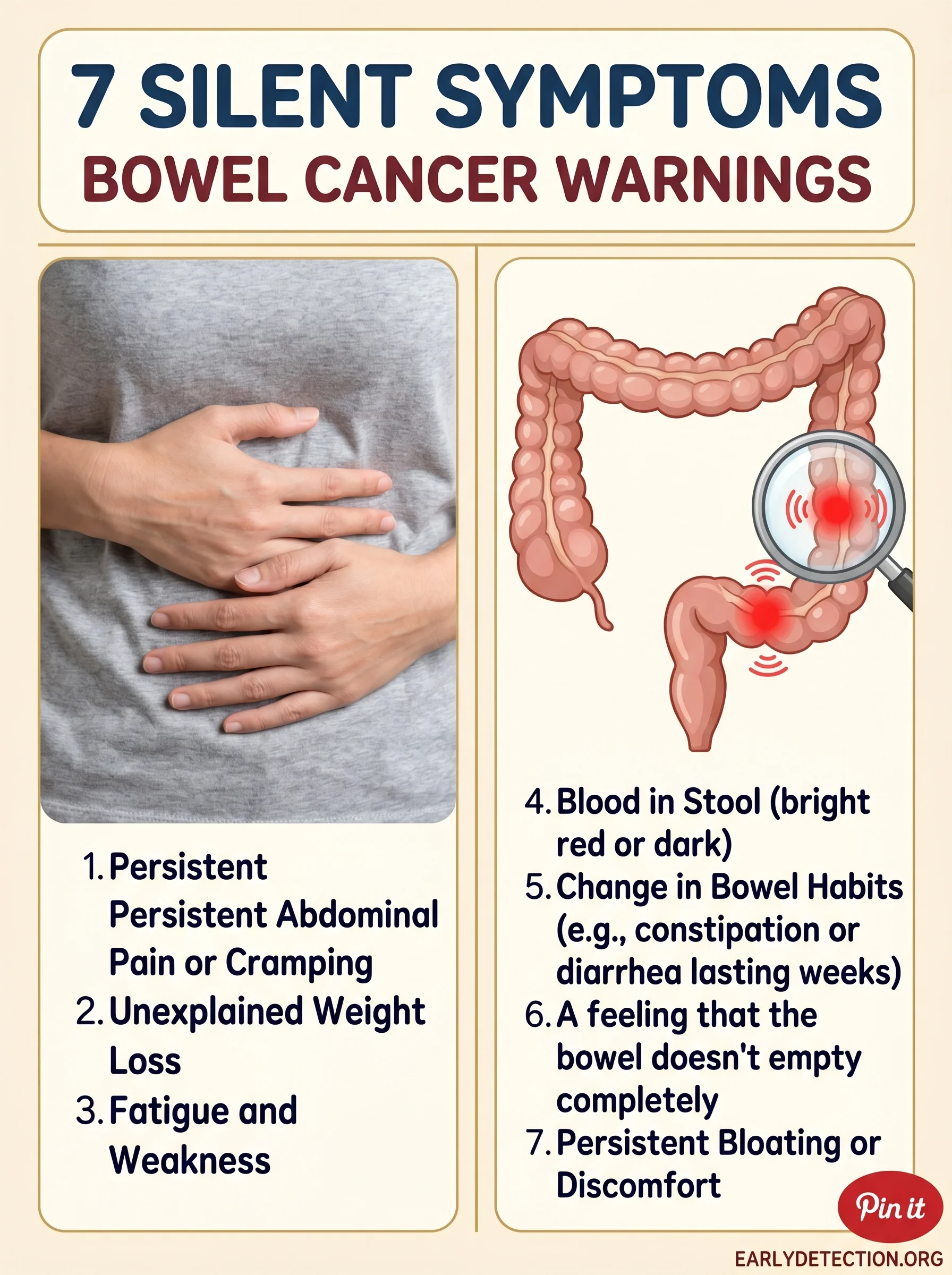
Remember, this is not about causing panic, it’s about staying informed and proactive. The earlier we catch these signs, the better the chances of successful treatment. If you’d like the bigger picture, we also cover the colon cancer warning signs you should never ignore in a companion guide.
1. Changes in your bowel habits
Everyone has their own routine when it comes to going to the bathroom. Some people are like clockwork, every morning after breakfast. Others only need to go a couple of times a week. But what if that routine changes? What if you start going more frequently, or much less often? What if your stool looks different, maybe thinner, or a different color?
These changes might seem minor, but they could be an early warning sign. In fact, around 65% of bowel cancer cases involve changes in bowel habits. Diarrhea that lasts for days, or constipation that comes and goes, can indicate that something is interfering with your digestive system. If you notice this kind of shift and it doesn’t go back to normal, don’t ignore it. Your body is trying to tell you something.
2. Blood in the stool
Blood in the stool can be shocking to see, and it’s easy to want to explain it away. Maybe it’s just hemorrhoids, right? Or perhaps you strained a little too hard. But here’s the thing: while hemorrhoids can cause bleeding, so can colon cancer. The difference is that the bleeding from cancer can be persistent, and sometimes, it’s internal, so you might not even see it.
The color of the blood can also give us clues. If it’s bright red, the bleeding might be coming from the lower part of the colon. If it’s darker, almost black, like tar, it could indicate bleeding higher up in the bowel. Either way, this is a symptom that should never be ignored. It doesn’t automatically mean cancer, but it’s worth investigating. And please don’t talk yourself out of it because you feel too young. Even a single episode of rectal bleeding is worth getting checked.
And here’s an important tip: always take a moment to observe your stool before you flush. It might sound strange, but checking for blood, changes in color, or changes in shape can give early clues about your bowel health. If your stool looks unusually thin, like a ribbon, it could be a sign that something is blocking the passage, such as a tumor.
3. Persistent abdominal pain
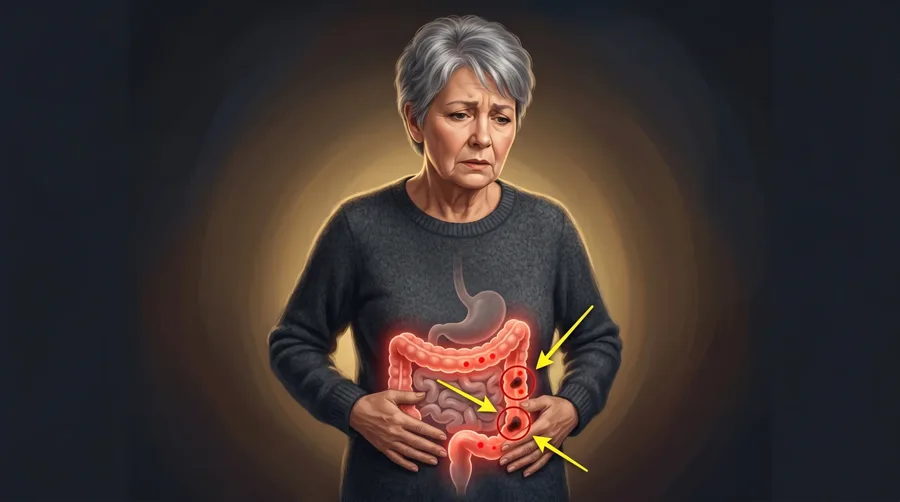
Picture this, you’ve been feeling fine, going about your daily life, but lately, you’ve noticed a dull pain in your abdomen. Maybe it comes and goes. Maybe it gets worse when you try to go to the bathroom. Could it just be gas or indigestion? Possibly. But if this pain becomes persistent, or if it’s a new kind of pain that doesn’t go away, it’s time to pay attention.
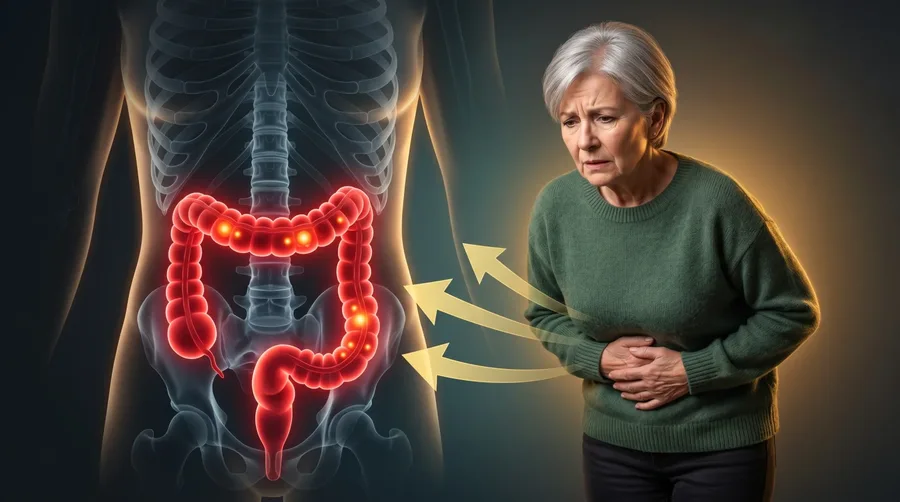
Abdominal pain can be caused by many things, but in some cases, it’s a sign that a tumor is blocking part of the intestine.
4. Fatigue that doesn’t lift with rest
Fatigue is easy to overlook, but this isn’t your typical “I didn’t sleep well last night” kind of tired. This is a deep, lingering fatigue that sticks around for weeks, even months.
Colon cancer can cause slow internal bleeding, which leads to anemia, a condition where your body doesn’t have enough red blood cells to carry oxygen. Without enough oxygen, you feel tired, weak, and drained, no matter how much rest you get. If this exhaustion seems out of the ordinary for you, it’s something you shouldn’t ignore.
5. Persistent bloating
Another symptom that might seem normal but could be a red flag is bloating. We all feel bloated from time to time, especially after a heavy meal. But what if the bloating doesn’t go away? What if it starts to become a daily occurrence, even when you haven’t eaten anything unusual?
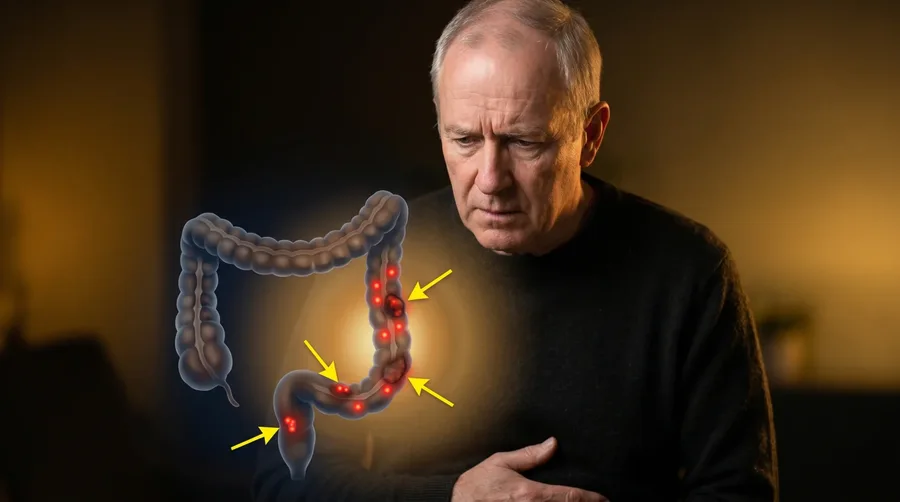
Persistent bloating, especially when it’s combined with pain or discomfort, could be a sign that something is blocking your intestines. Tumors can cause partial blockages, trapping gas and stool, which leads to that uncomfortable, swollen feeling.
6. Unexplained weight loss
Most people wouldn’t mind losing a few pounds. But here’s the key: if you’re losing weight without trying, and you haven’t made any changes to your diet or exercise routine, you need to pay attention.
When your body isn’t absorbing nutrients properly, or if a tumor is physically blocking food from passing through the intestines, weight loss can happen quickly. And that’s not a good sign.
7. The feeling your bowel never empties
One of the most subtle symptoms is the feeling that your bowel never completely empties. You go to the bathroom, but even after you’re done, it feels like there’s still something there, like you need to go again.
This sensation, called tenesmus, can be caused by a tumor blocking part of the colon. It tricks your body into thinking there’s more stool to pass, when really, it’s the tumor causing the obstruction.
What are early colon cancer symptoms in your 30s and 40s?
This part matters more than it used to. Colorectal cancer is rising in younger adults, and recent research suggests cases in people under 50 have been climbing steadily for years, even in those with no family history at all. Rectal cancer in particular is driving much of that increase.
The early colon cancer symptoms in your 30s and 40s are the same seven signs above: a lasting change in bowel habits, blood in the stool, cramping or pain, deep fatigue, bloating, weight loss you can’t explain, and that never-quite-empty feeling. The trouble is that younger people, and sometimes their doctors, are quick to assume it’s stress, hemorrhoids, or diet. So the symptoms get watched and waited on for months. If something has been off for more than a few weeks, ask to be checked. You are never “too young” to take your own gut seriously.
Why is colon cancer rising in young adults?
Honestly, researchers don’t fully know yet, and anyone promising you a single cause is getting ahead of the science. What we do have are careful clues, not conclusions.
Early life and diet seem to play a role. One hypothesis getting a lot of attention looks at a gut-bacteria toxin called colibactin, made by certain strains of E. coli, and whether childhood exposure quietly damages the colon lining over decades. It’s a promising lead, not a proven answer. Alongside that, the usual suspects still matter: ultra-processed foods, low fiber, too much red and processed meat, alcohol, smoking, sedentary days, and rising obesity. None of this is about blame. It’s about knowing that the same gentle habits that protect older adults protect younger ones too. Our piece on the early signs of cancer people ignore until it’s too late walks through the broader pattern.
When should you get screened for colon cancer?
Here’s the scariest part: many people with colon cancer don’t experience any symptoms at all in the early stages. That’s why regular screenings, like colonoscopies, are so important. If you’re over 45, or you have a family history of colon cancer, getting checked early could make all the difference. And if you have symptoms at any age, that’s a reason to talk to your doctor now, not at 45.
Colon cancer often starts as small, non-cancerous growths called polyps. These polyps can sit in the lining of your colon for years without causing any harm. But over time, a small percentage of them can turn into cancer. The good news? If these polyps are found early, they can be removed, before they ever have a chance to become cancerous. For more on the quiet ones, see the early signs of colon cancer that most people miss.
How to lower your risk of colon cancer
Prevention is key, and there are simple, powerful steps you can take to lower your risk of colon cancer. None of these replace screening or any care your doctor recommends. Think of them as everyday support.
- Drink plenty of water. Staying hydrated helps your bowel move more efficiently and reduces the time that waste sits in your colon.
- Eat fiber-rich fruits and vegetables. Fiber helps keep your digestive system clean, speeding up the passage of stool and lowering the risk of cancer.
- Reduce your intake of red and processed meats. Too much red meat, especially processed meats like bacon and sausage, can increase your risk.
- Incorporate natural anti-inflammatory foods. Spices like turmeric and cinnamon may help calm inflammation in the body. You can find more ideas in our roundup of foods that block cancer cells.
- Mind your folate. Getting enough of this B vitamin from leafy greens, beans, and citrus is linked to a healthier colon lining, as we explain in our guide to folate for colon cancer prevention.
- Don’t shy away from dairy. If you’re not lactose intolerant, consuming dairy products like milk and yogurt may help lower your risk of bowel cancer.
- Stay active. Regular exercise helps regulate your hormones, reduces inflammation, and keeps your weight in check.
- Avoid alcohol and quit smoking. Both are linked to an increased risk of colon cancer.
- Maintain a healthy weight. Obesity is a significant risk factor for colon cancer.
- Don’t skip your screenings. A colonoscopy might not be the most exciting thing on your calendar, but it’s one of the most effective ways to catch colon cancer early.
A gentle closing thought
If you or someone you love is experiencing any of these silent colon cancer symptoms, don’t wait. Talk to a doctor today, and if necessary, schedule a colonoscopy. It could save your life. The good news is that many cases of colon cancer are preventable, and many more are beatable when they’re caught early. With regular check-ups and some simple lifestyle changes, you can significantly reduce your risk.
If this was useful, the newsletter goes out every Friday with more of the same. You can join the drop if you want it to land in your inbox.
Frequently asked questions
What are the symptoms of colon cancer?
The main colon cancer symptoms are a lasting change in bowel habits, blood in the stool, persistent abdominal pain or cramping, deep fatigue, ongoing bloating, unexplained weight loss, and a feeling that your bowel never fully empties. Any of these lasting more than a couple of weeks deserves a doctor’s visit.
Is blood in stool always a sign of colon cancer?
No. Hemorrhoids and small tears can also cause bleeding, so blood in the stool does not automatically mean cancer. But it can be a sign, and the bleeding from cancer is often persistent or hidden. Bright red blood may come from the lower colon, darker blood from higher up. Either way, get it checked.
What are early colon cancer symptoms in women?
Colon cancer symptoms in women are largely the same as in men: changes in bowel habits, rectal bleeding, bloating, cramping, fatigue, and unexplained weight loss. Women sometimes mistake bloating or fatigue for hormonal or period-related changes, so if these feel new, persistent, or unusual for you, it’s worth raising with your doctor.
Why is colon cancer rising in young adults?
Researchers don’t fully know yet. Recent research points to diet, ultra-processed foods, low fiber, obesity, alcohol, and inactivity, plus a newer hypothesis about a gut-bacteria toxin called colibactin from certain E. coli strains. None is proven as the sole cause, but the takeaway is clear: symptoms in your 30s and 40s should never be brushed off as “too young.”
Should I get screened before age 45?
If you have symptoms or a family history of colon cancer or polyps, yes, talk to your doctor about earlier screening rather than waiting for a birthday. For people at average risk with no symptoms, routine screening usually starts around 45. But symptoms at any age are always a reason to be evaluated now.
What does tenesmus mean?
Tenesmus is the sensation that your bowel never completely empties. Even after you go, it feels like there’s still something there. It can be caused by a tumor blocking part of the colon, tricking your body into thinking there’s more stool to pass. Persistent tenesmus is worth investigating.
Share this article