Folate for colon cancer prevention: the one vitamin worth taking seriously
Sheenam Midha · Health writer
On this page
TL;DR: Folate (vitamin B9) is the single most studied vitamin for colon cancer prevention. It works like the quality-control supervisor in your colon-cell factory, catching DNA mistakes before they turn cancerous. Aim for 400 to 800 micrograms a day, ideally from food: lentils, spinach, asparagus, broccoli, avocado, Brussels sprouts, and strawberries. A 400 to 800 mcg folic acid supplement can fill the gap if your diet falls short.
Today we are talking about folate for colon cancer prevention, and why this quiet little B vitamin keeps showing up in the research on one of the most common and dangerous cancers in the world. Colon cancer is currently the third most common cancer diagnosed in both men and women. The lifetime risk is roughly 1 in 23 for men and 1 in 25 for women. That means without preventative habits, about 1 in every 25 people will develop this potentially serious disease.
The reassuring part is that colon cancer is also one of the most preventable, through regular screening, a steady healthy lifestyle, and a little attention to what is on your plate. Research has long pointed to certain vitamins and minerals with a protective effect, and folate sits at the top of that list. Below we will walk through what the science says, how much you need a day, and the foods that carry folate best.
What is the best vitamin for colon cancer prevention?
The most protective vitamin against colon cancer is vitamin B9, better known as folate, or folic acid in its synthetic form. Folate is a B-complex vitamin found naturally in foods, while folic acid is the version added to supplements and fortified foods like cereals and breads. This water-soluble nutrient plays a central role in cellular growth and repair. It helps your body make new healthy cells and mend damaged ones, which matters a great deal in a tissue that renews itself as fast as the colon does.
Does folate help prevent colon cancer?
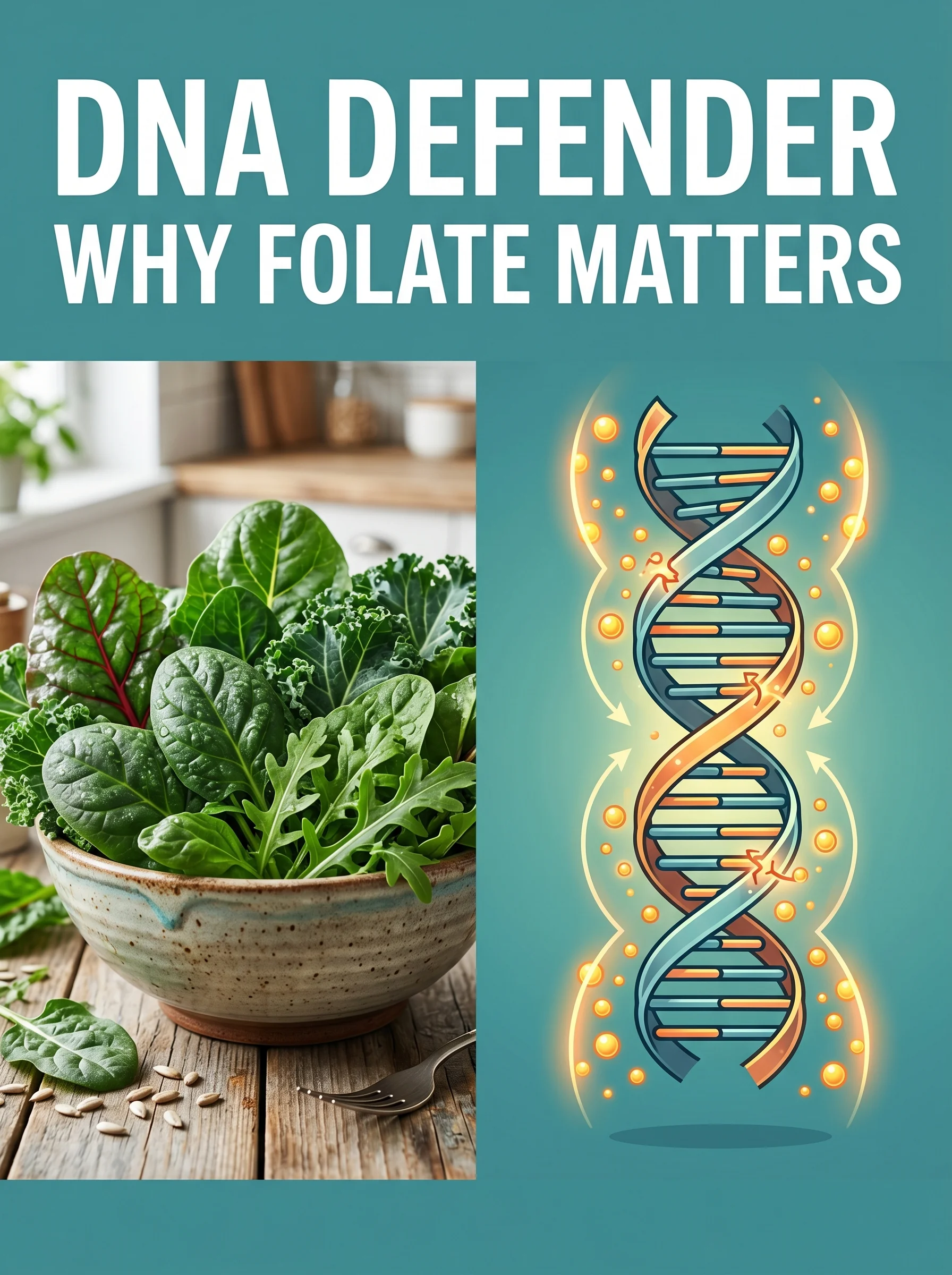
Yes, and the way it works is easier to picture than you might expect. Think of folate as the quality-control supervisor in a cell factory. The cells lining your colon are like a busy production line, rapidly making new cells to replace old ones. Folate is the supervisor who oversees that production and checks that every DNA blueprint is a perfect copy, with no mistakes slipping through.
Folate also helps switch the right genes on and off, the way a supervisor directs workers, which keeps cell growth orderly and in check. When folate runs low, it is like the supervisor stepping away from the floor. Errors creep into the DNA blueprints, faulty cells get made, and damaged DNA quietly builds up over time. That is the link behind colon cancer and folate deficiency: without enough folate overseeing things, the colon-cell factory is more likely to turn out defective cells that can eventually become cancerous.
Can low folate be a sign of cancer, or a cause of it?
This is a common worry, so let us be clear and calm about it. Low folate is best understood as a risk signal, not a diagnosis. Studies have linked poor folate status with a higher risk of colorectal cancer, and folate deficiency can also show up alongside other health issues. But low folate on its own does not mean you have cancer. It is far more often a sign that your diet, gut absorption, or alcohol intake needs attention.
If you suspect you are running low, it helps to know the everyday clues. Tiredness that does not lift, a sore or smooth red tongue, mouth ulcers, and the pale, breathless feeling of anemia can all point to it. We cover these in more detail in our guide to the 7 signs of folate deficiency your body may be showing, which is a good companion read if any of this sounds familiar. The fix is usually gentle: more folate-rich food, and a chat with your doctor about whether testing makes sense.
What does the research actually say about folate and colon cancer?
The broad weight of evidence points the same direction: diets rich in folate are associated with lower colorectal cancer risk, while folate deficiency is associated with higher risk. Large long-term studies of tens of thousands of people have repeatedly found that those with the highest folate intake tend to have meaningfully lower colon cancer rates than those with the lowest, and recent large reviews and meta-analyses pooling hundreds of thousands of participants continue to support that link, especially for folate that comes from food.
The protection seems strongest when folate intake is steady over many years, rather than a last-minute fix. It looks especially worthwhile for people at higher risk, including those with a family history of colon cancer or lifestyle factors like smoking, heavy alcohol use, or carrying excess weight. Folate is one piece of a bigger picture, and it sits comfortably alongside the wider habits in our evidence-based guide to food choices and cancer risk.
Is taking folic acid supplements safe when it comes to cancer?
For most people, yes, folic acid is considered safe at the usual supplemental doses, and it can be genuinely helpful when diet falls short. There is one honest nuance worth knowing, though. Food folate and high-dose supplemental folic acid are not quite the same story. Researchers have raised the careful question of whether very high doses of supplemental folic acid, well above what you would get from food, might behave differently in someone who already has a tiny pre-existing colon lesion.
This is a timing-and-dose conversation, not a reason to fear your spinach. The practical takeaway is reassuring and simple. Get most of your folate from whole foods, keep any supplement in the sensible 400 to 800 mcg range unless your doctor advises otherwise, and never use a supplement as a substitute for screening or for any prescribed treatment. If you are unsure, your doctor can help you land on the right amount for you.
What are the best food sources of folate?
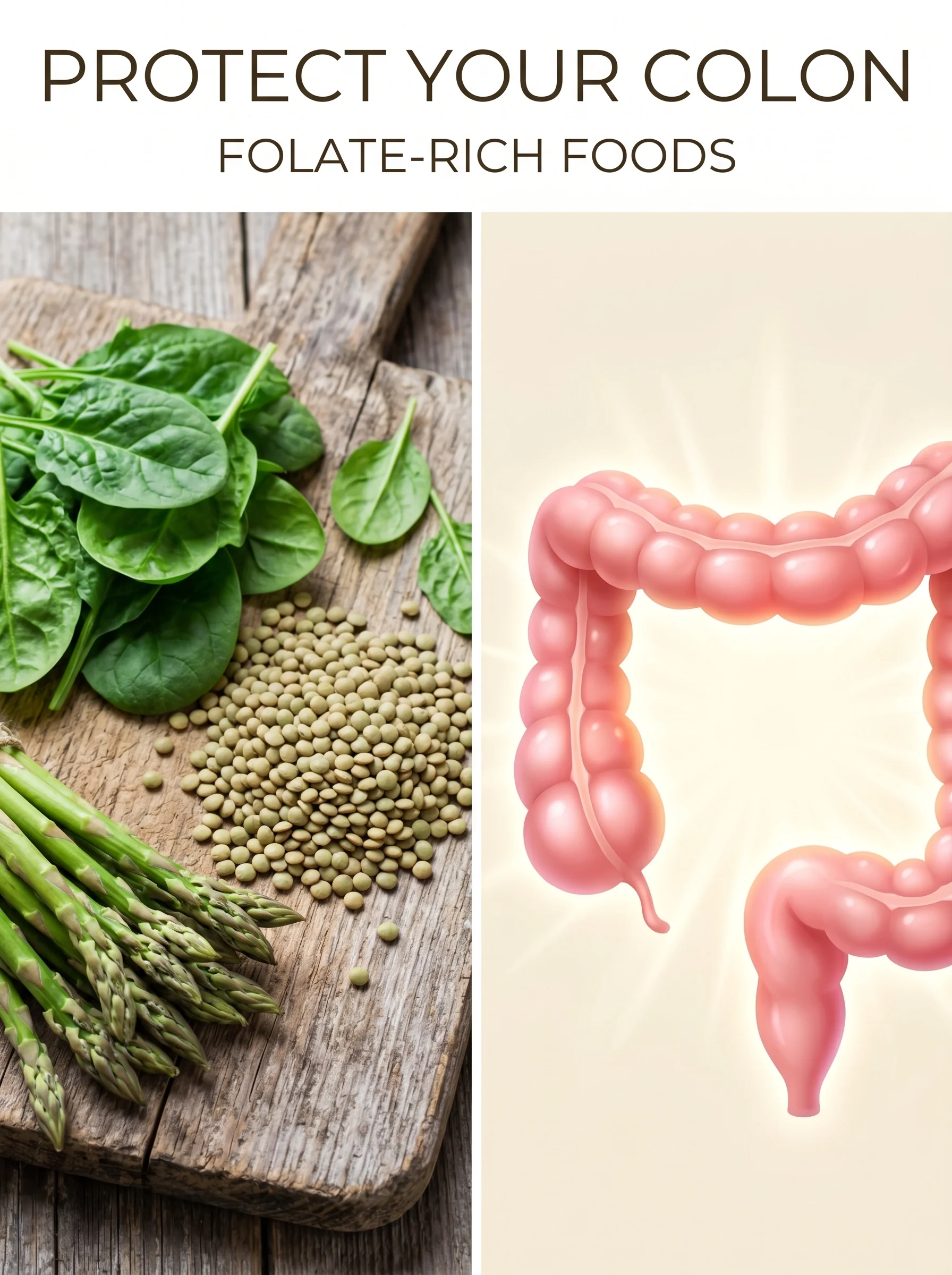
For colon cancer prevention, folate is best earned at the table. Folate found naturally in foods comes packaged with fiber and other protective nutrients, and food-first is the approach the research keeps rewarding. Some of the most generous dietary sources of folate include:
- Lentils, which provide about 90% of your daily folate needs in just one cup.
- Spinach, with around 66% of your daily value in a single cup.
- Asparagus, with over half of your folate for the day in one cup.
- Turnip greens, broccoli, romaine lettuce, and avocado.
- One avocado, providing almost 40% of the recommended daily intake.
- Brussels sprouts, with about 30% of your daily folate per cup.
- Strawberries, providing roughly a quarter of your needs.
If salads and steamed greens feel like a chore, you are not alone. There are easier ways in, and we share a few gentle ones in our piece on how to eat more vegetables with juices and soups.
How much folate do you actually need?
The current recommended daily allowance (RDA) for folate is 400 micrograms for adults. Research suggests that intakes of 800 micrograms or higher, preferably from food, are linked with the most meaningful anti-cancer benefit. The simplest way to get there is to make folate-rich foods a regular habit rather than an occasional one, leaning on leafy greens, beans, lentils, asparagus, broccoli, and avocado most days.
Do you need a folate supplement?
Food should stay the main strategy, but folate supplementation has a sensible place when life or biology gets in the way. Folic acid is actually well absorbed, so a supplement can be useful when whole foods are not enough. People with digestive conditions that limit folate absorption, such as celiac disease or inflammatory bowel disease, may benefit from adding 400 to 800 micrograms of folic acid a day.
A supplement can also help anyone who simply does not eat folate-rich vegetables regularly, or who struggles to hit the RDA from diet alone. As always, check with your doctor before starting anything new, so it fits safely with your medications and your overall plan. A supplement supports a healthy pattern. It does not replace screening, and it does not replace any treatment your doctor has prescribed.
How to maximize folate intake daily
- Include lentils, dark leafy greens, asparagus, avocado, and broccoli in your regular diet.
- Add spinach, romaine, or other greens to your morning smoothie.
- Snack on raw veggie crudites like carrots, celery, and turnip.
- Use spinach instead of lettuce in your sandwiches and burgers.
- Try zoodles or noodle replacements made from spiralized zucchini or carrots.
- Drink fresh vegetable juices and eat plenty of salads at each meal.
- If your diet is lacking, take a folic acid supplement of 400 to 800 micrograms per day.
- Folate is water-soluble so toxicity risk is low, but do not exceed 1000 micrograms per day from supplements.
- Always take folic acid supplements with food for better absorption.
And remember, folate works best alongside other protective nutrients like vitamin B12, vitamin D, calcium, and antioxidants. Aim for a balanced, mostly plant-based plate with a variety of vegetables, fruits, nuts, seeds, beans, and whole grains. Go easy on processed meat to lower colon cancer risk a little further. Get regular exercise, keep a healthy weight, do not smoke, and avoid heavy alcohol. None of this replaces screening, so it is also worth knowing the body’s red flags, which we lay out in our guide to colon cancer warning signs you should never ignore.
A gentle closing thought
The best dietary strategies for colon cancer prevention are not exotic. They are lentils, leafy greens, and a few small habits held steady over time. Folate is not a cure or a shortcut, but it is a quietly powerful ally for your colon cells. Now go eat those folate-rich greens. If this kind of piece is useful, the newsletter lands every Friday with more.
Frequently asked questions
How much folate do I need per day for colon cancer prevention?
The recommended daily allowance for folate is 400 micrograms for adults. Research suggests intakes of 800 micrograms or higher, preferably from food, are linked with the most meaningful protective benefit. The easiest path there is eating folate-rich foods like lentils, leafy greens, asparagus, and avocado most days of the week.
Does folate help prevent colon cancer?
Folate supports the DNA repair and orderly cell growth that keep colon cells healthy, and diets rich in folate are consistently associated with lower colorectal cancer risk. It is one protective piece of a bigger picture that includes screening, a plant-forward diet, exercise, and limiting alcohol and processed meat. Folate helps, but it is not a standalone cure.
Can low folate be a sign of cancer?
Low folate is a risk signal, not a diagnosis. Poor folate status has been linked with higher colorectal cancer risk, but on its own it usually points to diet, gut absorption issues, or alcohol intake rather than cancer. If your levels are low, talk with your doctor about diet, testing, and whether any further checks make sense.
What are the signs of folate deficiency?
Common signs include persistent fatigue, weakness, a sore or smooth red tongue, mouth ulcers, and the pale, breathless feeling of anemia. Some people also notice low mood or trouble concentrating. These clues are easy to miss, so if several sound familiar, it is worth getting your folate status checked rather than guessing.
Is taking folic acid supplements safe when it comes to cancer?
At the usual 400 to 800 mcg doses, folic acid is considered safe for most people and can help when diet falls short. Researchers do raise a careful question about very high supplemental doses in people with pre-existing lesions, so food folate stays the smartest base. Check with your doctor, and never use a supplement in place of screening or treatment.
Is folate from food better than folic acid from a supplement?
For colon cancer prevention, food-first is the wiser default. Folate from whole foods arrives with fiber and other protective nutrients, and the strongest evidence supports dietary folate. Folic acid is well absorbed and genuinely useful when diet falls short, especially with absorption conditions, but a supplement is best seen as a backup to a folate-rich plate, not a swap for it.
Share this article