7 colon cancer symptoms and warning signs you should never ignore
Sheenam Midha · Health writer
On this page
TL;DR: Colon cancer is one of the most treatable cancers when it is caught early, and your body often whispers before it shouts. These are seven colon cancer symptoms you should never ignore, from blood in the stool to fatigue that won’t lift, plus the simple screening step at 45 that makes the biggest difference.
Cancer. It is a diagnosis no one wants to hear. But when it is caught early, survival rates are significantly higher, and that is especially true for colon cancer, one of the most treatable forms when detected in early stages. That is why learning the colon cancer symptoms and warning signs is so worth your time.
Understanding your body, and noticing what may be amiss, empowers you to seek screening and swift treatment if needed. Catching colon cancer early gives you the best odds. Here are seven symptoms worth paying attention to, and what to do about each one.
What is the first warning sign of colon cancer?
Blood in the stool is often the first thing people notice. Bleeding in the colon causes blood to mix with stool. It may make stools look abnormally dark, or you might see bright red spots on the toilet paper or in the bowl. Any bloody stool warrants a conversation with your doctor and, usually, a colonoscopy to find the source.
It is true that bleeding often comes from something harmless like hemorrhoids or a small tear. But you cannot tell by looking, and even one episode of rectal bleeding is worth a check. Changes that persist or arrive with other symptoms deserve prompt medical attention.
2. Changes in bowel habits
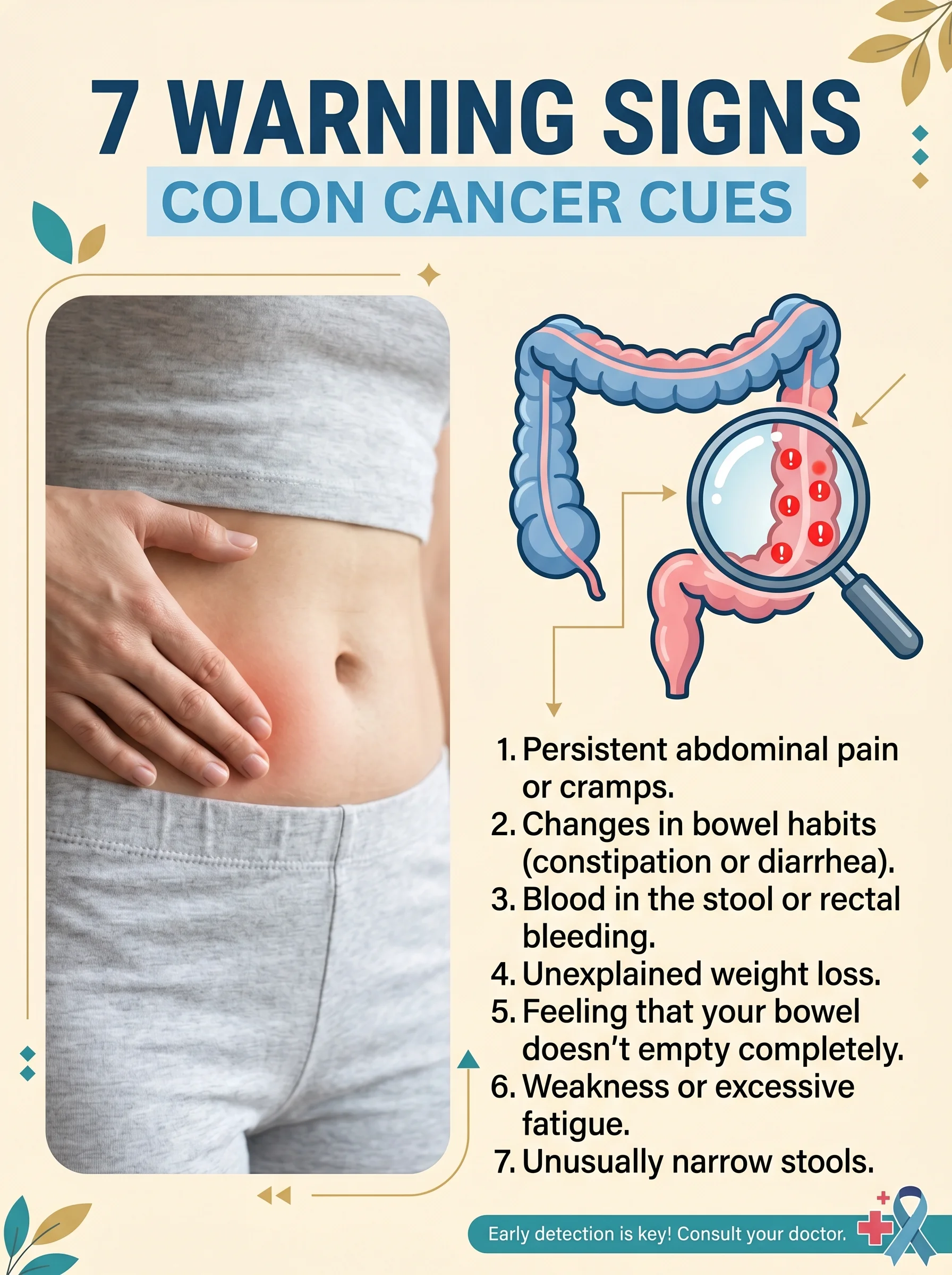
Chronic diarrhea, constipation, or stools that suddenly look narrower can all point to potential trouble. Painful bowel movements, or the feeling that you can never fully empty, also count as signals worth noticing.
The key word is persistent. Everyone has an off week. But if your pattern shifts and stays shifted for several weeks, that is the cue to get it looked at rather than wait it out.
3. Abdominal pain
Cramping, bloating, and gas pains can sometimes reflect a tumor getting in the way of digestion. Pain that comes and goes is usually less concerning than pain that lingers. Pay attention to discomfort that settles in one spot and does not resolve, especially if it is new for you.
4. Unintended weight loss
Losing weight without trying can happen when colon cancer interferes with how your body absorbs nutrients. Rapid or unexplained weight loss is always worth evaluating, especially when it shows up alongside fatigue or a change in appetite.
5. Is iron deficiency anemia a colon cancer symptom?
It can be. Anemia from low iron often stems from slow, steady bleeding in the colon that you would never see in the toilet. If you feel unusually tired and a blood test shows low iron, ask what is causing it. Screening helps identify any bleeding polyps or lesions behind the scenes.
6. Weakness and fatigue
Cancer can quietly drain your energy by using up nutrients your cells need to function. A noticeable, lasting drop in strength or endurance, the kind that sleep does not fix, points to something worth investigating. Make an appointment if fatigue is starting to shape your daily life.
7. A feeling that something is wrong
Do not dismiss that quiet, intuitive sense that something seems off with your body. Vague abdominal discomfort, or that nagging “tummy trouble” feeling, can be worth a closer look. Trust your instincts and get checked. No good doctor will fault you for being thorough.
Listen to your body, learn the warning signs, and get screened beginning at age 45.
Are colon cancer symptoms different in women?
People often search for colon cancer symptoms in women specifically, and the honest answer is that the core signs are the same: blood in the stool, changing bowel habits, ongoing belly pain, fatigue, and unexplained weight loss. The catch is that some of these overlap with period cramps, anemia, or other everyday complaints, so they get brushed off more easily.
If you are tracking unusual fatigue, our look at the signs of folate deficiency your body may show can help you tell ordinary tiredness from the kind that deserves a blood test.
Why is colon cancer rising in young adults?
This is the part that has changed in recent years. Recent research suggests colorectal cancer is climbing among adults under 50, even as it falls in older age groups, and a meaningful share of new diagnoses now show up in people younger than 55. Doctors do not yet fully understand why.
Several ideas are being studied, including early-life gut exposures and certain bacterial toxins, but none is confirmed and there is no need to panic over any single theory. The practical takeaway is simpler. The old assumption that you are “too young for colon cancer” no longer holds, so early colon cancer symptoms in your 30s and 40s deserve the same attention they would at 60.
What should you do if you have any of these colon cancer symptoms?
If you have any concerning colon cancer symptoms, schedule a screening colonoscopy. This visual exam of the colon detects polyps or tumors. Most polyps are benign, but some can become cancerous over time, and removing them early prevents that progression entirely.
A colonoscopy is the most thorough option, but stool-based tests like FIT or Cologuard are reasonable starting points for some people, and a positive result simply leads to a colonoscopy. The right choice is a conversation with your doctor, not a one-size-fits-all rule. If you are noticing symptoms before 45, say so plainly and ask whether earlier screening makes sense for you.
Reducing colon cancer risk also starts with everyday habits.
- Eat more vegetables and fiber.
- Maintain a healthy weight.
- Do not smoke.
- Limit alcohol and red or processed meat.
- Exercise regularly.
- Get screened beginning at age 45.
Food is not a cure, but a steady, plant-forward plate is a sensible support. If you want a gentle starting point, our notes on folate and colon-cancer risk and our evidence-based guide to food choices and cancer risk are easy places to begin.
A gentle closing thought
Listen to your body, learn the warning signs, and ask a clinician when screening should begin based on your age, symptoms, and family history. Earlier detection makes colon cancer easier to treat.
If this was useful, the newsletter lands in your inbox every Friday. One tiny essay, a handful of good links, and quiet nudges like this one. That is the only bell you have to ring.
Frequently asked questions
What are the symptoms of colon cancer?
The main colon cancer symptoms are blood in the stool, a lasting change in bowel habits, narrow stools, ongoing abdominal pain or bloating, unexplained weight loss, weakness, and fatigue. Iron deficiency anemia from slow bleeding is another clue. Any symptom that persists for several weeks is worth a check.
What are early colon cancer symptoms in your 30s and 40s?
The early signs are the same at any age: rectal bleeding, a shift in bowel habits, belly pain that lingers, fatigue, and unexplained weight loss. Because colon cancer is rising in younger adults, do not assume you are too young. Bring persistent symptoms to your doctor even without a family history.
Is blood in stool always a sign of bowel cancer?
No. Blood in the stool often comes from harmless causes like hemorrhoids or a small anal tear. But you cannot tell the source by looking, and bleeding is also an early colon cancer symptom. Even one episode warrants a check, so do not wait to mention it to your doctor.
When should you get a colonoscopy?
Routine screening is recommended starting at age 45, and sooner if you have symptoms, a family history, or other risk factors. A colonoscopy is a visual exam that finds polyps or tumors. If you have any concerning colon cancer symptoms at any age, ask your doctor about screening now.
Are polyps always cancerous?
No. Most polyps are benign. Some can slowly turn cancerous over the years, which is exactly why screening matters. During a colonoscopy, polyps are usually removed on the spot, and that removal prevents progression. It is one of the few cancers you can largely prevent by screening.
What lifestyle changes lower colon cancer risk?
Eat more vegetables and fiber, maintain a healthy weight, stay active, and do not smoke. Limit alcohol and red or processed meat. These habits support your gut but are not a substitute for screening, so keep both in your routine and never stop prescribed care without talking to your doctor.
Share this article