
Do apples lower cholesterol and triglycerides? A gentle guide for your heart
Sheenam Midha · Health writer

On this page
TL;DR: Do apples lower cholesterol? They can gently help. Apples are an easy, everyday fruit packed with soluble fiber and polyphenols that support healthier cholesterol and triglyceride numbers. The fiber binds to cholesterol in your gut, the polyphenols act as antioxidants, and the whole fruit helps steady your blood sugar. One apple a day, sliced into oatmeal or baked into something warm, is a simple place to start.
Today we are talking about apples, and how this humble fruit can quietly help lower your cholesterol and triglycerides. Do apples lower cholesterol on their own? Not like a medicine, but as part of a heart-friendly day they really do pull their weight. Let’s walk through how.
Apples are not just a crunchy, convenient snack. They are full of the kind of fiber and plant compounds your heart loves, and they are easy to keep on hand all week.
How do apples lower cholesterol?
Apples contain soluble fiber, mostly a type called pectin. This fiber forms a soft gel in your digestive tract, binds to cholesterol, and helps carry it out of the body before it can build up. Over time, that can nudge your LDL, the “lousy” cholesterol, in a better direction.
Apples are also rich in polyphenols, the antioxidants that give the skin its color. Research suggests these plant compounds help protect your blood vessels and are linked with healthier cholesterol levels. If apples appeal to you, you might also enjoy the gentle cholesterol support in this aloe and ginger infusion.
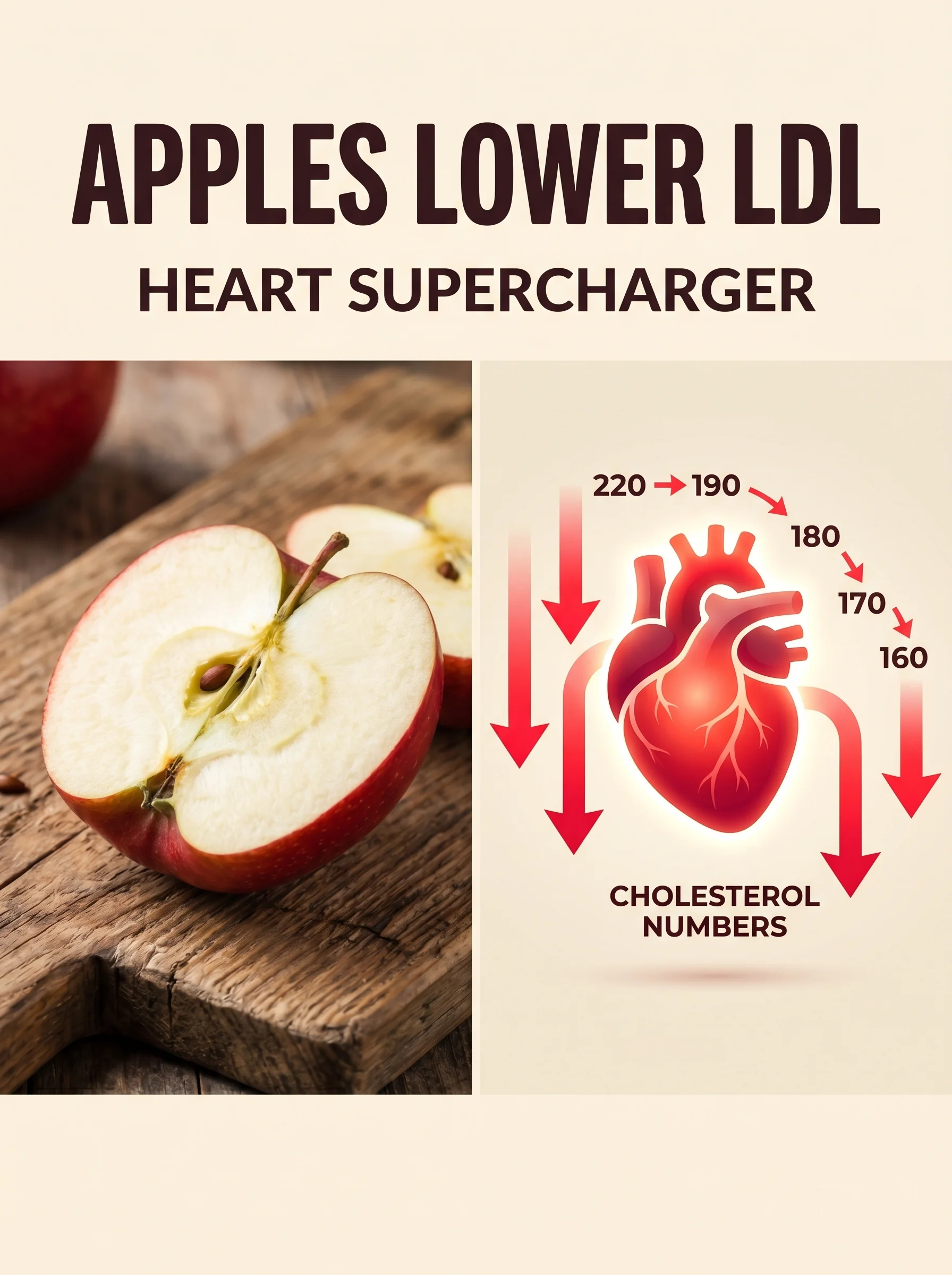
One more quiet win: apples are low in fat and calories and high in water and fiber, so they fill you up. That makes them a friendly snack if you are watching your weight, which is itself one of the kindest things you can do for your heart.
Are apples good for triglycerides and blood sugar?
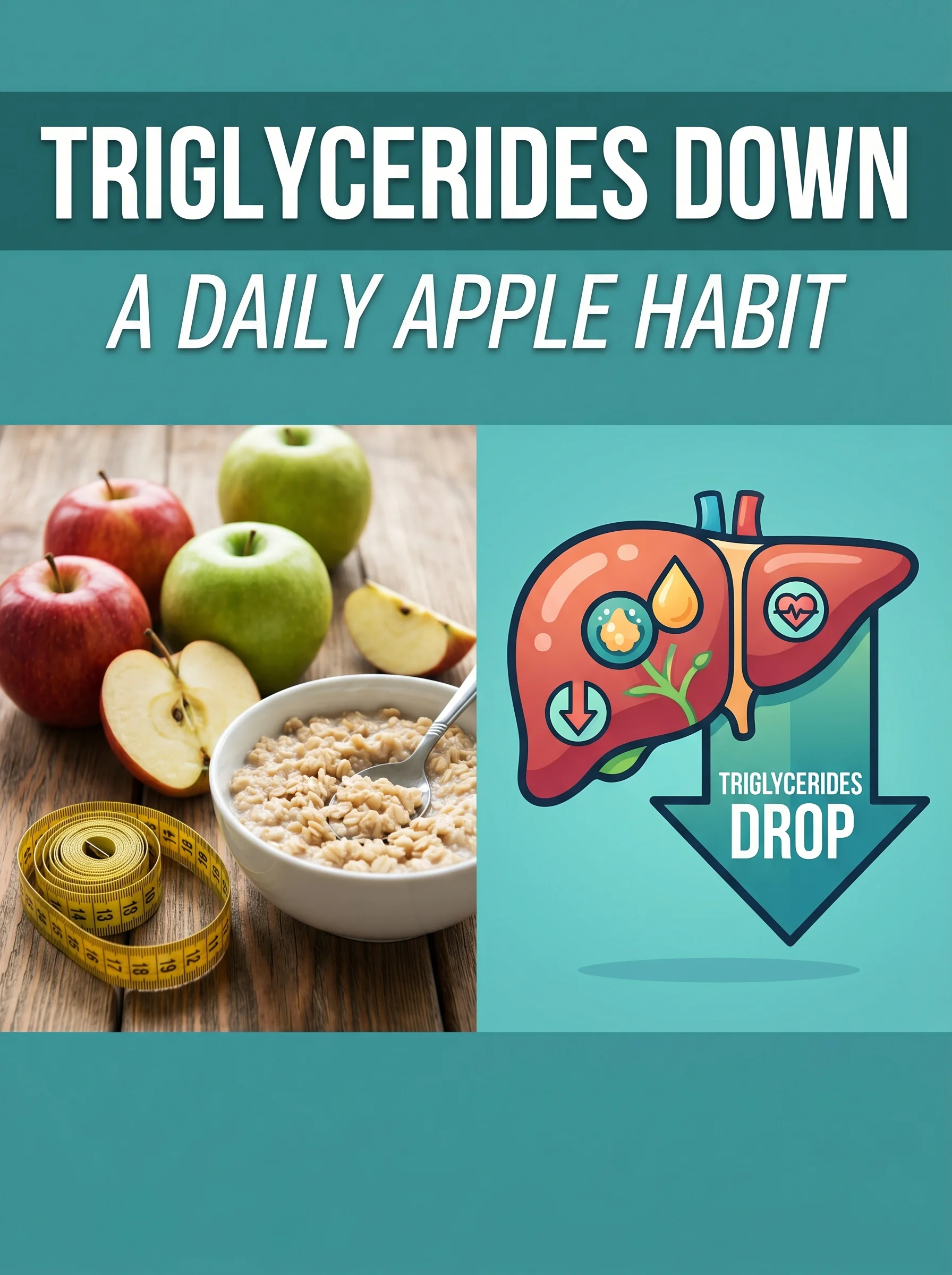
Yes, and the two are connected. Triglycerides are a type of fat in your blood, and they tend to climb when your blood sugar swings high too often. Steady blood sugar usually means steadier triglycerides.
This is where the whole apple shines. The fiber slows down how quickly the natural sugars are absorbed, so you get a gentler rise instead of a spike. Over time, that helps your body stay sensitive to insulin, and that supports healthier triglyceride numbers. For more everyday foods that do this, see our roundup of four everyday foods for a healthy heart.
Is a whole apple better than apple juice for cholesterol?
For your heart, the whole apple usually wins. A lot of the benefit lives in the fiber and the skin, and most of that is lost when fruit is juiced. You have probably seen the viral “magic juice that lowers cholesterol and blood sugar” posts. They sound wonderful, but juicing strips out the fiber and concentrates the sugar, so you lose the very part that helps the most.
That does not make juices useless, and gentler blends still have a place. If you do enjoy a glass, lean toward higher-fiber, lower-sugar options like this spinach and apple juice for triglycerides or a classic carrot juice for cholesterol, and keep portions small. Just remember that no single juice is a cure, and food works alongside your routine, never as a replacement for medicine your doctor has prescribed.
How to eat more apples every day
The nicest part is how easy apples are to work in. You do not need a plan, just a bowl of them somewhere you’ll see them.
- Have a whole apple a day as a snack, skin on for the fiber.
- Slice them into oatmeal, yogurt, or a salad.
- Pair slices with a little nut butter for staying power.
- Bake them with a sprinkle of cinnamon for a warm treat.
Apples also pair beautifully with other heart-friendly habits. A handful of flaxseed for heart and diabetes on your oatmeal, plus a few daily habits to keep your heart healthy, add up far more than any one food can on its own.
The takeaway
Apples are delicious, affordable, and genuinely good for your heart. They will not undo an unbalanced diet by themselves, but as a daily habit they support healthier cholesterol and triglycerides, steadier blood sugar, and a happier heart. A healthy lifestyle starts with simple choices, and reaching for an apple is one of the easiest ones to make.
An apple a day still earns its old reputation, one quiet, fiber-rich bite at a time.
Want more gentle, practical tips like these? Join the newsletter and we’ll send a little heart-friendly inspiration to your inbox every Friday.
Frequently asked questions
Do apples really lower cholesterol?
Apples can gently help. Their soluble fiber, mainly pectin, binds to cholesterol in your digestive tract and helps carry it out before it builds up, while their polyphenols support healthier blood vessels. Apples work best as part of a balanced, heart-friendly diet, not as a stand-alone fix.
How many apples a day should I eat for heart health?
About one to two whole apples a day is a sensible, realistic goal for most people. Eat them with the skin on, since much of the fiber and polyphenols live there. There is no need to overdo it; consistency over weeks matters far more than eating a large amount at once.
Are apples good for high triglycerides?
Yes, indirectly. Apples are low in fat, high in fiber, and help steady your blood sugar, which keeps triglycerides from climbing. The whole fruit works better than juice here, because juicing removes the fiber that does most of this gentle, blood-fat-balancing work.
Is apple juice as good as a whole apple for cholesterol?
Not really. Juicing strips out most of the fiber and concentrates the natural sugars, so you lose the part that helps your cholesterol most. A whole apple, skin and all, is the better choice. If you love juice, keep portions small and choose higher-fiber, lower-sugar blends.
Can apples replace my cholesterol medication?
No. Apples are a supportive food, not a substitute for prescribed medicine. They can complement a heart-healthy diet, but never stop or change a medication your doctor has prescribed without talking to them first. Think of apples as a helpful daily habit alongside your care, not instead of it.
What is the best way to eat apples for cholesterol?
Eat them whole and raw with the skin on for the most fiber and polyphenols. Slicing them into oatmeal or yogurt, or pairing them with a little nut butter, also works well and keeps you full. Baking with cinnamon is fine too, just go easy on added sugar.
Share this article