Protein intake for muscle gain: a practical grams-per-day guide
Sheenam Midha · Health writer
On this page
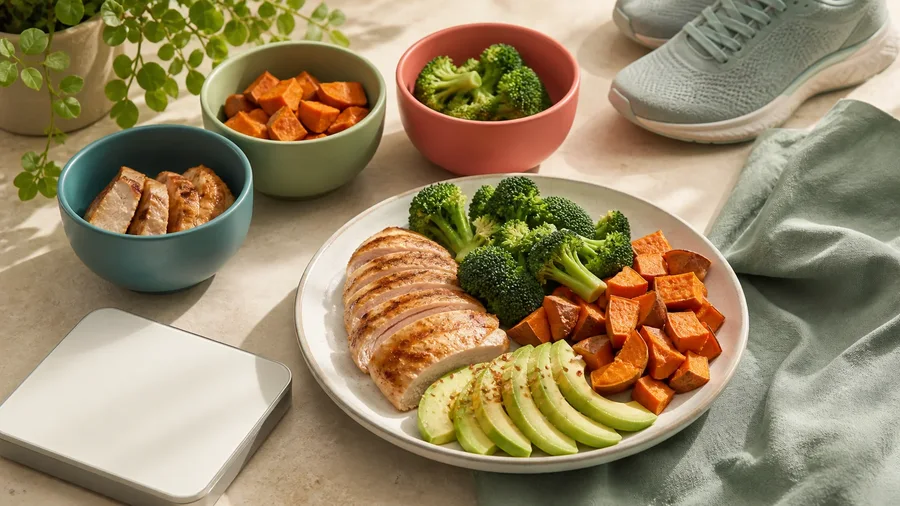
Protein intake for muscle gain is best treated as a useful range, not a contest to eat the largest number. For many healthy adults who lift regularly, about 1.4 to 2.0 grams per kilogram of body weight per day is a practical evidence-based starting range.
Use our protein intake calculator to translate your weight and activity into a starting estimate. The result is educational, not a prescription for kidney disease, pregnancy, adolescence, or a medically supervised diet.
How to calculate protein intake for muscle gain
Convert body weight in pounds to kilograms by dividing by 2.205. Then multiply kilograms by a factor within the range that fits your training and energy intake.
| Context | Practical starting range |
|---|---|
| General health, little structured training | Use the standard dietary requirement as a baseline |
| Regular resistance or mixed training | About 1.4-2.0 g/kg/day |
| Calorie deficit with hard resistance training | Often toward the upper part of the range |
| New to training or maintaining muscle | Often the lower-to-middle part is sufficient |
For example, a 70-kilogram adult using 1.6 grams per kilogram would target about 112 grams per day. This calculation does not prove that exactly 112 grams is optimal; it provides a sensible place to begin and evaluate.
The RDA and a muscle-building range answer different questions
The adult protein RDA is 0.8 grams per kilogram per day. It is designed to cover the basic needs of nearly all generally healthy adults, not to identify the intake that maximizes every strength-training outcome.
Sports-nutrition guidance uses higher ranges for people training regularly. That does not make the RDA wrong. It means the question has changed from avoiding inadequacy to supporting adaptation, recovery, or lean-mass retention during a calorie deficit.
For a 70 kg adult, the RDA is 56 grams. A training range of 1.4 to 2.0 g/kg is 98 to 140 grams. The size of that gap explains why a person eating enough for general nutrition may still benefit from more protein after starting serious resistance training.
Do not interpret the upper edge as a requirement. Someone making progress at 1.5 g/kg does not need to force 2.0 simply because the calculator permits it.
More calculation examples
A person weighing 150 pounds divides by 2.205 to get about 68 kg. At 1.6 g/kg, the target is about 109 grams per day.
A person weighing 200 pounds is about 91 kg. At 1.6 g/kg, the result is about 146 grams. If much of the current weight is body fat and the number feels difficult, using goal weight or another adjusted method may be more reasonable with a dietitian.
One gram per pound equals about 2.2 g/kg. It is a memorable gym rule, but it sits above the 1.4-to-2.0 range that covers many active adults. More can fit in some diets, but it is not automatically better.
Use a range of roughly 10 to 20 grams rather than one exact number. Weekly consistency matters more than reaching the same gram every day.
Why your best target may differ
Resistance training is the signal that asks muscle to adapt. Protein supplies amino acids used in that process, while enough total energy helps support recovery. A person training progressively four days a week has a different context from someone who is sedentary but simply adds shakes.
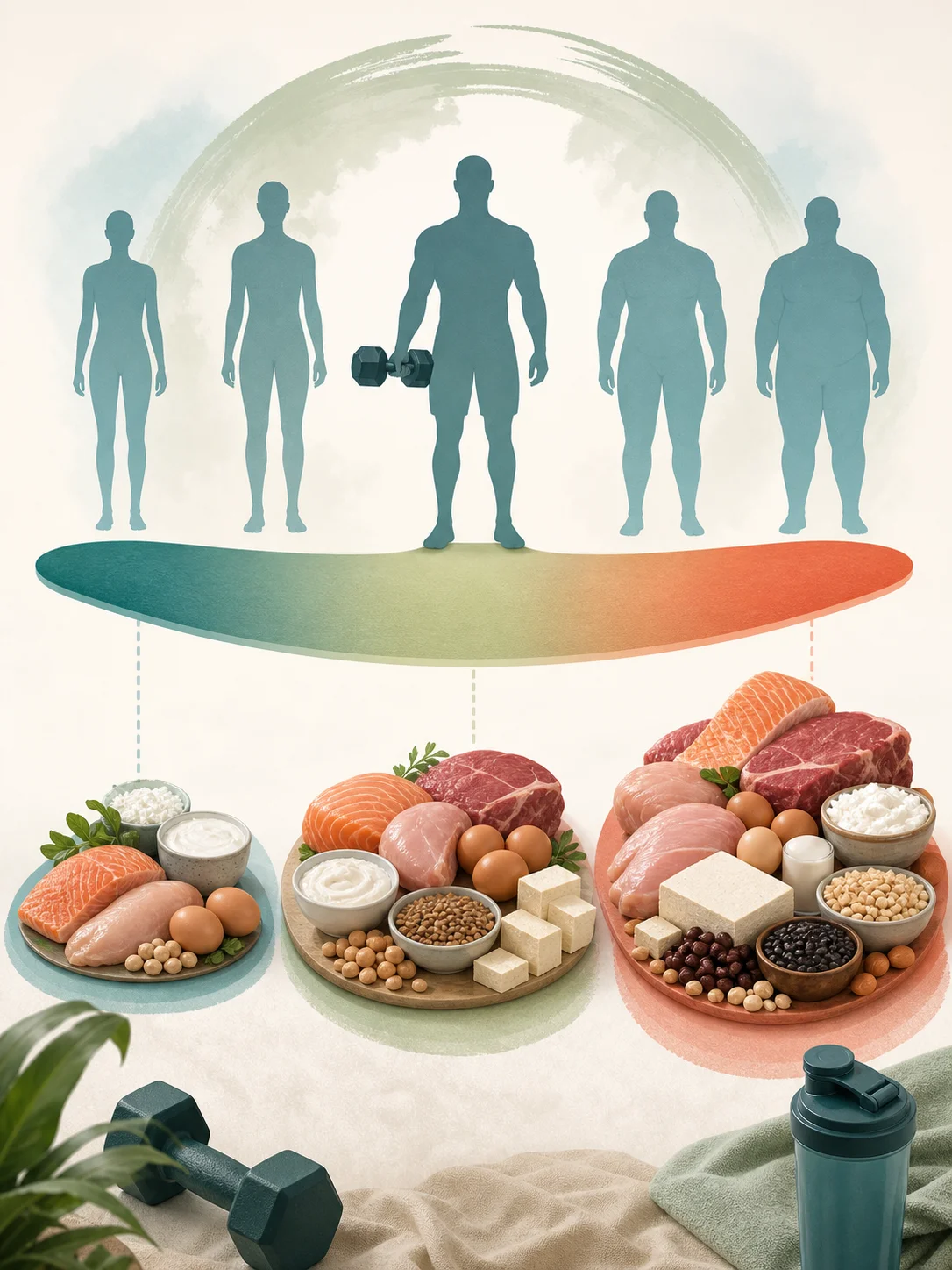
Protein needs can also shift with age, a calorie deficit, training volume, food preferences, and lean mass. Larger body weight caused mainly by body fat can make a simple total-weight calculation overshoot. In that situation, a dietitian may use goal weight, adjusted weight, or fat-free mass rather than multiplying current weight indefinitely.
How much protein per meal?
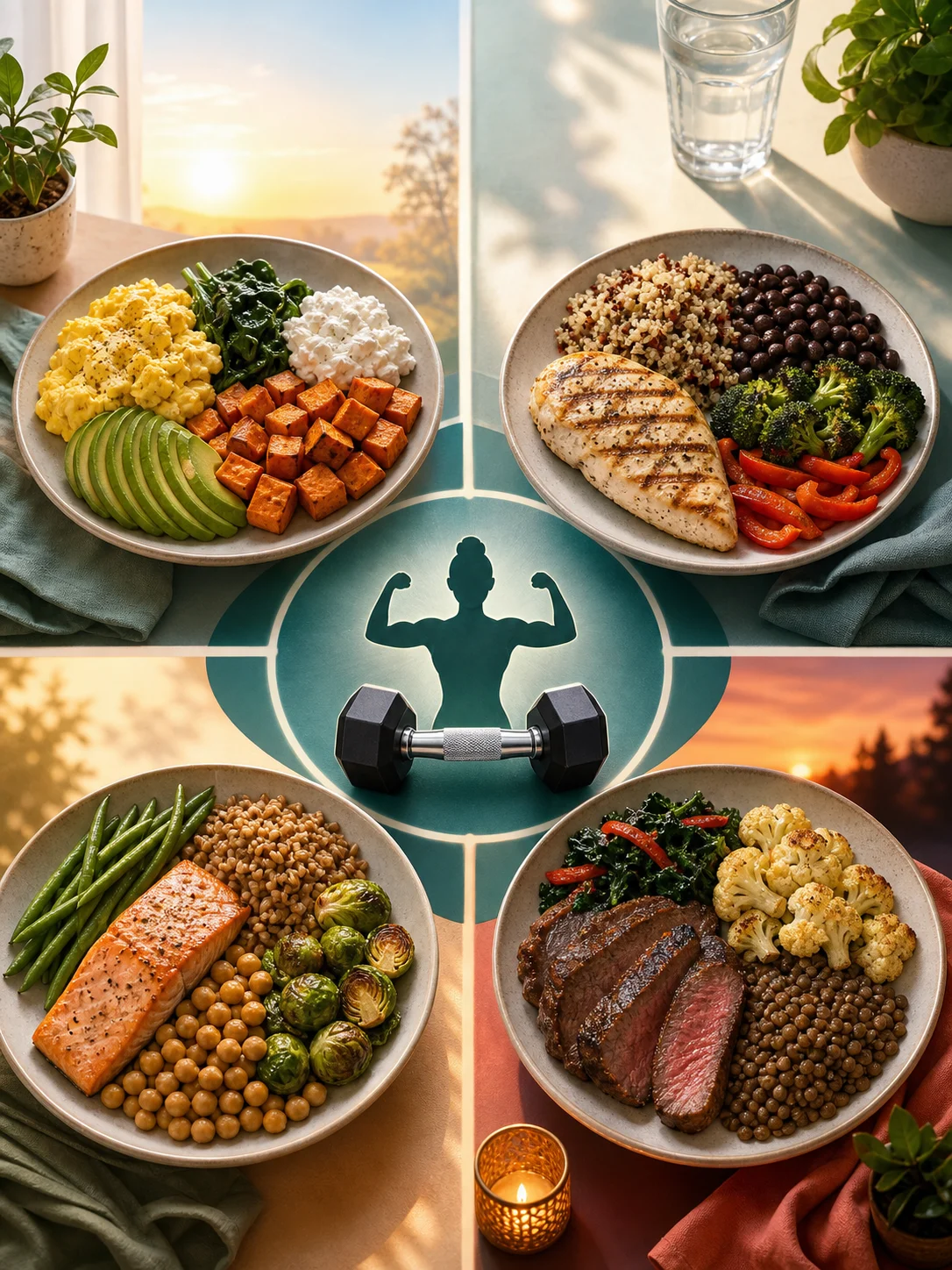
You do not need to eat the entire target at dinner. Divide it across three to five eating occasions that suit your schedule. Someone targeting 120 grams might use four meals of roughly 25 to 35 grams, leaving room for normal variation.
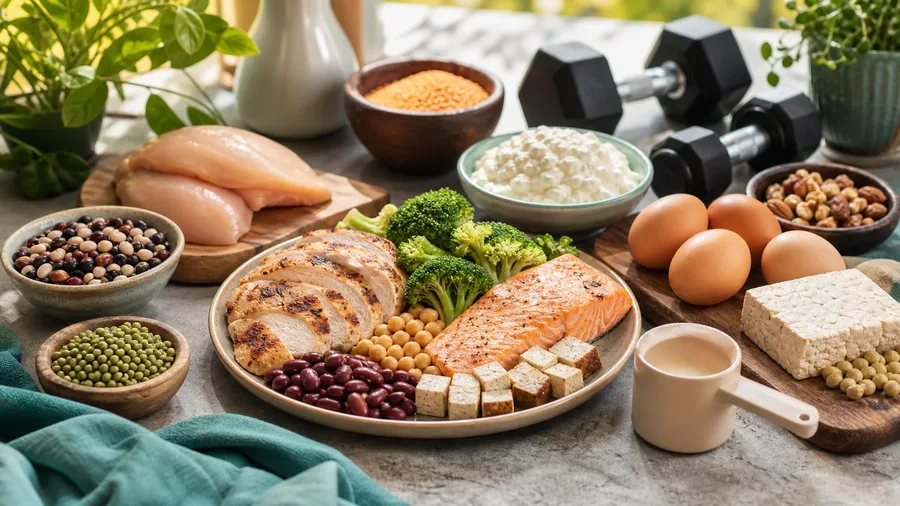
Useful options include eggs, dairy or fortified soy alternatives, fish, poultry, lean meat, tofu, tempeh, beans, lentils, seitan, and protein powders when convenient. Plant-based diets can support muscle gain; variety and adequate total intake help cover indispensable amino acids.
The so-called anabolic window is not a five-minute emergency. A protein-containing meal in the hours around training is practical, but daily consistency matters more than racing to a shaker immediately after the last repetition.
A sample 120-gram day from ordinary food
Breakfast could provide about 25 to 30 grams from eggs with Greek yogurt or a fortified soy alternative. Lunch might add 30 grams from chicken, fish, tofu, tempeh, lentils paired with grain, or another main protein food.
Dinner can provide another 30 to 35 grams. A snack or shake supplies the remainder if needed. The exact foods and amounts depend on culture, budget, allergies, and whether animal products are used.
This is not a requirement to eat four protein products. It shows why distribution is often easier than trying to find 80 grams at dinner. A normal day will vary, and that is fine.
Read labels carefully. “High protein” on the front does not guarantee a useful amount, and some protein snacks bring a large amount of added sugar or saturated fat for the grams provided.
Protein quality on plant-based diets
Plant foods can support muscle gain. Soy foods, seitan, beans, lentils, peas, nuts, seeds, and protein powders all contribute. Individual plant proteins differ in indispensable amino-acid profile and digestibility, so variety and enough total intake are useful.
You do not need to combine complementary proteins at every bite. Eating a varied diet across the day covers the issue for most people. Pairing legumes with grains is practical because it creates a complete meal and improves food variety.
Plant-based athletes may choose a target toward the higher part of a reasonable range if intake and digestibility warrant it. That decision should still leave room for carbohydrate, fats, fruits, and vegetables.
Leucine is often discussed because it helps signal muscle protein synthesis. A mixed meal with a substantial serving of high-quality protein usually supplies it. Buying a separate leucine supplement is not a substitute for sufficient food or progressive training.
Training creates the reason to use the protein
Muscle grows in response to progressively challenging resistance exercise. The program needs enough hard sets to create a stimulus, but not so much that recovery fails.
Track a few lifts. Over time, add a repetition, a small amount of load, better range of motion, or improved control. Constantly changing exercises makes progress harder to judge.
Beginners often improve strength quickly because skill and nervous-system adaptation contribute. That does not mean all early weight gain is muscle. Hydration, glycogen, food mass, and some fat gain can move the scale too.
Sleep and rest days matter. If performance stalls while soreness, fatigue, and irritability climb, more protein may not solve the problem. Review the training load and recovery first.
Calories decide whether you are gaining or cutting
Protein does not create a calorie surplus by itself. To maximize muscle gain, some trained people use a modest surplus. Beginners and people returning after a break may gain muscle around maintenance intake, particularly when training becomes more consistent.
A large surplus does not force faster muscle growth. It usually adds more body fat. Track average weight, waist, and performance and adjust slowly.
During weight loss, protein near the upper part of the range can support lean-mass retention, but resistance training remains necessary. An aggressive deficit can still reduce performance and muscle despite high protein.
Carbohydrate supports hard training, and dietary fat supports health and food enjoyment. Do not crowd either out to make room for an arbitrary protein milestone.
Do you need protein powder?
No. Powder is concentrated food that can make a target convenient. It is useful when appetite is low after training, time is short, or a vegetarian or vegan diet needs an easy addition.
Whey, casein, soy, pea blends, and other products can work. Choose based on tolerance, diet, cost, and third-party testing when sport rules or contamination risk matter.
A scoop does not repair a weak diet. Check serving size, protein grams, added sugar, stimulants, and proprietary mixtures. Products marketed as mass gainers may contain far more calories than expected.
If dairy causes symptoms, lactose-free whey isolate or a plant option may suit better. Anyone with a food allergy needs to check manufacturing and cross-contact information.
Protein is only one part of muscle gain
Progressive resistance training, sufficient calories, carbohydrate to support hard sessions, sleep, and recovery all matter. If total calories are too low, some dietary protein may be used for energy and training quality can suffer.
Our macros-for-weight-loss guide explains how protein fits beside carbohydrate and fat. If you are intentionally gaining weight, make the calorie surplus modest and track waist, strength, and performance rather than assuming every added pound is muscle.
When more is not automatically better
Once protein is sufficient, extra grams do not replace progressive training or sleep. Very high targets can crowd out fiber-rich carbohydrates, fruits, vegetables, and unsaturated fats. They may also add expense without a measurable advantage.
Protein marketing often turns an adequate target into an unlimited one. The useful distinction is between correcting a low intake and continually increasing an amount that already supports training.
People with kidney disease, some metabolic disorders, a history of disordered eating, or clinician-directed restrictions need individualized advice. Sudden swelling, persistent nausea, unexplained weakness, or major changes in urination deserve medical evaluation rather than a calculator adjustment.
Kidney disease and other special cases
Healthy kidneys and chronic kidney disease are different contexts. Someone with reduced eGFR or urine albumin may need a protein target based on disease stage, nutrition status, diabetes, medicine, and whether dialysis is used.
Pregnancy, adolescence, recovery from surgery, and older age also need more context than a gym calculator provides. Older adults may benefit from careful meal distribution and resistance exercise, while illness or poor appetite may require a dietitian’s help to reach enough total energy.
If a clinician has given you a protein restriction, do not override it with a sports range. If you have an unexplained low eGFR, review our eGFR guide and speak with the care team before making a large increase.
People with a history of an eating disorder may find gram targets and tracking triggering. A structured meal pattern designed with a dietitian can support training without daily counting.
How to adjust after four to eight weeks
Check whether training is progressing, body weight and waist are moving as intended, meals are comfortable, and digestion is normal. A target that causes constant bloating or displaces ordinary food needs adjustment even if the arithmetic looked good.
If progress is absent, confirm that the training program is progressive and total calories fit the goal. Then check average protein intake. Do not add 50 grams automatically.
If the current intake sits at the low end, increasing by 10 to 20 grams may be enough. If it already sits near the upper end, put attention into training, sleep, and overall energy.
Keep the plan simple enough to survive travel, work, and social meals. A useful protein target organizes the diet; it does not require perfect compliance.
How to test whether your target is working
Hold the plan steady long enough to observe a trend. Track training performance, repetitions or load, recovery, body-weight trend, waist, and how consistently you reach the target. Day-to-day smart-scale muscle readings are too noisy to prove new tissue growth.
If strength and recovery are improving, intake is comfortable, and the rest of the diet remains balanced, the target may be doing its job. If progress stalls, review training design, total calories, sleep, and adherence before assuming protein is the only missing variable.
Build the plan around training
Start with a reasonable range, spread it across meals, and pair it with progressive resistance training. The calculator gives you a planning number; your health context, training progress, and dietary quality determine whether that number is useful.
Evidence and review
How this article was checked
Protein ranges checked against sports-nutrition position statements and dietary reference standards. This article has not been independently medically reviewed. Evidence last reviewed Aug 4, 2026.
- International Society of Sports Nutrition - Protein and Exercise - Position stand on daily protein intake, protein quality, timing, and resistance exercise.
- Academy of Nutrition and Dietetics, Dietitians of Canada, and ACSM - Nutrition and Athletic Performance - Joint guidance on nutrition for training, performance, and recovery.
- National Academies - Dietary Reference Intakes for Macronutrients - Dietary reference intake framework for protein and other macronutrients.
FAQ
Frequently asked
Answers
Frequently asked questions
How much protein do I need to gain muscle?
A practical range for many healthy adults doing regular resistance training is about 1.4 to 2.0 grams per kilogram of body weight per day. Your total calories, training, body composition, and health may justify a different target.
Is 1 gram of protein per pound necessary?
It is an easy upper-end rule, but it is not necessary for everyone. One gram per pound is about 2.2 grams per kilogram, above the range that covers many recreational lifters.
Does protein timing matter?
Daily intake and consistent training matter most. Spreading protein across three to five meals can make the target easier to reach and provide repeated opportunities for muscle protein synthesis.
Can too much protein harm the kidneys?
Higher-protein diets are handled differently in healthy people than in people with kidney disease. If you have reduced kidney function, diabetes with kidney involvement, or another relevant condition, ask your clinician or dietitian before increasing protein substantially.
Share this article