3 natural ways to calm heart palpitations
Sheenam Midha · Health writer
On this page
TL;DR: Heart palpitations often come from stress and anxiety. This short guide covers three natural ways to calm heart palpitations: slow deep breathing that gently resets the vagus nerve, a glass of cold water (or cold water splashed on the face), and a cup of lemon balm tea. It also lists the warning signs that mean it’s time to stop the home remedies and call a cardiologist.
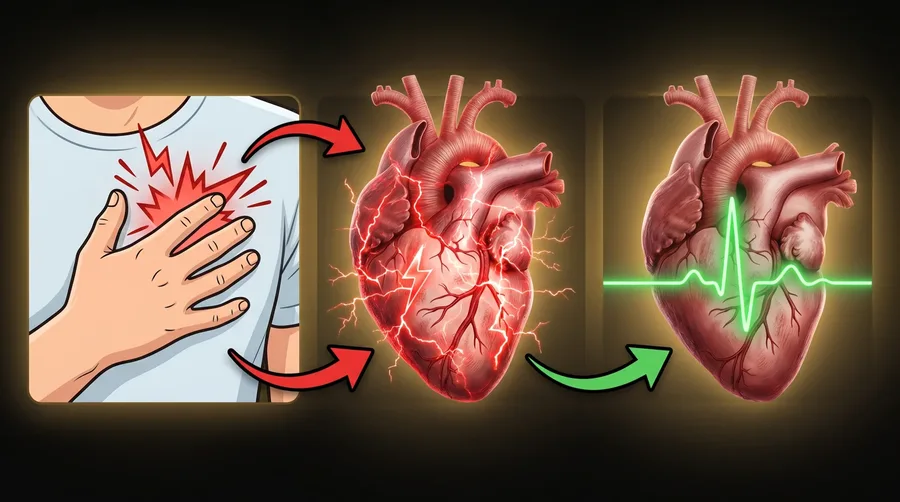
Have you ever felt your heart pounding against the chest? Did you get red in the face when it happened? These signs can suggest you have heart palpitations, that fluttering, racing, or skipping feeling people often describe as a flip-flop in the chest. If you want to calm heart palpitations naturally, the good news is that the simplest tools are free and you already carry them with you. Pregnant women and people who live with panic attacks are more prone to this problem, so you are far from alone.
Today you will learn 3 ways of regulating your palpitations naturally and safely.
What causes heart palpitations in the first place?
An irregular or pounding heart rate can have many causes, but the main ones are stress and anxiety. When you feel anxious, your body flips into fight-or-flight mode, and your heart speeds up to match. Palpitations are often followed by shortness of breath, dizziness, blurry vision, chest pain, sweating, nausea, vomiting, and even fainting. Caffeine, alcohol, dehydration, low magnesium, and sometimes an overactive thyroid can stir them up too. That’s why calming the nervous system is usually where the home fixes start.
It helps to know what is going on under the hood. Your heartbeat is steadied by the parasympathetic side of your nervous system, the “rest and digest” side, and the main switch for it is the vagus nerve. When stress floods you, that calming signal gets drowned out. The three steps below all work by turning it back up, gently and naturally.
1. Deep breathing to stop palpitations caused by anxiety
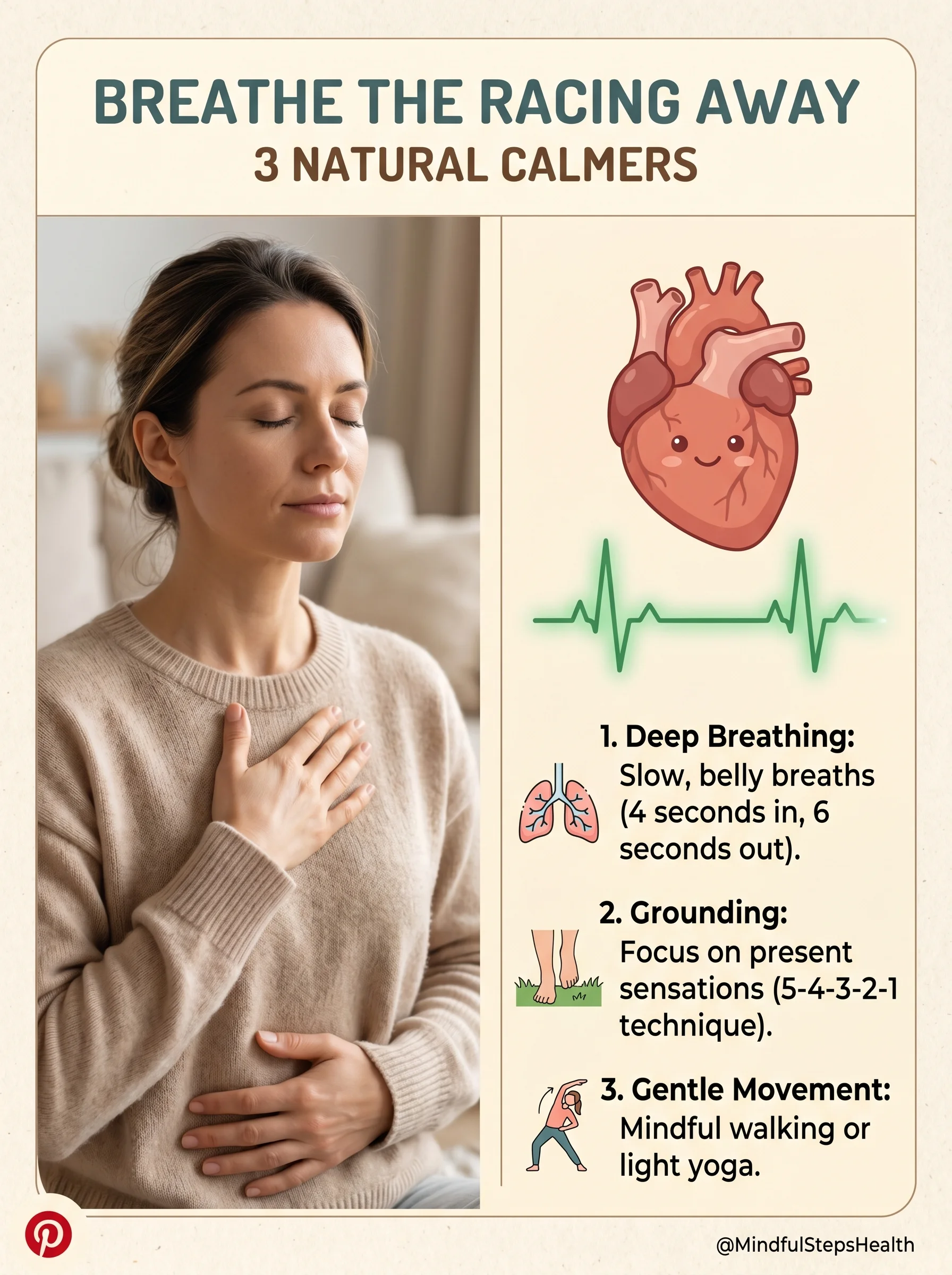
The best way of controlling heart palpitations is through deep breathing. It helps alleviate anxiety and normalizes heartbeats. Deep breaths also relax the body and quietly nudge the vagus nerve back into charge.
Sit comfortably with crossed legs. Slowly and deeply inhale through your nose, allowing your abdomen to expand with each breath. You can put one hand over your belly and the other over the heart while doing this technique. Then slowly exhale through your mouth. Repeat for a few minutes until your heart rate slows down.
One small tweak makes it work even faster: make the exhale longer than the inhale. A long, slow breath out is what tells your body the danger has passed, which is why a slow exhale settles a racing heart so quickly. Some people like the “physiological sigh,” two quick inhales through the nose followed by one long exhale through the mouth, repeated a few times. If breath and calm are your kind of medicine, a few drops of the right oil can help too, and these essential oils for better sleep and less anxiety pair nicely with a slow-breathing wind-down.
2. A glass of cold water (and cold water on the face)
Do you have a habit of drinking water? Not taking in liquids regularly can leave you dehydrated, which is one of the quieter triggers of irregular heartbeats. Try drinking a glass of cold water to help restore your rhythm. Drinking water also reduces stress, anxiety, and dizziness.
And here’s the trick worth remembering: splashing cold water on your face also works for heart palpitations and panic attacks. The cold touch on your face triggers what’s called the dive reflex, a built-in response that stimulates the vagus nerve and slows the heart within seconds. It costs nothing, it’s gentle, and you can do it at the kitchen sink.
3. Lemon balm tea
Besides these tricks, lemon balm tea also helps in cases of palpitation. The herb acts as a gentle tranquilizer, easing anxiety so the heart can settle. Think of it as support, not a cure, and never as a replacement for any medicine your doctor has prescribed.
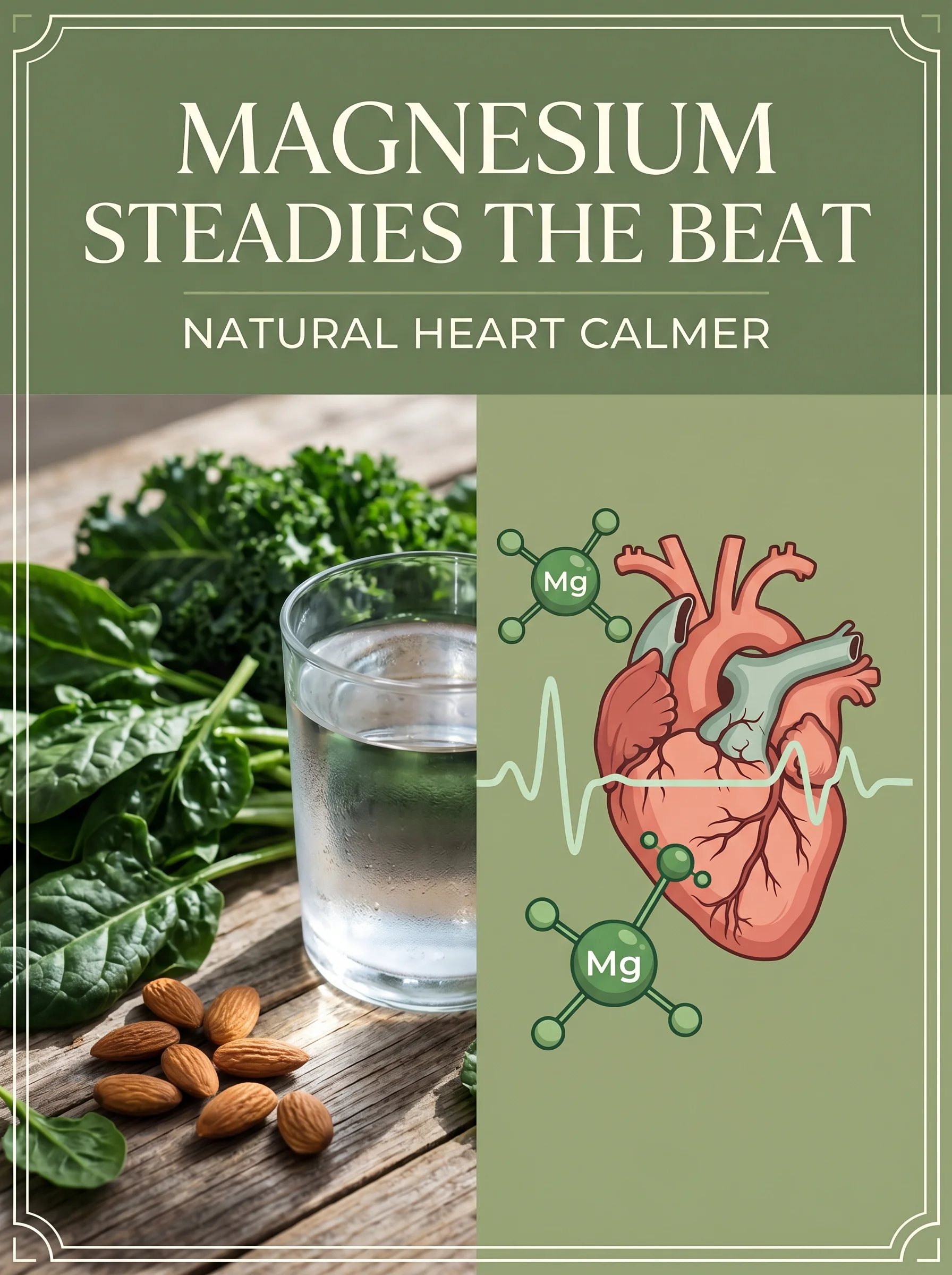
To make the tea, add one teaspoon of lemon balm to a cup of hot water. Cover and let it infuse for 5 to 10 minutes. Drink a cup of this tea whenever you have heart palpitations. While you sip, it’s worth knowing that magnesium-rich foods (leafy greens, nuts, seeds, beans) help steady the heart’s electrical rhythm over the longer term, so they’re a kind partner to the tea.
How do I reset my vagus nerve to calm a racing heart?
You don’t need a gadget or a supplement to do it. Resetting the vagus nerve simply means switching your body from “fight or flight” back to “rest and digest,” and all three steps above do exactly that. Slow breathing with a long exhale, cold water on the face, and a quiet cup of tea are the free, low-risk version of every viral “vagus nerve reset” you’ve seen. You can stack them: splash your face, sit down, breathe slowly, then sip.
Be a little wary of videos that promise a single miracle remedy and then funnel you toward a supplement to buy. The techniques here are gentle, evidence-friendly, and cost nothing. Building daily habits that keep your heart healthy does far more over time than any one product.
Can a thyroid problem cause heart palpitations?
Yes, it can, and this is one people miss. An overactive thyroid speeds up the whole body, including the heart, so palpitations that won’t settle, especially alongside weight loss, shakiness, or feeling hot and wired, are worth checking out. People who’ve struggled with palpitations for months sometimes discover an out-of-whack thyroid was behind it all along. If yours are frequent and stubborn, ask your doctor for a full thyroid panel, not just one or two markers, so nothing gets missed.
How to put it all together
Use these tips when you feel palpitations starting, and if you can make lemon balm tea, do it. These little tricks combined with the tea will bring more peace and calm to your heart.
- Sit with crossed legs, inhale slowly through your nose, and exhale even more slowly through your mouth until your heart rate slows down.
- Drink a glass of cold water, or splash cold water on your face to trigger the calming dive reflex.
- Steep one teaspoon of lemon balm in a cup of hot water, covered, for 5 to 10 minutes, then sip.
When are palpitations dangerous, and when should you call a doctor?
Most palpitations are harmless and pass on their own. But some are not, and the home remedies should never bury the red flags. Go to emergency care or call a cardiologist if your palpitations take longer than an hour to disappear, worsen with time, or come with dizziness, chest tightness, chest pain, fainting, or trouble breathing. Those last few, palpitations with chest pain, fainting, or breathlessness, are an emergency, not a “calm it naturally” moment.
Talk to your doctor if you feel these symptoms, especially if they worsen or happen frequently, or if you have a family history of heart disease. It helps to know which sensations are usually fine and which are not, and this guide to harmless symptoms that can signal heart issues and this list of warning signs your heart may be in serious danger can help you tell the difference.
The takeaway
Stress and anxiety are the main drivers behind most palpitations, and three simple tools help in the moment: deep breathing with a long exhale, cold water, and lemon balm tea. Use them together, not alone, and treat them as gentle support rather than a replacement for medical care. Watch the red flags above, and get a thyroid check if yours keep coming back. If quiet, practical tips like this are your speed, the newsletter lands once a week, every Friday.
Frequently asked questions
What causes heart palpitations?
An irregular or pounding heart rate can have many causes, but the main ones are stress and anxiety. Common triggers include caffeine, alcohol, dehydration, low magnesium, and sometimes an overactive thyroid. Palpitations are often followed by shortness of breath, dizziness, blurry vision, chest pain, sweating, or nausea.
What do heart palpitations feel like?
Heart palpitations feel like your heart is pounding, racing, fluttering, or skipping a beat. Many people describe a flip-flop sensation in the chest, or a sudden awareness of their own heartbeat. You might feel it in your throat or neck too. Most are brief and harmless, though they can feel alarming.
How do you actually do the breathing technique?
Sit comfortably with crossed legs. Slowly and deeply inhale through your nose, letting your abdomen expand. Put one hand over your belly and the other over your heart. Then exhale slowly through your mouth, making the out-breath longer than the in-breath. Repeat for a few minutes until your heart rate slows down.
How do I stop heart palpitations caused by anxiety?
Calm the nervous system first. Splash cold water on your face to trigger the dive reflex, then sit and breathe slowly with a long exhale to switch on the vagus nerve. A cup of lemon balm tea adds gentle support. These free tools steady an anxious, racing heart without any supplement to buy.
How do you make the lemon balm tea?
Add one teaspoon of lemon balm to a cup of hot water. Cover and let it infuse for 5 to 10 minutes, then sip. Drink a cup whenever you have palpitations. Lemon balm acts as a gentle tranquilizer that eases anxiety, so treat it as supportive, never as a replacement for prescribed medicine.
When are palpitations dangerous, and when should you see a doctor?
Go to emergency care or call a cardiologist if palpitations last longer than an hour, worsen over time, or come with dizziness, chest tightness, chest pain, fainting, or trouble breathing. Palpitations with chest pain, fainting, or breathlessness are an emergency. See your doctor too if they’re frequent or you have a family history of heart disease.
Share this article