7 harmless symptoms that can signal heart issues
Sheenam Midha · Health writer
On this page
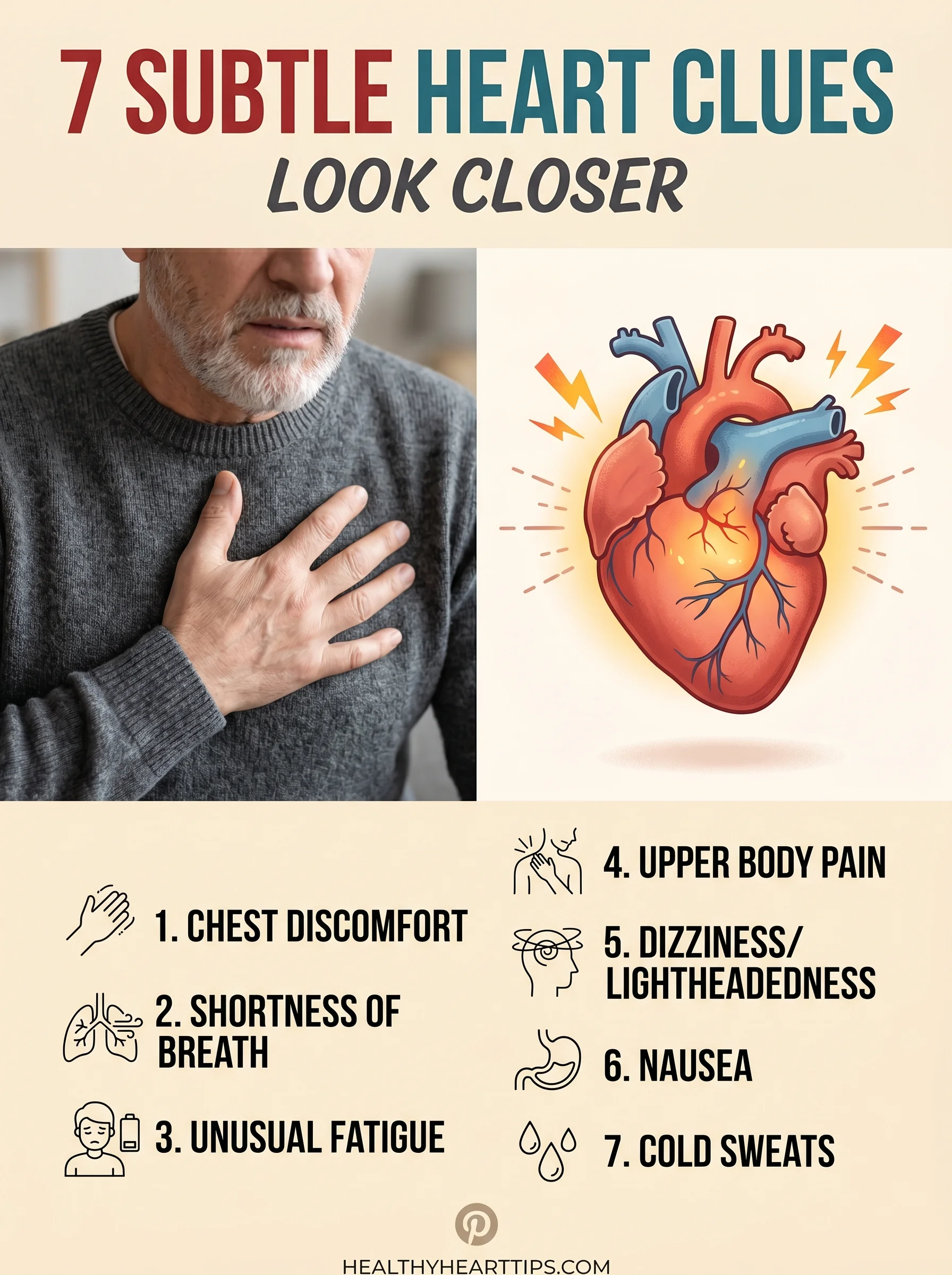
TL;DR: Some of the quietest heart attack warning signs look harmless at first: swollen legs, skin rashes, unexplained arm pain, loss of appetite, fainting spells, high anxiety, and a persistent cough. Pay attention when more than one shows up at the same time, and check in with a doctor rather than wait them out.
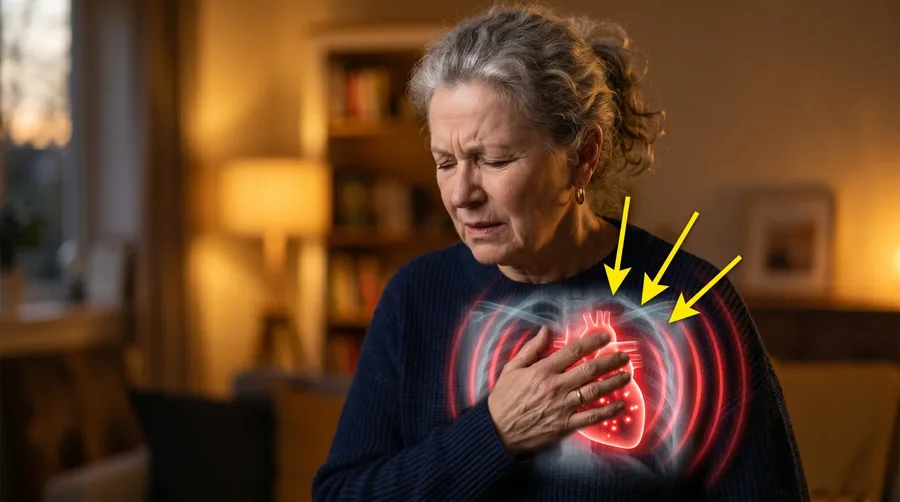
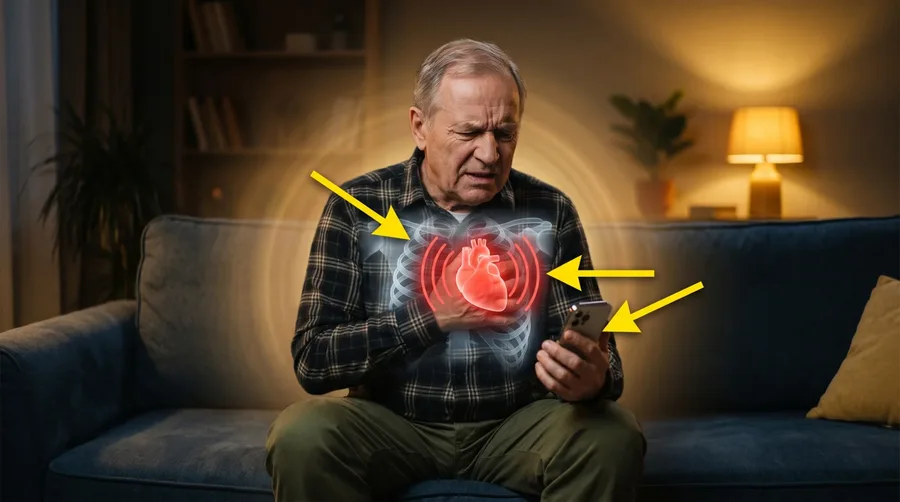
According to the Centers for Disease Control and Prevention of the USA, hundreds of thousands of Americans die every year from heart issues. Both men and women suffer from heart problems that are tied to lifestyle habits. The tricky part is that the body often sends early heart attack warning signs that we end up overlooking, because they feel too small or too ordinary to worry about.
These are seven symptoms you should pay attention to, to protect your heart. None of them mean a heart attack on their own, but together they are worth a closer look. If you want the other side of the coin, our guide to daily habits that keep your heart healthy is a gentle place to start.
1. Swollen legs, feet, and ankles
When the heart can’t pump well, fluid from the blood vessels leaks into the surrounding tissues. The legs and feet are the most affected areas because of gravity. This is called peripheral edema.
Many people with swollen ankles do not have heart disease at all. But it is common among cardiac patients, and it is worth paying attention to, especially if the swelling is new, in both legs, or comes with breathlessness.
2. Uncommon spots and rashes on the skin
Studies published in the Journal of Allergy and Clinical Immunology and in the Journal of the American College of Cardiology have linked eczema and shingles to a higher risk of heart disease.
In that research, people with eczema were more likely to also have high blood pressure and high cholesterol, and people with shingles showed a meaningfully higher chance of a heart attack than those without it. The skin isn’t causing the heart trouble, but it can be a flag for the same underlying inflammation.
3. Pain in the arms
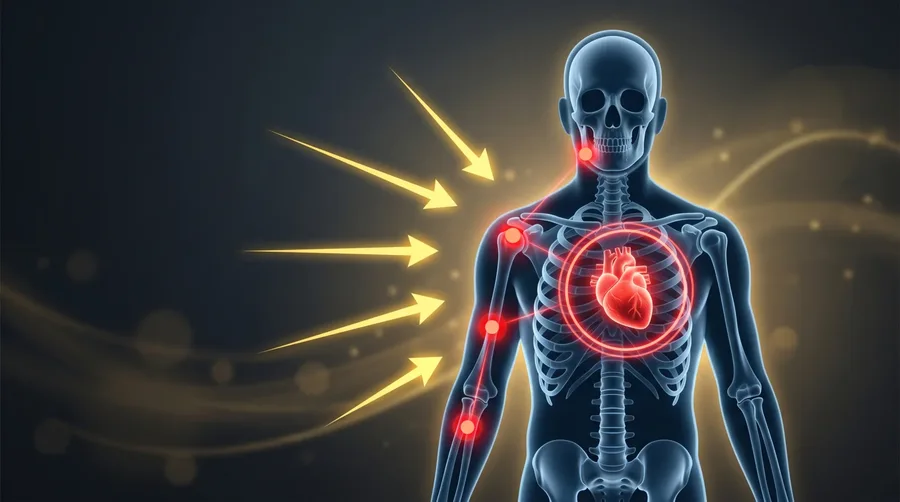
Do your arms ache for no clear reason? Many men feel pain in the left arm, while women tend to feel it in one or both arms. Some women even report pain in the elbow before a heart attack, though that is rarer.
This happens because the pain travels from the heart to the spine, where many nerves connect. The brain gets confused and reads it as arm pain, even though the source is really the heart.
4. Loss of appetite and a nauseating sensation
Research has noted that many people with heart disease feel a loss of appetite and nausea, even after eating small meals. Fluid can build up around the liver and gut, which interferes with digestion. These symptoms are often joined by abdominal discomfort.
Because nausea and indigestion feel so ordinary, they are some of the most missed heart attack warning signs, particularly in women. If they arrive together with sweating, breathlessness, or chest pressure, seek medical help right away.
5. Loss of consciousness or fainting spells
Feeling dizzy and briefly losing consciousness can happen to cardiac patients. It occurs when the heart can’t pump blood well, when an artery is obstructed, or when a valve is too narrow to let enough blood through.
If you faint and also have shortness of breath, treat it as urgent and get your heart checked. Repeated fainting is never something to shrug off.
6. A high level of anxiety
Many studies suggest that people who live with extreme anxiety from early on are more prone to heart disease. Anxiety can come from a stressful lifestyle or from conditions like panic disorder and phobic anxiety.
Anxiety also leaves marks on the heart itself: a racing pulse (tachycardia), higher blood pressure, and changes in heart rhythm. If your heart often pounds or flutters, our calm, practical notes on natural ways to settle heart palpitations may help in the moment.
7. A frequent and persistent cough
A cough has many harmless causes, but it can also point to cardiovascular disease. A persistent cough that brings up pink, frothy, or blood-tinged fluid may be a sign of heart failure. Sudden shortness of breath can signal heart trouble too.
What are the early heart attack warning signs in women?
This is one of the most under-recognized parts of heart health. The American Heart Association keeps pointing out that women’s heart attack warning signs are often atypical and under-treated.
Instead of the classic chest-clutch, women are more likely to feel jaw, neck, back, or arm pain, unusual fatigue, nausea, lightheadedness, or shortness of breath. Because these signs feel vague, they get brushed off as stress or a bad night’s sleep. If something feels off and lingers, it deserves a check rather than a wait-and-see. Our look at the warning signs your body sends before something goes wrong walks through more of these quiet signals.
Are there heart attack warning signs weeks or a month before?
Viral videos love to promise a tidy countdown of symptoms that appear weeks before a heart attack. The honest answer is gentler and a little less dramatic: a true heart attack is often sudden.
What can show up earlier are risk signals, like new breathlessness on the stairs, unusual fatigue, swelling, or chest discomfort that comes and goes. These are not a reliable clock ticking down to a date. They are simply your body’s invitation to see a doctor sooner rather than later. If you are curious about the same pattern with strokes, we cover stroke warning signs that can show up a month before in a separate piece.
What should you do if you think you’re having a heart attack and you’re alone?
First, please ignore the recirculating “cough CPR” claim, the idea that coughing hard and repeatedly can keep you alive during a heart attack. The American Heart Association does not endorse this for someone alone and unmonitored, and fact-checkers have repeatedly debunked it. Forced coughing can waste the minutes that matter most.
The real steps are calmer and clearer. Call your local emergency number straight away. Unlock your front door so help can reach you. Sit or lie down somewhere safe, and chew an aspirin only if a doctor has previously told you it is right for you. We go through this in more detail in how to survive a heart attack when you’re alone.
The takeaway
These symptoms don’t show up in every person with heart disease, but they are some of the most common and most overlooked heart attack warning signs. Stay alert, don’t wait them out alone, and remember that prevention does most of the quiet, heavy lifting. If you want more small-but-useful health reads like this, the newsletter lands every Friday.
Frequently asked questions
What are the most overlooked heart attack warning signs?
The easiest to miss are the ones that feel harmless: swollen legs, nausea or loss of appetite, unusual fatigue, anxiety with a racing pulse, and a persistent cough. On their own each has innocent causes, but when two or three appear together, treat them as a reason to see a doctor rather than wait.
What does swelling in the legs have to do with the heart?
When the heart can’t pump well, fluid from the blood vessels leaks into the surrounding tissues, and the legs and feet swell most because of gravity. This is called peripheral edema. It has many harmless causes too, but new swelling in both legs, especially with breathlessness, is worth checking.
How do heart attack warning signs differ in women?
Women more often have atypical symptoms instead of crushing chest pain. Think jaw, neck, back or arm pain, nausea, unusual fatigue, lightheadedness, and shortness of breath. The American Heart Association notes these are frequently under-recognized and under-treated, so trust a symptom that feels off and lingers.
Are there real heart attack warning signs weeks before it happens?
A heart attack is often sudden, so there is no reliable countdown. What can appear earlier are risk signals like new breathlessness, fatigue, swelling, or chest discomfort that comes and goes. Treat these as a nudge to get checked, not a guaranteed timer before an event.
Does coughing help during a heart attack if you’re alone?
No. The viral “cough CPR” claim is not endorsed by the American Heart Association for someone alone and can waste vital time. Instead, call emergency services, unlock your door, sit down, and chew aspirin only if a doctor has already advised it for you.
Can a cough be a sign of heart disease?
Yes. A persistent cough that brings up pink, frothy, or blood-tinged fluid can be a sign of heart failure, and sudden shortness of breath can also point to heart issues. Most coughs are harmless, but one that lingers alongside breathlessness deserves a medical check.
Share this article