Shower mistakes that raise stroke risk after 50
Sheenam Midha · Health writer
On this page
TL;DR: After 50, your blood vessels get stiffer and slower to respond, and that changes what a “safe shower” looks like. The shower mistakes that raise stroke risk after 50 are water that’s too hot, showering after meals or blood pressure meds, sealing the bathroom into a sauna, cold plunges, and late-night hot showers. Five small changes keep them from turning into trouble, and knowing the real stroke warning signs matters even more.
Something you do every single day, maybe even multiple times a day, could be putting you at risk for a stroke or heart attack, especially if you’re over 50. And the part that surprises people most is that the shower mistakes that raise stroke risk after 50 feel completely ordinary while you’re doing them.
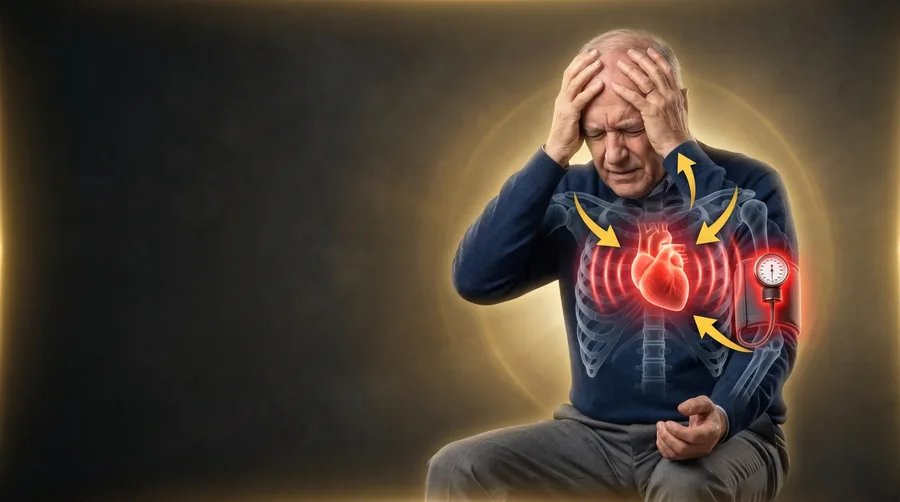
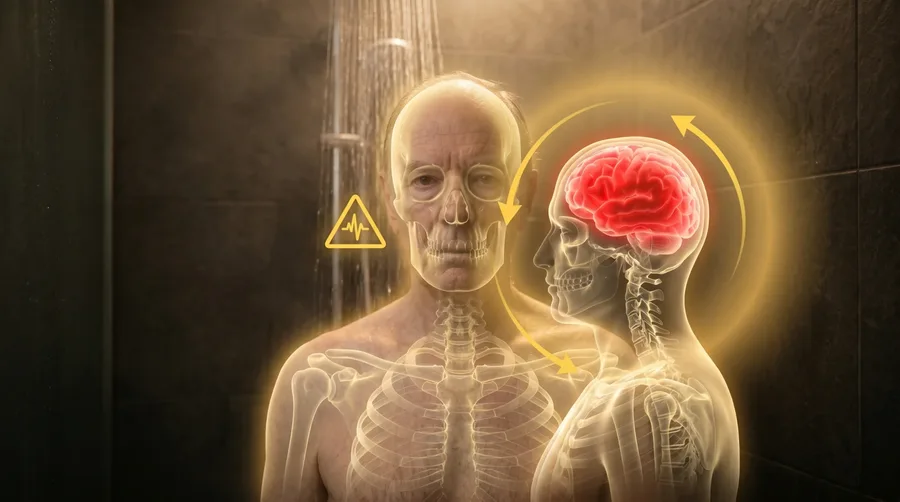
Millions of people make small mistakes when taking a shower. How can something as simple as washing up be dangerous? When you’re over 50, your body changes in ways that make certain bathing habits riskier than they used to be. Your blood vessels become stiffer, your nervous system responds more slowly, and your body’s ability to regulate blood pressure isn’t quite what it once was.
This means that water temperature, timing, and even how long you spend in the shower can nudge your blood pressure to swing more than it should. Those swings can cause dizziness, fainting, and in rare cases a cardiovascular event while you’re in the bathroom. The good news is that all of it is gentle to fix.
Why do showers get risky after 50?
After 50, blood vessels stiffen and the nervous system responds more slowly, so the body can’t snap blood pressure back when it swings. Hot water makes vessels expand and pressure drop. Cold water makes them constrict and pressure spike. Both corrections come slower as you age, which is why shower habits that felt harmless at 30 can raise stroke risk later. If you already live with high readings, our guide to hypertension warning signs your heart may be at risk is a good companion read.
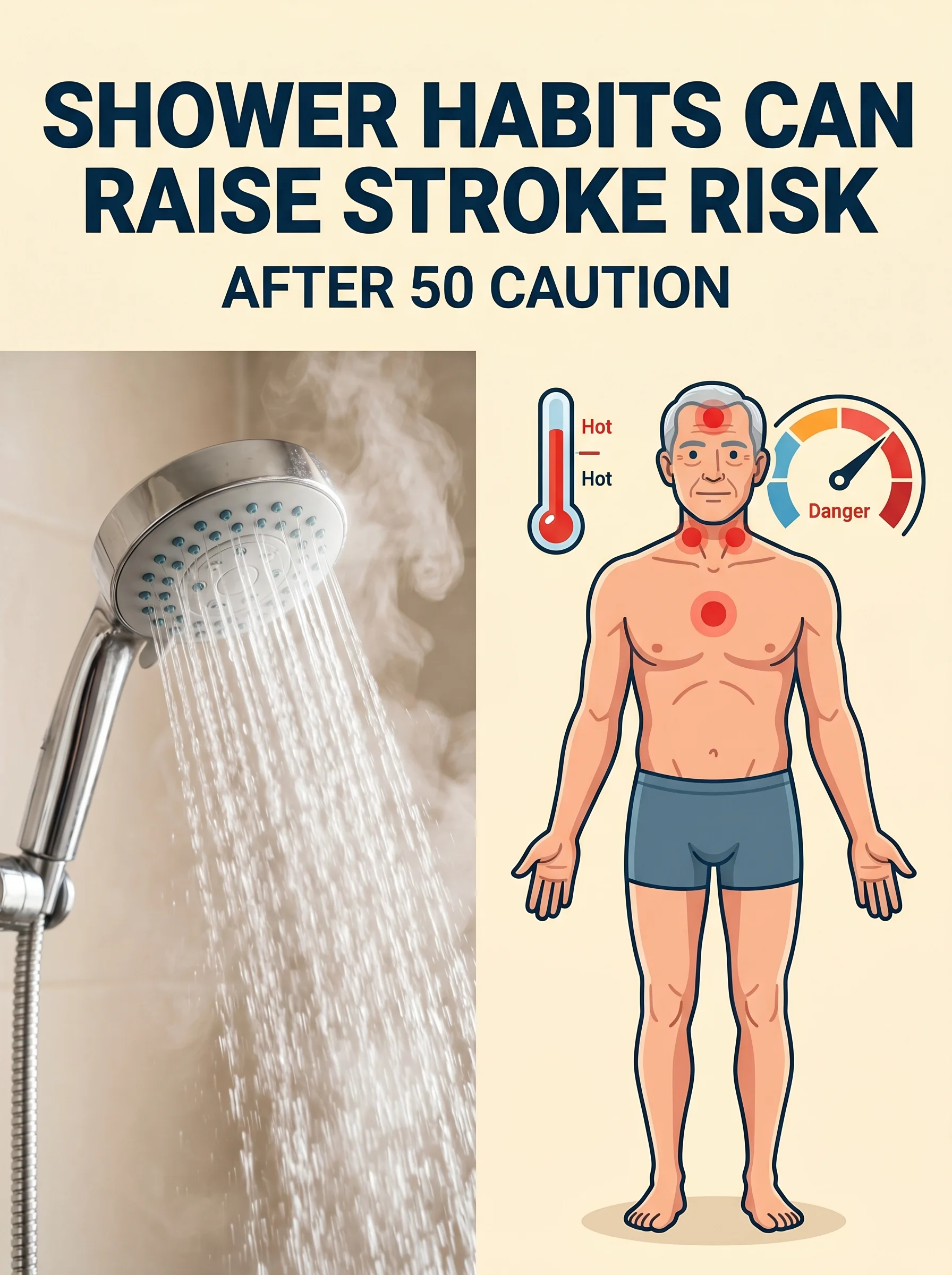
Research from Japan has linked thousands of sudden bathroom emergencies to exactly these patterns, often in older adults bathing alone. Picture feeling faint in a wet, slippery bathroom with no one nearby, and you understand why this matters. It’s worth taking seriously, and it’s also very preventable once you know what to change.
What actually happens to your blood pressure in the shower?
Think of your blood vessels like the pipes in your house. When hot water touches your skin, those pipes expand quickly. That feels wonderful and relaxing, but it also lets your blood pressure drop. When you’re younger, your body compensates almost instantly. After 50 or 60, your arteries are stiffer and the autonomic nervous system that steadies blood pressure responds much slower.
The reverse happens with cold water. When your body meets very cold water, the vessels constrict abruptly, your blood pressure shoots up, and the strain on small vessels rises, especially if you already have high blood pressure or plaque in your arteries. Eating the kind of meals and drinks in our roundup of foods to normalize your blood pressure won’t change shower physics, but steadier daily numbers give your body more room to absorb the swing.
Your digestive system plays a role too. After you eat, your body sends blood toward your digestive organs to break down food. This is called postprandial hypotension, and it’s more common as we age. Take a hot shower during that window and even more blood is pulled to your skin by the heat, leaving your brain with less. The same effect shows up right after blood pressure medication or diuretics, because those already lower your pressure on purpose.
1. Keep the water near body temperature
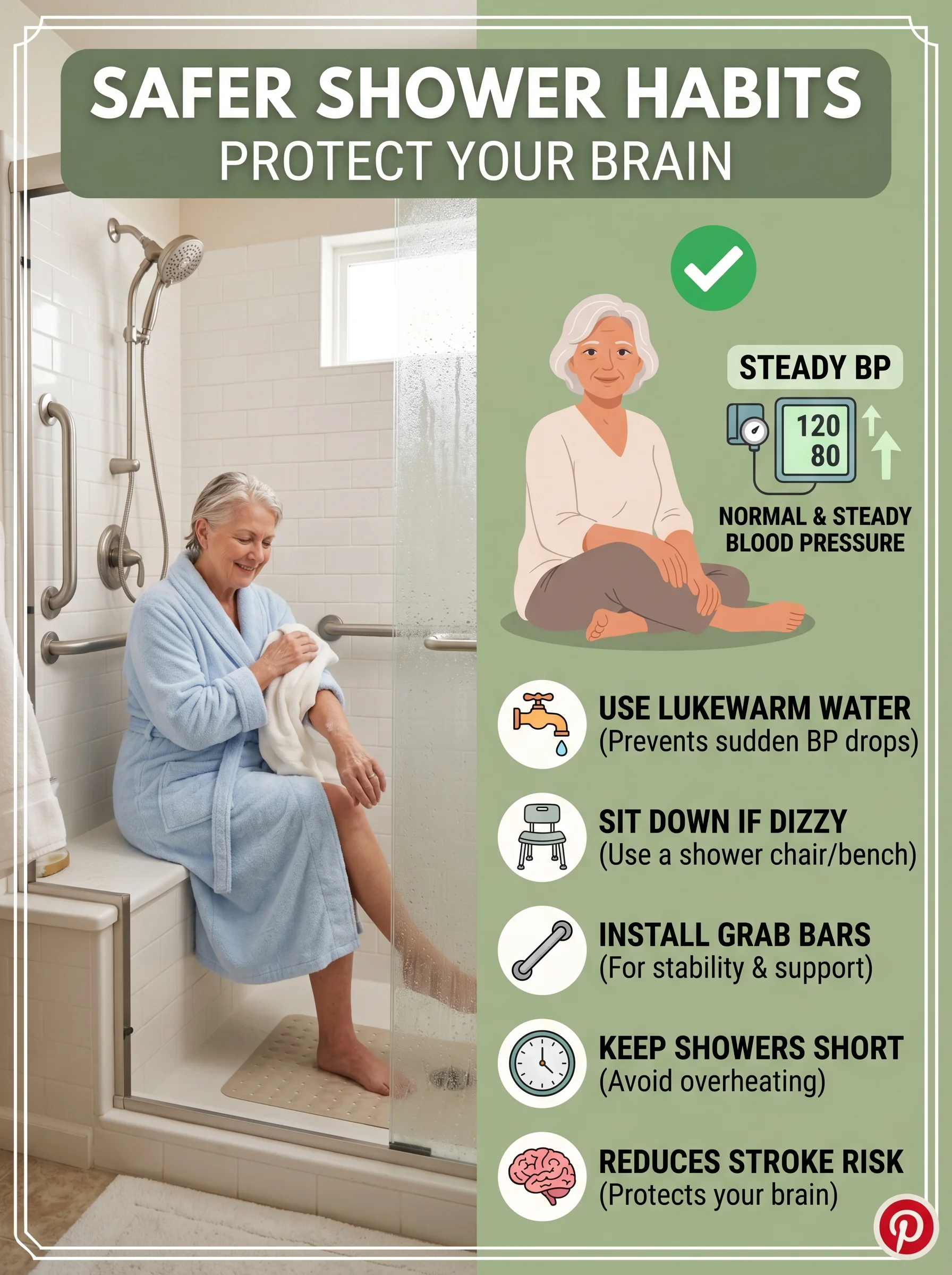
Keep your water temperature around 97 degrees F, which is about 36 degrees C, close to your body’s natural warmth. Anything above 104 degrees F or 40 degrees C is too hot. That kind of heat can irritate your skin, cause heavy vasodilation, drop your blood pressure too far, and leave you lightheaded in the bathroom. Keep your showers under 15 to 20 minutes, and step out sooner if you feel woozy.
2. Don’t shower right after meals or medication
This is one of the easiest shower mistakes to fix. Try not to shower immediately after eating or taking blood pressure medication. Wait at least an hour and a half to two hours after meals or medications, which gives your body time to settle. Never skip or delay a prescribed dose to fit a shower in, just nudge the bath a little later. And if you’d feel safer, leave the bathroom door unlocked and let someone in your home know you’re showering. Our note on how to survive a heart attack when you’re alone walks through why that small habit matters.
3. Ventilate the bathroom
Don’t turn your bathroom into a sauna by sealing every door and window. Keep the door slightly open so steam can escape. That keeps excess heat from deepening the vasodilation, and it stops the floor from turning into a slick, foggy hazard underfoot.
4. Skip thermal shock and cold plunges
Avoid thermal shock, especially if you have high blood pressure, an irregular heartbeat, plaque buildup in your arteries, or you’re over 60. Cold plunges and contrast showers are trending hard right now, but that sudden hot-to-cold switch fires up your sympathetic nervous system, releases adrenaline, spikes your blood pressure, and pushes your heart rate up fast. For an older heart, that’s a real shower mistake that can raise stroke risk. Stick with comfortable, body-temperature water instead.
5. Don’t shower right before bed
Try not to take a long, hot shower late at night right before bed. Your blood pressure naturally dips while you sleep, a healthy pattern called nocturnal dipping. Stack a hot shower on top of that natural drop, add the vasodilation from the heat, and the dip can go deeper than your body likes, especially if you take diuretics at night or live with heart trouble. Shower at least two hours before bedtime, and keep it warm or cool rather than hot.
What are the real warning signs of a stroke?
Here’s the honest part. A lot of viral content suggests you can predict a stroke a month ahead, or that wetting your head first in the shower will prevent one. The head-wetting tip is low-evidence folk advice, not medicine, so don’t lean on it. The reliable early warning is a TIA, a transient ischemic attack or “mini-stroke,” where symptoms appear and fade within minutes to hours. It can come days, weeks, or months before a larger stroke, and it always deserves a same-day call to your doctor. If that interests you, we cover it more in stroke warning signs that can show up a month before it hits.
For the moment one is happening, remember FAST. Face drooping on one side, Arm weakness, Speech that’s slurred or confused, and Time to call emergency services right away. A real stroke is sudden, and brain cells are lost by the minute, so it’s an emergency, not something to watch and wait on. Other tells worth knowing are sudden loss of balance, a severe headache out of nowhere, and sudden trouble seeing. These warning signs of stroke can look slightly different in women, sometimes showing up as sudden fatigue, confusion, or nausea rather than the classic signs.
The takeaway
Five simple changes can lower the everyday risk: keep the water close to body temperature, give your body a couple of hours after meals or meds, let some steam escape, skip the hot-to-cold trend, and shower well before bed rather than right before it. Pair those with steady daily habits to keep your heart healthy and a firm memory of FAST, and you’ve covered both the shower and the bigger picture. If this was useful, the newsletter lands in your inbox every Friday with more of the same.
Frequently asked questions
What water temperature is safest for a shower after 50?
Keep your water temperature around 97 degrees F, about 36 degrees C, which is close to your body’s natural warmth. Anything above 104 degrees F or 40 degrees C is too hot and can drop your blood pressure too far. Keep showers under 15 to 20 minutes.
How long should I wait after eating or taking blood pressure medication before showering?
Wait at least an hour and a half to two hours after meals or medications before you shower. This gives your body time to stabilize before hot water lowers your blood pressure further. Never skip a prescribed dose to make room for a shower, simply shower a little later.
Are cold plunges and contrast showers safe after 60?
Be cautious, especially if you have high blood pressure, an irregular heartbeat, plaque buildup in your arteries, or you’re over 60. The sudden switch from hot to cold water spikes blood pressure and heart rate and can strain an older heart. Comfortable, body-temperature water is the safer choice.
Why is a hot shower right before bed risky?
Your blood pressure naturally drops when you sleep, a pattern called nocturnal dipping. A long hot shower right before bed stacks that drop on top of the one from hot water and vasodilation. Shower at least two hours before bedtime and keep it warm or cool, not hot.
Are there warning signs days or a month before a stroke?
Sometimes. A TIA, or mini-stroke, can act as a genuine early warning, with symptoms that come and go within minutes to hours, possibly days to months before a larger stroke. Treat any TIA as urgent and call your doctor the same day. A full stroke itself, though, is sudden and can’t be reliably predicted weeks ahead.
What is the FAST test for spotting a stroke?
FAST stands for Face drooping on one side, Arm weakness, Speech that’s slurred or confused, and Time to call emergency services immediately. If you notice any one of these, even briefly, call for help right away. A stroke loses brain cells by the minute, so fast action protects the most function.
Share this article