
Benefits of aronia berries: the little chokeberry that earns its superfood stripes
Sheenam Midha · Health writer

On this page
TL;DR: The benefits of aronia berries, also called chokeberries, come from one of the most antioxidant-rich fruits we know of. The standout benefits of aronia berries cover heart and circulation, brain protection, eye health, digestion, cold and flu defense, blood sugar balance, and urinary tract support. Eat them raw, dried, or powdered, or in jams, smoothies, juices, syrups, and teas. Many of the strongest results so far come from lab and animal work, so think of aronia as a supportive everyday food, not a cure.
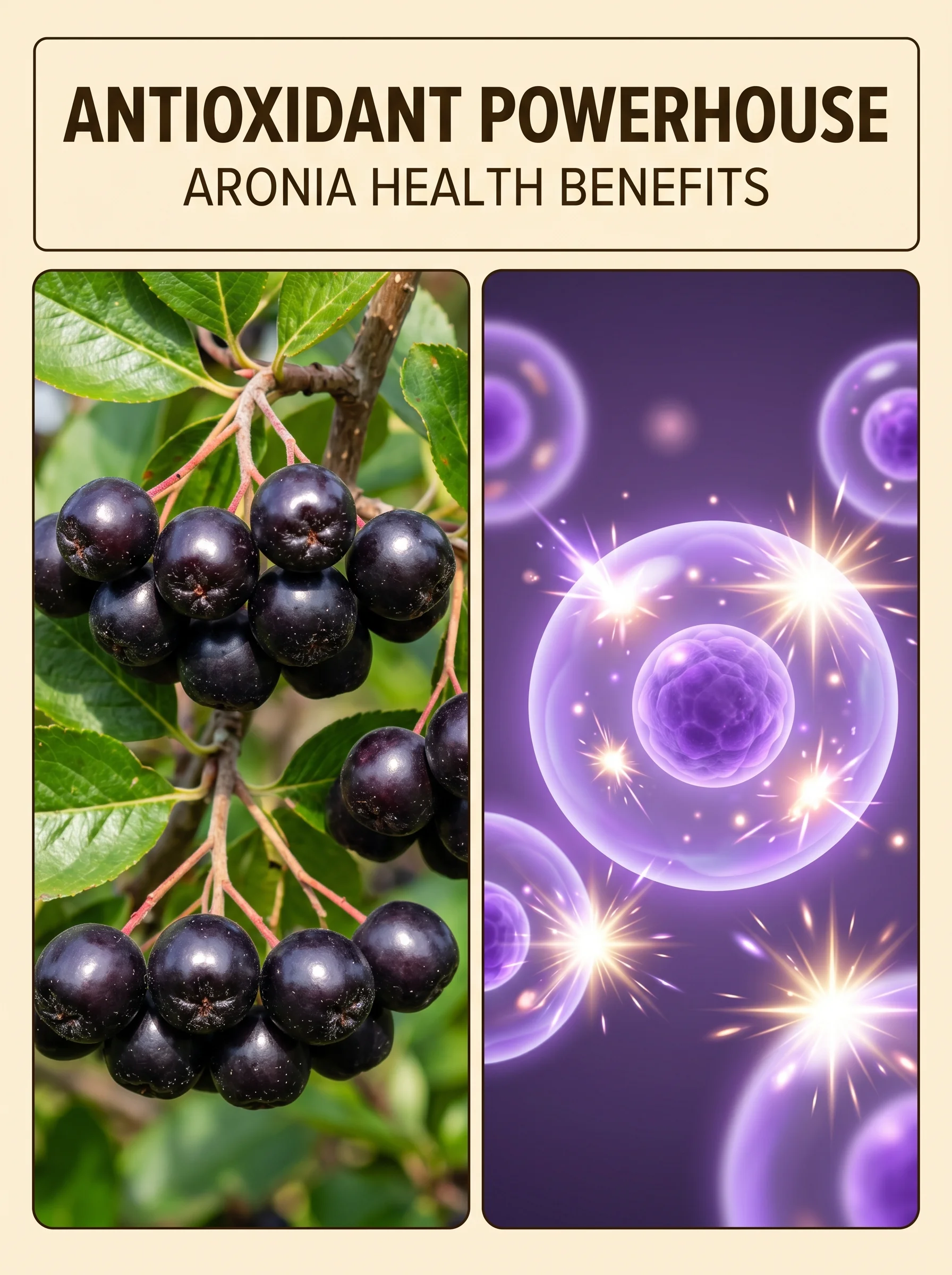
Have you ever heard of aronia? It’s a little fruit that resembles the acai berry, and once you start reading the research, the benefits of aronia berries pile up fast. Chokeberries are packed with anthocyanins, the same deep-purple antioxidants that give them their color. Early studies link them to better heart health, steadier blood sugar, and calmer inflammation. It’s worth saying upfront, kindly: a lot of that evidence is still from lab and animal studies, so we’ll keep things honest as we go.
Native to North America, chokeberry is a healthy berry filled with nutrients and powerful antioxidants. Aronia is known for its astringent, mouth-puckering flavor and grows in woodlands and swamps. It usually comes in three varieties: red, purple, and black. The plants can be grown for food or simply for their good looks in the garden.
What are aronia berries good for?
In short, aronia berries are good for your heart, brain, eyes, gut, immune system, blood sugar, and bladder, mostly because they are so rich in antioxidants. Think of them as a quiet daily helper rather than a quick fix. Below, we walk through each of the main aronia berries benefits one at a time, so you can see where the research is strong and where it’s still early.
How do you actually eat aronia berries?
Aronia berries can be added to bread, cakes, and other baked goods, or used as a topping for ice cream. Chokeberries also turn up in wines, juices, syrups, and teas. You can use the berries raw or as a powder to make jams, purees, and homemade syrups, or stir them into smoothies and juices with other fruits like bananas and strawberries. Because they’re so tart on their own, pairing them with sweeter fruit makes them much easier to enjoy.
If raw berries are hard to find, dried aronia berries benefits are much the same, and they keep for months. A small handful of dried berries, or a teaspoon of powder, blends nicely into oatmeal or yogurt. This is the same gentle approach we suggest with other tart fruits, like the way apples support heart health, cholesterol, and triglycerides when you eat them regularly.
How do aronia berries improve cardiovascular health?
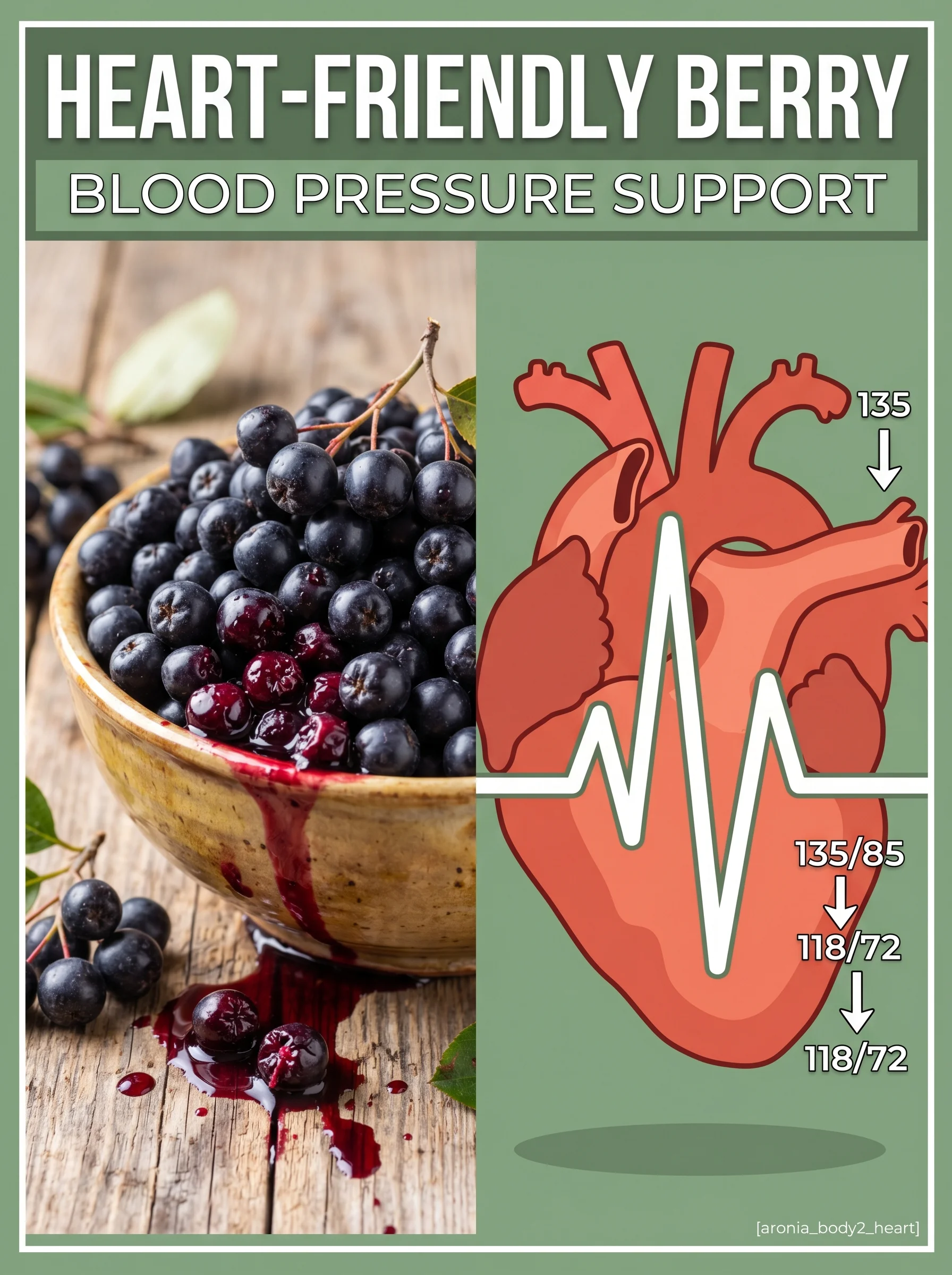
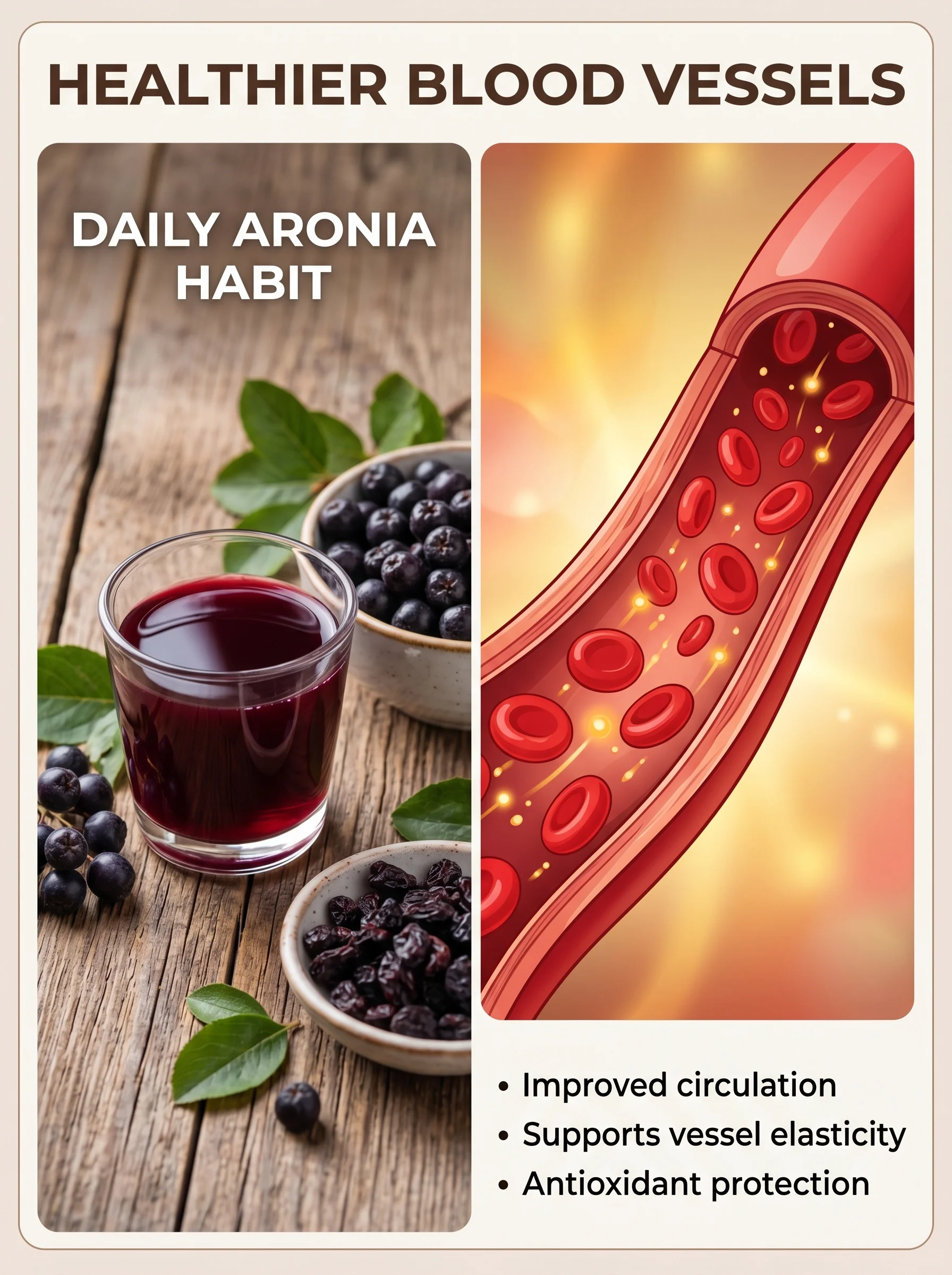
One of the most studied benefits of aronia berries is for the heart and blood vessels. Aronia appears to help support healthy blood flow and strengthen the blood vessels. Research suggests chokeberry may help protect the heart in several ways. It seems to ease the kind of inflammation that can build up in the artery walls, and it may help lower LDL cholesterol, which in large amounts can collect in those walls and lead to blockages.
This puts aronia in good company with other heart-friendly habits. If circulation is your focus, you might also like our look at beetroot juice and blood pressure.
Do aronia berries help the brain?
Thanks to its antioxidants, chokeberry may help support memory and protect brain cells from oxidative stress. Some small, early studies suggest aronia might one day play a role alongside care for neurodegenerative conditions, such as Parkinson’s, Alzheimer’s, and other dementias. This is a hopeful area, but it’s still early science, so treat it as a reason to enjoy the berry, not a treatment.
Healthy eyes
Chokeberries are a lovely food for the eyes. They contain carotenoids, which help defend the delicate cells of the eye, and their antioxidants may help protect against age-related eye changes like macular degeneration and cataracts. None of this replaces regular eye checkups, but it’s a friendly bonus from a berry you’re eating anyway.
Can aronia help with digestion?
Aronia is a good source of fiber, which is a real friend to your digestive system. Eating chokeberry can help keep bowel movements regular and may ease everyday issues like occasional constipation. Its tannins have traditionally been used to settle the stomach, including mild diarrhea. If gut comfort is something you’re working on, you may also enjoy our gentle aloe and ginger infusion for the gut.
Improves colds and immune defense
Did you know that adding chokeberry to your regular diet may be a nice way to support your defenses against the common cold and flu? Alongside a good amount of vitamin C, this berry has shown antiviral and antibacterial activity in the lab. Studies report that aronia berries show bacteriostatic activity against Escherichia coli and Staphylococcus aureus, and antiviral effects against the type A cold virus. It’s not a flu shot, but it’s a comforting food to lean on during the colder months.
Can aronia berries help with blood sugar and diabetes?
This is one of the most exciting benefits of aronia berries, and one people are asking about a lot lately. The plant compounds in aronia may help support healthier blood sugar and influence how the body handles insulin. In one older study, people with diabetes drank about 7 ounces of unsweetened aronia juice each day for three months, and researchers saw a drop in fasting glucose.
That’s encouraging, but please read it gently. Aronia is a supportive food, not a substitute for prescribed medication. If you live with diabetes, keep taking what your doctor prescribed and talk with them before adding aronia juice, since it can nudge your numbers. For more on this whole-food approach to steadier glucose, see our guide to berberine and blood sugar.
Promotes urinary tract health
Another welcome benefit chokeberry may offer is support for a healthy urinary tract. Urinary tract infections are a common problem, with symptoms like pain during urination, frequent urination, and sometimes blood in the urine. Like cranberries, aronia is thought to make it harder for bacteria to cling to the urinary tract lining, so they can be flushed out with the urine. If you’re prone to infections, this is a small, easy berry to keep on hand.
A gentle closing thought
You can find chokeberries in natural health stores or online, fresh, frozen, dried, or as a powder. If you spot aronia, try it. It’s a small, astringent berry that quietly covers a lot of ground: heart, brain, eyes, gut, bladder, and blood sugar. Keep your expectations kind and your meals varied, and let it be one helpful piece of a bigger picture. If this is the kind of tiny-fruit detour you like, the newsletter lands every Friday with a few more worth reading.
Frequently asked questions
What are the benefits of aronia berries?
The main benefits of aronia berries come from their very high antioxidant content, especially anthocyanins. They are linked to better heart and blood vessel health, steadier blood sugar, brain and eye protection, easier digestion, immune support, and a healthier urinary tract. Most claims are still being confirmed in human studies.
Are aronia berry benefits proven in humans or just lab studies?
Some are proven in people, like aronia’s effect on heart markers and blood sugar, but many other benefits still come mainly from lab and animal research that needs confirmation in humans. That’s why it’s fair to call aronia a promising, supportive food rather than a proven treatment for any condition.
How do you eat such a bitter aronia berry?
Aronia is very tart raw, so most people mix it with sweeter foods. Blend the berries into smoothies with banana or strawberry, stir powder into oatmeal or yogurt, or use them in jams, syrups, juices, and baked goods. Dried aronia berries are milder and easy to snack on.
Can aronia berries help lower blood sugar or blood pressure?
Early research suggests aronia may help support healthier blood sugar and blood pressure, thanks to its anthocyanins and fiber. In one small study, daily aronia juice lowered fasting glucose. Treat it as a helpful addition to a balanced diet, not a replacement for medication, and check with your doctor first.
Are there aronia berries benefits for skin?
Possibly. The same antioxidants that help inside the body may also help protect skin from oxidative stress and support a healthy glow from within. Most of this is early evidence, so enjoy aronia as part of a colorful, antioxidant-rich diet rather than expecting it to replace good skincare.
Can aronia berries help prevent urinary tract infections?
Aronia may help make it harder for bacteria to stick to the urinary tract lining, much like cranberries, so they can be flushed out with the urine. This may lower the chance of infection, but it isn’t a treatment. If you have UTI symptoms, see your doctor for proper care.
Share this article