Berberine benefits: what this ancient herb does for blood sugar and more
Sheenam Midha · Health writer
On this page
TL;DR: Berberine benefits are best supported for blood sugar and cholesterol, not for miracle weight loss. This ancient herb, used in traditional Chinese medicine for millennia, can gently support steadier glucose, healthier cholesterol, and a happier gut. The typical dose is 500 mg, three times a day, 30 minutes before meals. It is a supportive supplement, not a drug replacement, so talk to your doctor first, especially if you take any prescriptions.
In this piece, you will learn the real berberine benefits and why so many people are suddenly curious about it. Have you seen it called “nature’s Ozempic” online? That nickname is doing a lot of work, and it is not quite fair. Widely used in traditional Chinese medicine for millennia, berberine is used today as a supplement that can help regulate blood sugar and support heart health, which is where the strongest evidence sits.
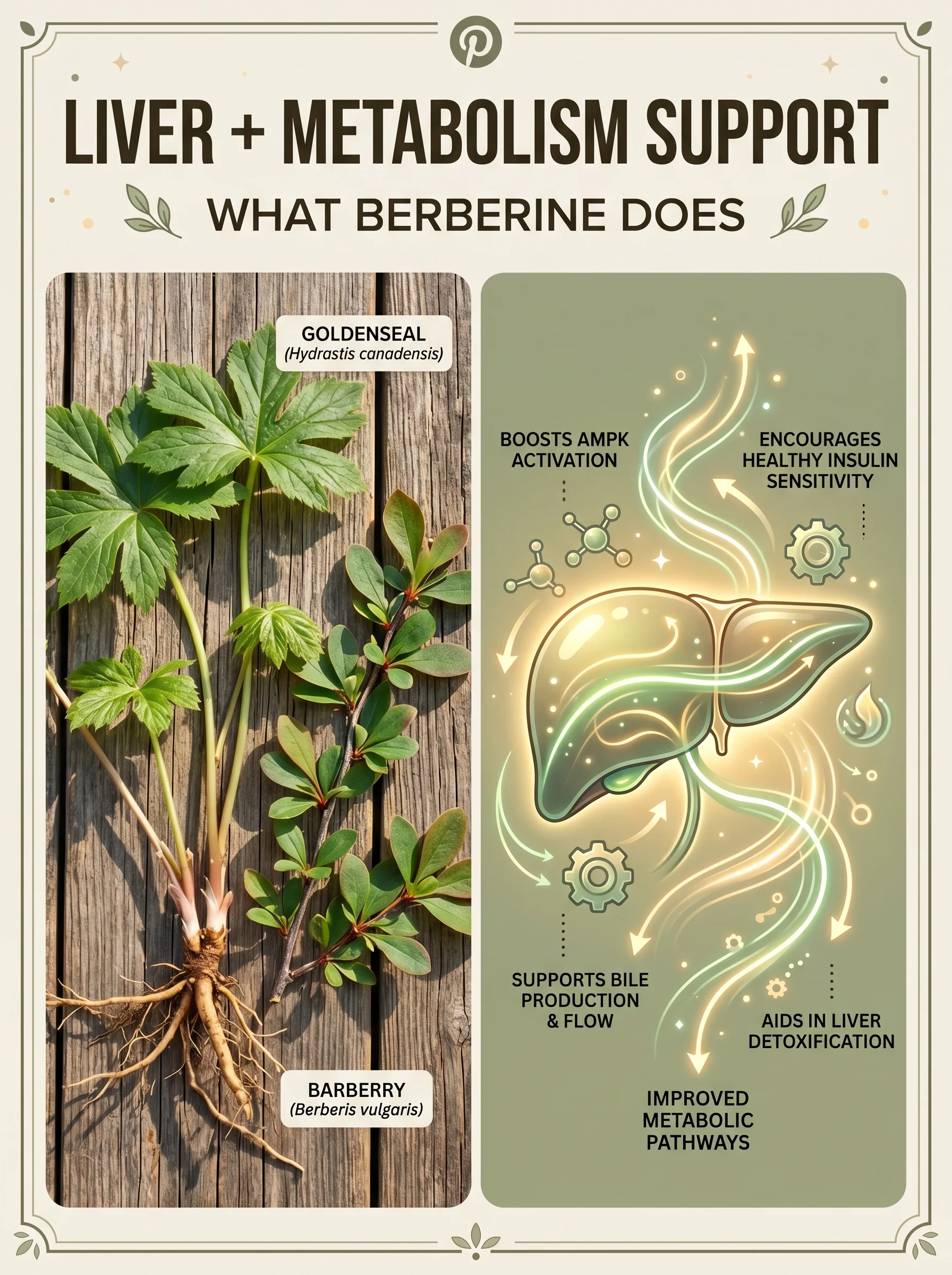
Berberine is a natural phytotherapeutic extracted from the roots, stalks, rhizomes, and bark of Phellodendron chinense and Rhizoma coptidis. Easily found as a capsule supplement, it touches several systems at once. Here are the health benefits of berberine worth knowing, plus the honest caveats.
Does berberine improve gut health?
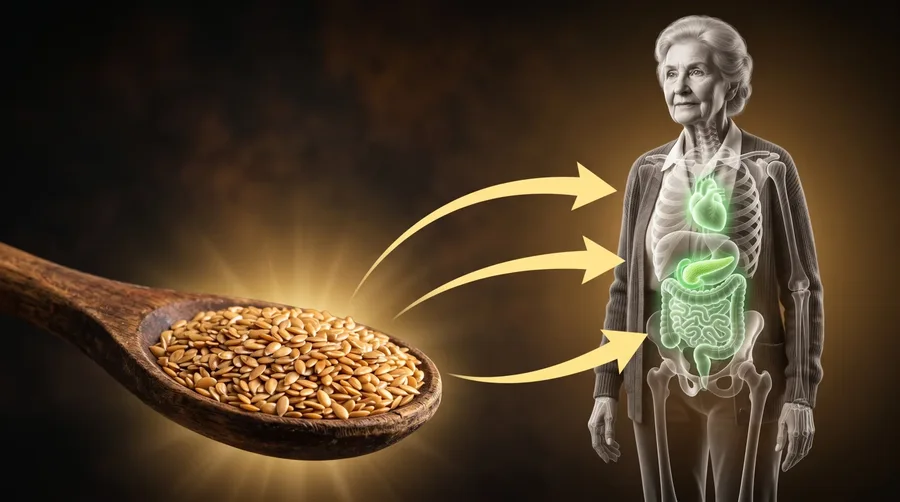
Berberine has an antimicrobial effect and helps hold back the proliferation of harmful bacteria in the intestine. It also favors the multiplication of beneficial bacteria, improving intestinal transit, protecting the intestine, and producing substances that help regulate blood sugar. A calmer gut is part of why this herb seems to help with so many things at once. If you are working on digestion more broadly, a gentle aloe and ginger infusion for the gut pairs nicely with the same goals.
What are the benefits of berberine for blood sugar?
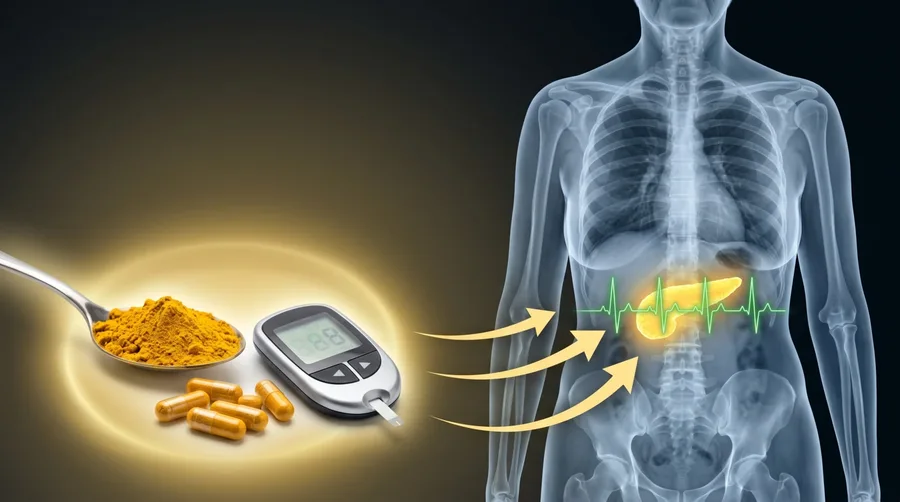
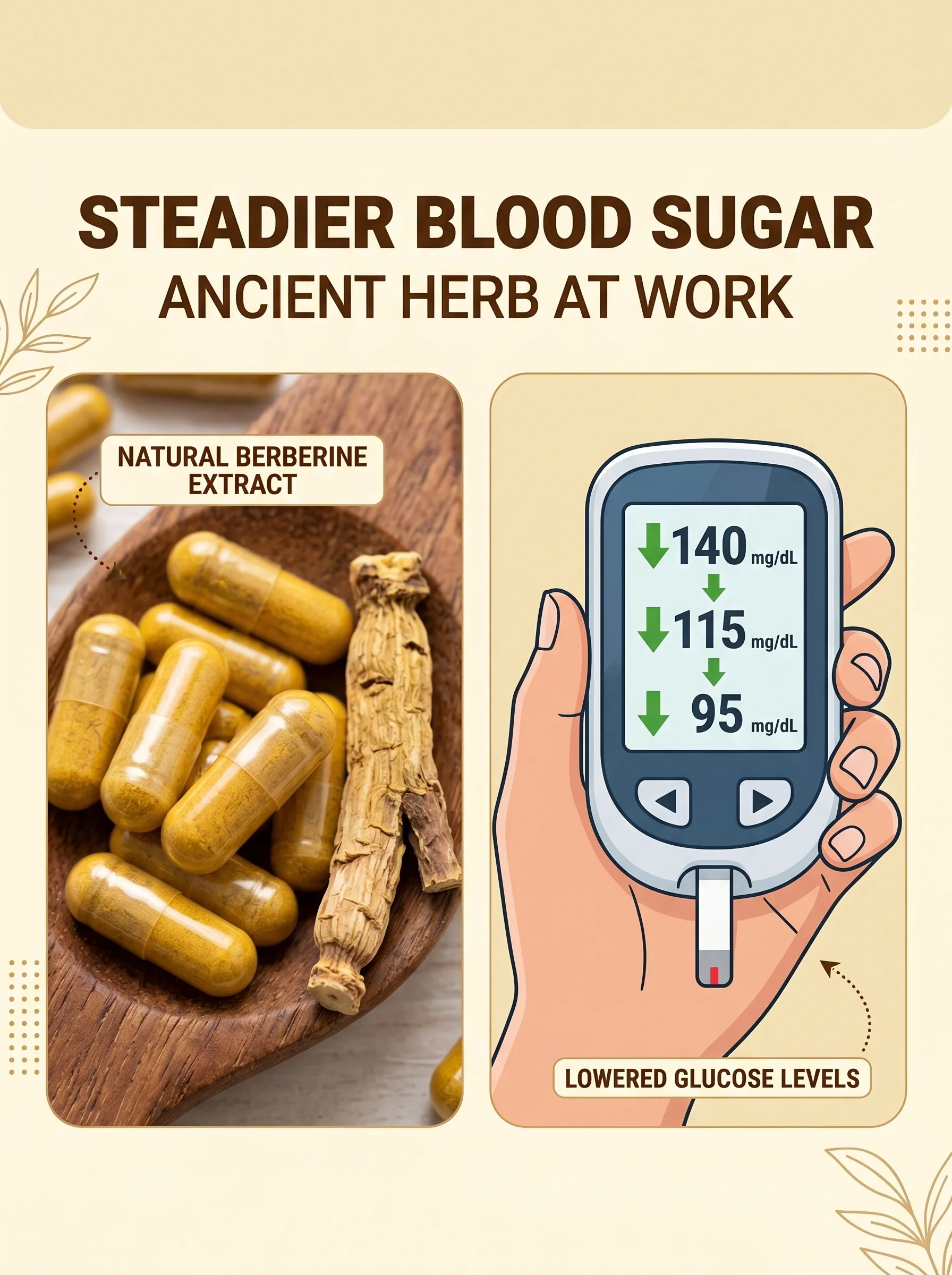
This is the headline of all the berberine benefits, and the best-supported one. Studies in animals that took berberine showed it helped produce a molecule that carries sugar from the blood into the cells, which lowers glycemia. In practice, people often see steadier fasting glucose and smaller spikes after meals.
It works in a way that looks a little like some diabetes medications, which is exactly why you should be careful. Recent research suggests berberine can add to the blood-sugar-lowering effect of those drugs, so combining the two without guidance can push your sugar too low. Berberine is a supportive adjunct, not a swap for your prescription. If you have diabetes or prediabetes, talk to your doctor before adding it. For a food-first companion to this work, many readers like the flaxseed benefits for heart and diabetes.
Berberine vs metformin: is it “nature’s metformin”?
You will see berberine called “nature’s metformin,” and there is a kernel of truth there, because both seem to nudge the same blood-sugar pathways. But we cannot say berberine is as effective as, or better than, metformin, the most-used and most-studied medication for people with diabetes. Metformin has decades of trials behind it. Berberine is promising but far less proven, and supplement quality varies a lot from bottle to bottle. Never stop a prescribed medication to try a supplement instead. Use them as a team only if your doctor agrees.
Does berberine really work like Ozempic for weight loss?
Here is where the hype outruns the science. Berberine increases the cells’ energy production, which can gently stimulate fat burning, and that is why it picked up the “nature’s Ozempic” label on social media. But major health centers like Mayo Clinic and UCLA Health have been clear that berberine is not a magic weight-loss solution, and the results for weight loss are genuinely mixed.
”Nature’s” does not mean “risk-free” or “as strong as a GLP-1 drug.” Berberine is a real compound with real effects and real interactions, so treat it with the same respect you would a medication.
So why do results seem so mixed? Dosing is inconsistent across products, people respond differently, and supplements are not standardized the way prescriptions are. If weight is your main goal, think of berberine as a small helper on top of food and movement habits, not the engine.
What berberine does for cholesterol
Alongside its blood sugar work, berberine has shown good results in lowering total cholesterol, LDL cholesterol, and triglycerides, which helps protect against cardiovascular disease. When combined with medication and a balanced diet, it can also help raise HDL, the good cholesterol. If you are tackling cholesterol from the kitchen too, this juice to lower cholesterol and triglycerides and the simple heart benefits of apples are easy, friendly additions.
Berberine and brain health
Thanks to its anti-inflammatory effect, berberine appears to help protect the brain against issues like memory loss and Alzheimer’s, and may reduce the after-effects of stroke on brain cells. This is an early and hopeful area of research rather than a settled one, so hold it lightly.
Are there special berberine benefits for women?
Women often ask about berberine because of its links to blood sugar and metabolic health, which overlap with concerns like insulin resistance and PCOS. The same steadying effect on glucose and cholesterol applies. That said, the safety notes matter most here: berberine is not for pregnancy or breastfeeding, and it can interact with other medicines, so a quick chat with your doctor is the smart first step.
How much berberine should I take, and when?
Generally, the recommended dose is 500 mg of berberine three times a day, always about 30 minutes before your main meals. Taking it with meals helps because that is when blood sugar rises. Some protocols go up to 1,500 mg before each meal, but more is not automatically better, and higher doses raise the chance of stomach upset. Start low, and talk to your doctor and nutritionist before beginning.
Is berberine safe long term, and who should avoid it?
Berberine is generally considered safe for short to medium use, but in excess it can cause side effects like nausea, vomiting, abdominal pain, and gas. It is not recommended during pregnancy or breastfeeding, since it can affect the uterine structure and pass through breast milk.
The bigger caution is interactions. Berberine can interact with diabetes drugs, blood thinners, and others, so do not stack it with prescriptions without your doctor’s blessing. Choose a reputable brand, since supplement quality and dosing are not tightly regulated. Researchers are still studying berberine for things like cancer and blood pressure, so the full picture is still being written. If lowering pressure is your focus, the gentle beetroot juice for blood pressure is a kinder place to start.
A gentle closing thought
Berberine is one of those plants that has been quietly helping people for thousands of years and is only now showing up in the supplement aisle. Used well, with a doctor’s eye on it, it can touch several systems at once. Used carelessly, it is still a real compound with real interactions, so do not wing it, and please do not treat it as an Ozempic shortcut. If you like grounded, tradition-meets-research writing like this, the newsletter goes out every Friday.
Frequently asked questions
What are the benefits of berberine?
The main berberine benefits are steadier blood sugar, lower total and LDL cholesterol and triglycerides, better gut balance, and modest support for fat metabolism. The blood sugar and cholesterol effects are the best supported. Think of berberine as a supportive supplement that works alongside healthy food, movement, and any prescriptions, not as a cure on its own.
Does berberine really work like Ozempic for weight loss?
Not really. The “nature’s Ozempic” nickname is mostly social media hype. Mayo Clinic and UCLA Health say berberine is not a magic weight-loss fix, and the evidence for weight loss is genuinely mixed. It may gently support fat burning, but it is far weaker than a GLP-1 medication. Treat it as a small helper on top of habits, not a replacement.
Is berberine as good as metformin?
We cannot say berberine is as effective as, or better than, metformin, the most-used and most-studied diabetes medication. Both seem to act on similar blood-sugar pathways, but metformin has far more trial evidence behind it. Never stop a prescribed medication to try berberine instead. If you want to combine them, do it only with your doctor’s guidance.
How much berberine should I take and when?
The common dose is 500 mg three times a day, taken about 30 minutes before your main meals so it lines up with rising blood sugar. Some protocols use up to 1,500 mg before each meal, but higher amounts increase stomach side effects. Start low and check with your doctor or nutritionist before beginning.
Is berberine safe to take long term, and what does it interact with?
Berberine is generally considered safe for short to medium use, but long-term safety is still being studied. It can interact with diabetes drugs, blood thinners, and other medications, which is the main risk. In excess it may cause nausea or stomach upset. Talk to your doctor before stacking it with any prescription.
Who should not take berberine?
Berberine is not recommended during pregnancy or breastfeeding, since it can affect the uterine structure and pass through breast milk. Anyone on diabetes medication, blood thinners, or other prescriptions should check with a doctor first. If it upsets your stomach, lower the dose or stop and get advice.
Share this article