Hibiscus tea side effects you should actually know
Sheenam Midha · Health writer
On this page
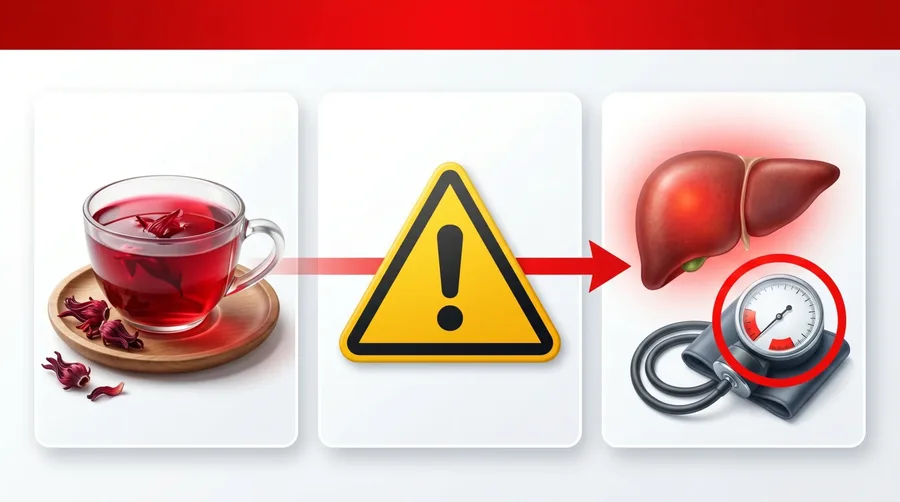
TL;DR: Hibiscus tea side effects mostly show up when you drink it every day, not from the occasional cup. Research points to real blood pressure benefits, but heavy use can bring dehydration, stomach upset, hormone and fertility effects, and clashes with certain medications. Here is who should be careful, and who should talk to a doctor first.
Hibiscus tea got famous because of a diet that promises quick weight loss. But burning body fat is only one of its many talking points, and the hibiscus tea side effects people search for often matter more than the hype. Many studies have shown this ruby-red brew can be kind to the heart, including a gentle lowering of blood pressure.
A study published in The Journal of Nutrition found that adults with high blood pressure who drank three cups of hibiscus tea daily for six weeks saw their numbers come down. That is a real effect, and it is exactly why the cautions below are worth reading before you make this a daily ritual.
What are the side effects of drinking hibiscus tea?
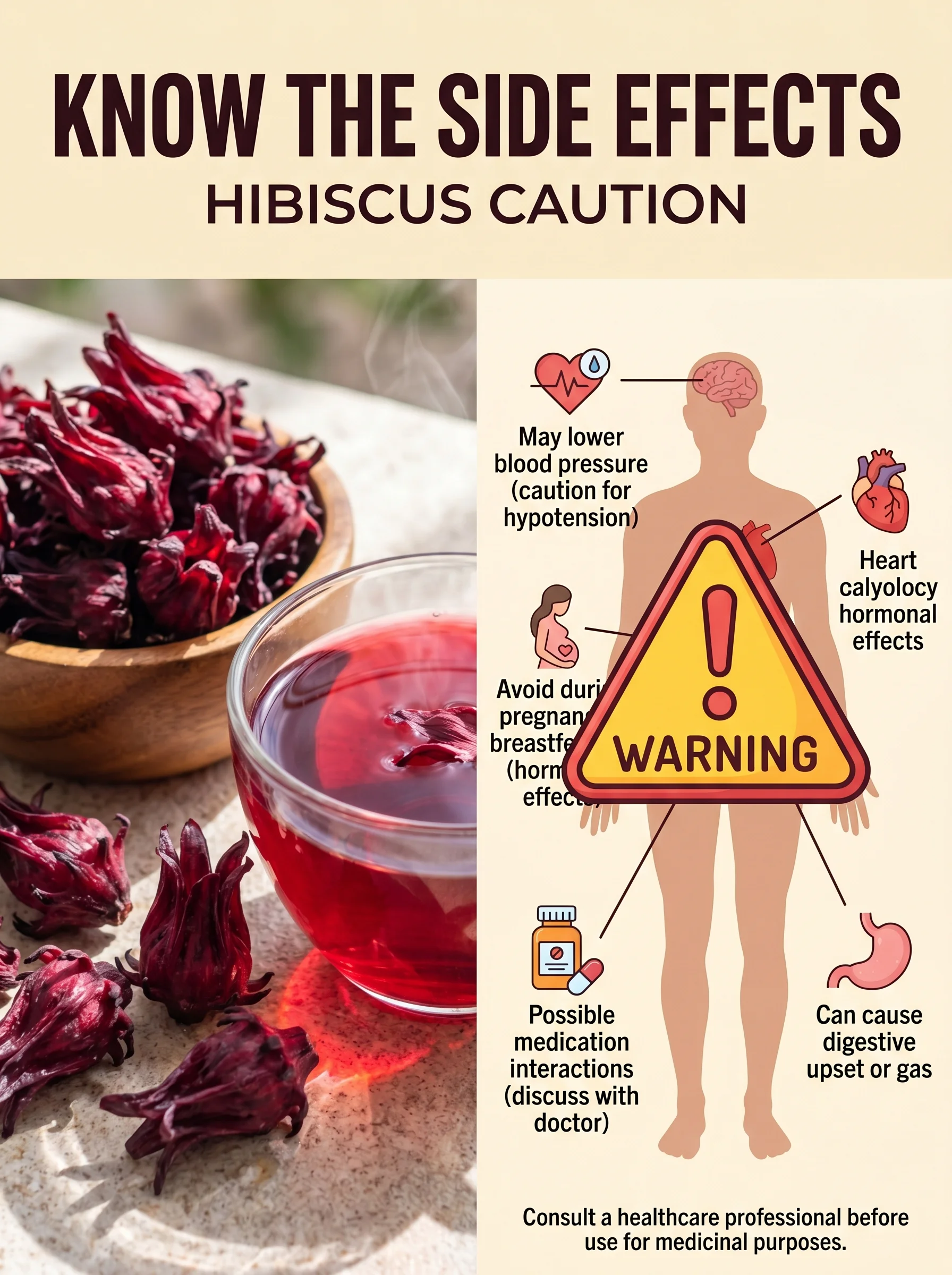
Hibiscus tea is usually safe in normal amounts. The common side effects of drinking hibiscus tea tend to appear with heavy, everyday use: stomachache, gas, constipation, nausea, painful urination, headaches, and ringing in the ears. None of these come from an occasional cup. They are signals that you may simply be having too much, too often.
Can it leave you dehydrated (the diuretic effect)?
Yes, and this is one of the quieter hibiscus tea side effects. Hibiscus has a mild diuretic effect, so drinking a lot of it makes you pass more fluid. Over time that can mean dehydration and the loss of electrolytes like potassium and sodium. Low electrolytes can show up as muscle cramps, dizziness, weakness, and in extreme cases fainting. If you notice any of that, ease off and rehydrate with water.
Does hibiscus tea affect estrogen and fertility?
Some studies suggest that continuous, heavy hibiscus tea consumption may nudge estrogen levels, and that is the root of the hibiscus tea side effects on estrogen that people search for. In animal research, that hormonal shift appeared to interfere with ovulation and lower fertility. The doses involved were far beyond a casual cup, but if you are actively trying to conceive, it is reasonable to keep your intake modest and mention it to your doctor.
What medications should you never mix with hibiscus tea?
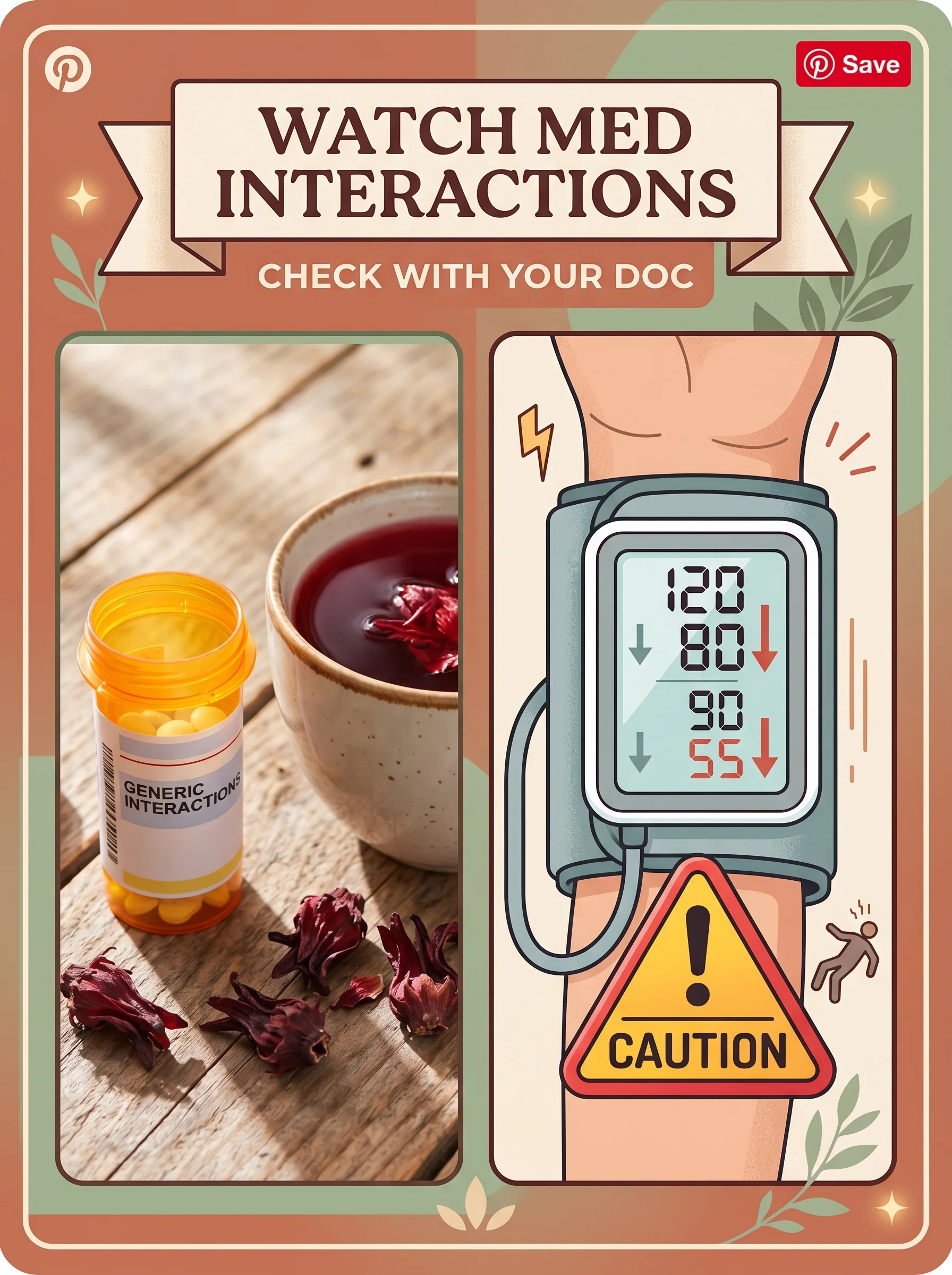
This is the part worth reading slowly, because it is the side of hibiscus tea that recent safety write-ups keep flagging. Hibiscus can both strengthen and weaken the effect of certain medicines. Its diuretic action can add to blood pressure drugs and push your numbers down too far. It may also affect diabetes medication and has been shown to lower the effect of some drugs, like paracetamol (acetaminophen).
If you take medicine for blood pressure, diabetes, or anything you rely on daily, please do not stop it or swap it for tea. Hibiscus is a supportive drink, not a replacement for a prescription. The safe move is simply to ask your doctor or pharmacist whether your specific medication and hibiscus get along. If you are watching your numbers, our roundup of foods that help normalize blood pressure and these hypertension warning signs are gentler places to start.
Who should skip hibiscus tea?
Hibiscus tea is not recommended during pregnancy. The same hormonal changes and possible uterine contractions that make it interesting elsewhere can raise the risk of complications, so most guidance says avoid it while pregnant. Nursing women are usually advised to skip it too, simply because there is not enough solid research on its safety during breastfeeding.
People with low blood pressure, or anyone already on blood pressure medication, should be cautious as well, since hibiscus can lower readings further. And if you tend to run low on electrolytes or take diuretics, the combined effect is worth a quick chat with your doctor before it becomes a daily habit.
Are there side effects on sleep or the liver?
On sleep, hibiscus is caffeine-free, so it will not keep you wired the way black tea or coffee can. A warm evening cup is fine for most people, and if a calming bedtime drink is what you are after, a chamomile and apple tea is the gentler classic. On the liver, very high doses of concentrated hibiscus extract have raised questions in some studies, but ordinary brewed tea in sensible amounts has not shown the same concern. As with everything here, the issue is quantity, not the plant itself.
The takeaway
Hibiscus tea can be a flavorful, heart-friendly drink, and the research genuinely supports an effect on blood pressure. But the line between helpful and harmful is how much you drink, how often, and what else you are taking. A cup or two for the taste is one thing. Several strong cups a day, every day, is when the hibiscus tea side effects start to matter. If a doctor already has you on blood pressure medication, that conversation comes first. If you like the idea of other gentle brews, our notes on black tea for your gut and heart and lemongrass tea are a good next read. And if quiet health reads like this are your thing, the newsletter lands once a week, every Friday.
Frequently asked questions
What are the side effects of drinking hibiscus tea every day?
Daily, heavy use can bring stomachache, gas, constipation, nausea, painful urination, headaches, and ringing in the ears. Its diuretic effect can also cause mild dehydration and electrolyte loss. A cup or two for the taste rarely causes problems. The issues come from large amounts, day after day.
What medications should you never mix with hibiscus tea?
Be cautious with blood pressure medication and diuretics, since hibiscus can lower your numbers too much. It may also affect diabetes drugs and has been shown to reduce the effect of some medicines, like paracetamol. Never stop a prescription for tea. Instead, ask your doctor or pharmacist about your specific medication.
Can hibiscus tea affect estrogen and fertility?
Some studies suggest that continuous, heavy hibiscus tea consumption may interfere with estrogen levels, and that hormonal shift could affect ovulation and fertility in research. The amounts involved were high. If you are trying to conceive, it is sensible to keep your intake modest and mention it to your doctor.
Is hibiscus tea safe during pregnancy?
Hibiscus tea is generally not recommended during pregnancy, because the hormonal changes and possible uterine contractions may raise the risk of complications. Nursing women are usually advised to avoid it too, since there is not enough conclusive research on its safety and a safe dose while breastfeeding.
Should people with high blood pressure drink it?
Hibiscus may gently support healthy blood pressure thanks to its mild diuretic action, but it is not a substitute for treatment. If you have high blood pressure or take blood pressure medication, check with your doctor first, since hibiscus can lower your numbers further when combined with your prescription.
Does hibiscus tea affect sleep or the liver?
Hibiscus is caffeine-free, so it will not disrupt sleep for most people, and a warm evening cup is fine. Concerns about the liver come mainly from very high doses of concentrated extract, not from ordinary brewed tea in sensible amounts. As always, the quantity is what matters most.
Share this article