
6 daily habits that trigger chicken skin (keratosis pilaris)
Sheenam Midha · Health writer
On this page
TL;DR: Keratosis pilaris, often called chicken skin, is those small rough bumps that show up on arms and thighs, especially in summer. Here are 6 daily habits that quietly trigger keratosis pilaris (harsh scrubs, hot showers, perfumed soaps, too little fat, too much dairy, and tight clothes), the gentle swaps that calm it down, and the moisturizers and ingredients that actually smooth it over time.
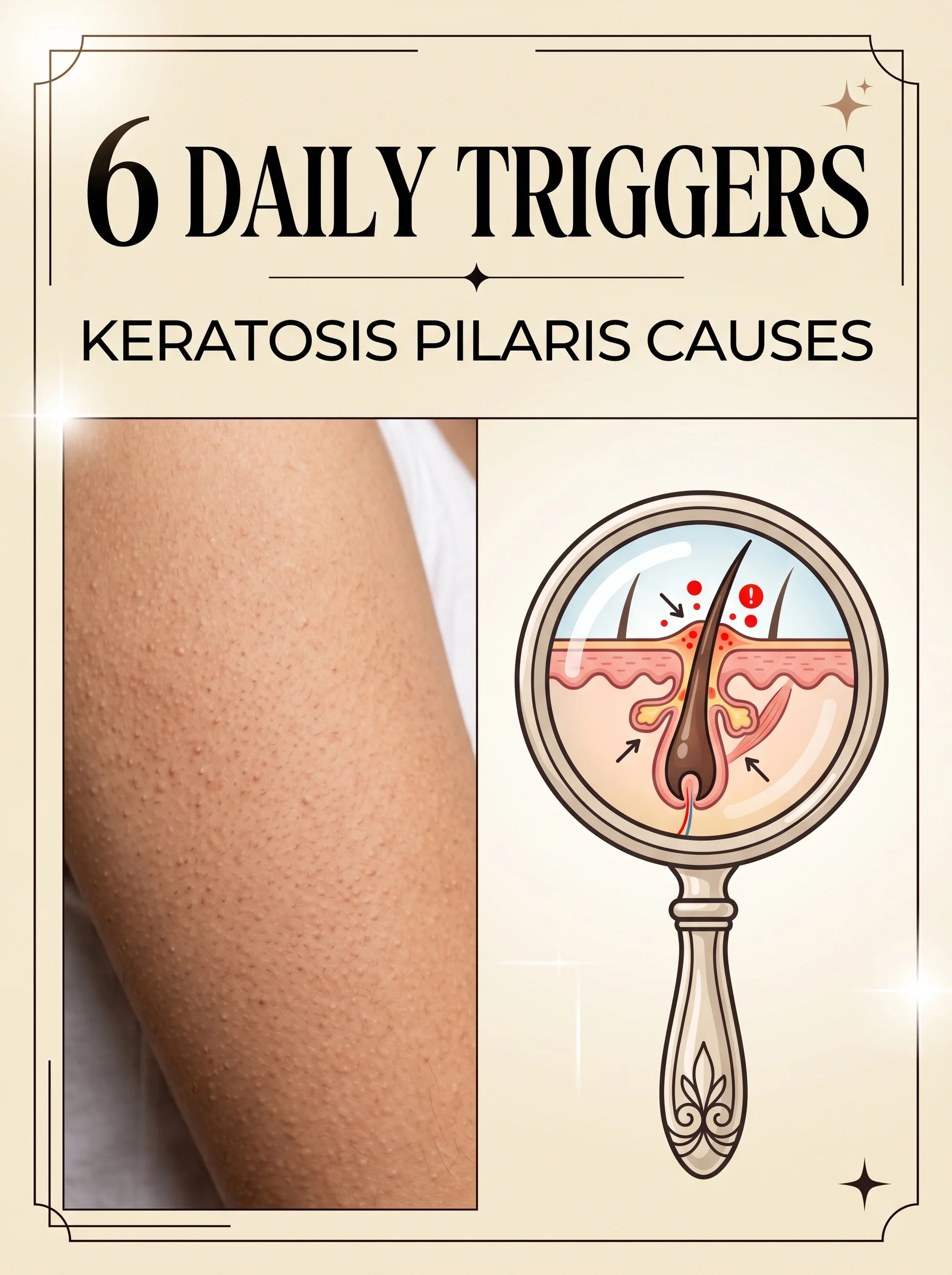
Have you ever heard about chicken skin? During summer, when we wear light clothes, some people can’t help but notice small bumps on their skin, usually more visible on the arms and thighs. This common skin condition is called keratosis pilaris, commonly described as chicken skin, because it makes the skin look like a recently plucked chicken.
Although it is harmless and not contagious, chicken skin can be very annoying, and certain everyday habits can quietly make it worse. The good news is that most of those habits are easy to change. Let’s walk through 6 daily things that can trigger keratosis pilaris, and the gentler swaps that help it settle.
1. Using too aggressive body scrubs
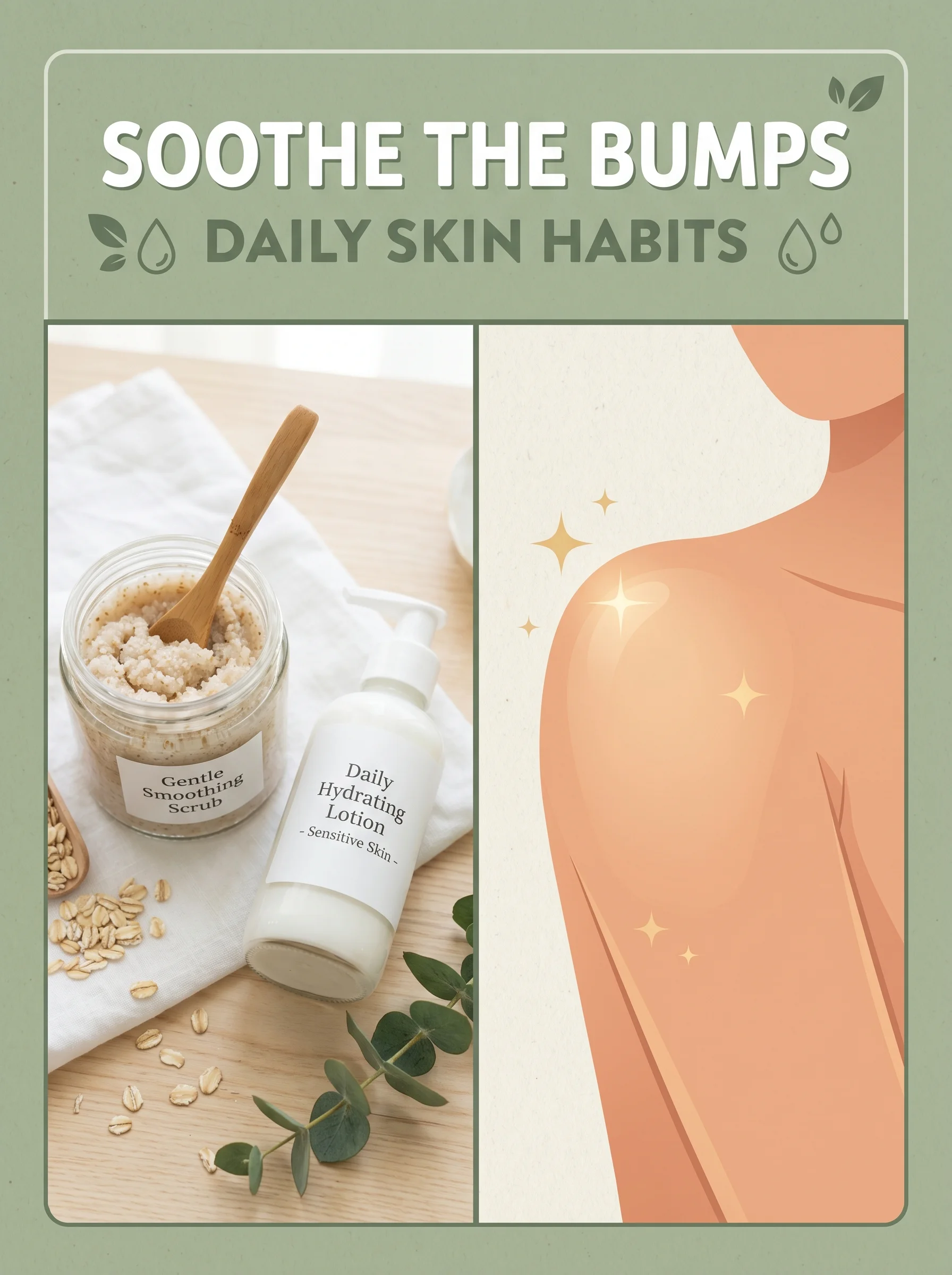
Although gentle exfoliation can help lessen chicken skin, aggressive body scrubs can actually worsen your condition. The rough particles can irritate the skin, causing itchiness and flaking.
Instead of using scrubs with irregular, big particles, try gently massaging your skin with a loofah or pumice stone. And resist the urge to scrub hard or pick at the bumps. Aggressive scrubbing and picking tend to leave redness and dark marks that linger long after the bump itself fades.
2. Hot showers
Although hot showers don’t actually make the skin swell, being under hot water for too long can worsen your condition. Long, steamy showers strip the natural oils from the skin, leaving it dry and irritated, and dry skin is exactly where keratosis pilaris loves to show off.
Take short, warm showers and pat your skin gently dry to avoid irritation. Showering every other day can also help calm the symptoms, and if you’re curious, there are a few other shower habits worth rethinking for your skin and your health.
3. Perfumed soaps
Since chicken skin is linked to a build-up of keratin in the pores, heavily fragranced products can worsen the condition. Your favorite soap may smell of roses, but it probably contains lots of artificial additives that can dry out and irritate sensitive skin.
In this case, opt for fragrance-free, hypoallergenic products made for sensitive skin. A simple, gentle cleanser does far more for keratosis pilaris than anything that promises a strong scent.
4. You aren’t eating enough fat
When your body doesn’t receive enough of the omega-3 and omega-6 fatty acids it needs, your skin can become drier and more easily inflamed, which makes those small bumps more visible.
Try eating more foods rich in good fats, like wild fish, eggs from free-range chickens, and plant sources such as the omega-3s in flaxseed. Healthy fats support the skin barrier from the inside, which is half the battle with chicken skin.
5. You may be drinking too much milk
Most people can’t imagine going a single day without a cup of coffee with milk or cream, but for some people dairy can trigger food sensitivities that show up on the skin. A number of people develop intolerance to a protein found in dairy, which may contribute to skin irritation, breakouts, and keratosis pilaris.
This won’t be true for everyone, so treat it as an experiment, not a rule. Try cutting milk and its by-products from your diet for about six weeks and watch whether your skin improves. If it does, you might swap cow’s milk for a plant-based alternative and see how you feel.
6. Your clothes are too tight
Wearing tight clothes isn’t ideal for many reasons, and it can worsen chicken skin too. Tight fabrics don’t let the skin breathe and create friction, which irritates already sensitive bumps even more.
In this case, consider looser clothes made with soft, breathable fabrics like organic cotton, especially over the arms and thighs where keratosis pilaris tends to gather.
What actually clears keratosis pilaris, and how long does it take?
Changing your triggers calms the flare, but the thing that actually smooths the bumps is consistent moisturizing. A good moisturizer for keratosis pilaris usually pairs hydration with a gentle chemical exfoliant.
Look for ingredients like urea, lactic acid, glycolic acid, or salicylic acid. These soften and loosen the keratin plugs over time, far more kindly than any scrub. Recent skin-care guidance leans the same way: gentle daily care beats harsh treatment for chicken skin.
Patience matters here. Most people start to notice a difference after a few weeks of daily use, not overnight. You may see online claims that a handful of treatments clear most bumps in a few weeks, but results vary a lot from person to person, so think of it as steady management rather than a quick fix.
Does keratosis pilaris ever go away on its own?
Often, yes. Keratosis pilaris is harmless, very common, and tends to fade with age for many people. It can also come and go with the seasons, looking calmer in humid summer months and rougher in dry winter air.
There isn’t a permanent cure, and it can return, so the goal is comfortable, calmer skin rather than perfection. If the bumps are red, itchy, or really bothering you, a dermatologist can suggest a stronger cream or in-office option suited to your skin.
The takeaway
Keratosis pilaris is harmless and not contagious, but daily habits can quietly make it worse. Soften the scrubs, cool and shorten the showers, skip the perfumed soaps, lean into good fats, experiment with cutting dairy for six weeks, and give the skin room to breathe in looser fabrics. Then add a daily moisturizer with urea or lactic acid and let time do the rest. Small swaps, stacked. If quiet skin and other gentle wellness reads are your thing, the newsletter lands once a week, every Friday.
Frequently asked questions
What exactly is keratosis pilaris (chicken skin)?
Keratosis pilaris is a very common, harmless skin condition where small rough bumps form on the arms, thighs, cheeks, or buttocks. It’s nicknamed chicken skin because the texture looks like a plucked chicken. It happens when keratin builds up and plugs the hair follicles, and it isn’t contagious.
What actually gets rid of keratosis pilaris bumps, and how long does it take?
Daily moisturizing is what smooths the bumps, ideally a cream that pairs hydration with a gentle exfoliant. Most people notice improvement after a few weeks of consistent use, not overnight. There’s no permanent cure, so steady, gentle care works better than any one-time harsh treatment.
Which ingredients work best in a keratosis pilaris moisturizer?
Look for urea, lactic acid, glycolic acid, or salicylic acid. These soften and gradually loosen the keratin plugs while keeping skin hydrated. A fragrance-free formula made for sensitive skin is gentler than a gritty scrub, which can irritate the bumps and make redness worse.
Does dairy really trigger keratosis pilaris?
For some people it might. A number of people are sensitive to a protein in dairy that can show up as skin irritation. It isn’t a universal trigger, so treat it as an experiment: cut milk and its by-products for about six weeks, watch your skin, and switch to a plant-based milk if it helps.
Do tight clothes make chicken skin worse?
They can. Tight clothes don’t let the skin breathe and create friction that irritates the bumps. Choose looser, breathable fabrics like organic cotton, especially over the arms and thighs, to reduce rubbing and give sensitive skin some room to settle.
Does keratosis pilaris ever go away permanently?
It often improves with age and can fade for long stretches, but there’s no guaranteed permanent cure, and it may return, especially in dry weather. With gentle daily care and a good moisturizer you can keep it calm. If it’s red, itchy, or stubborn, a dermatologist can help.
Share this article