8 household items that increase cancer risk (and what to use instead)
Sheenam Midha · Health writer
On this page
TL;DR: You probably think your home is a safe haven, but a few everyday objects may be quietly adding to your chemical load. These are eight household items that increase cancer risk, what the research actually says about each, how much to worry, and the simple swaps that lower your exposure without ripping your life apart.
Have you ever wondered if some of the ordinary objects in your home could be working against your health? The household items that increase cancer risk are rarely dramatic. They are the candle on the shelf, the receipt in your wallet, the pan you reach for every morning. Here are eight sneaky everyday products worth a second look, and the calm, doable changes that help.
First, a steadying word. Most of these items are about exposure over time, not a single use. Harvard Health frames chemicals like these as linked to increased risk, with dose and context doing a lot of the work. So the goal here is not fear. It is gently lowering how much of this stuff you breathe, touch, and eat, day after day.
What everyday household items increase cancer risk?
The usual suspects fall into a few buckets: fragranced products that release volatile chemicals into your air, plastics and coatings that shed into food, and paper or cleaners that carry endocrine disruptors. None of them belong in the same panic category as smoking, but together they add up. The list below walks through the eight that come up most, newest concerns first.
1. Are scented candles actually bad for you?
Often, a little. Most scented candles contain limonene and phthalates. Limonene gives off that citrusy scent, and when released into the air it can react to form formaldehyde, which is classed as a human carcinogen. Phthalates, which make fragrance last longer, are endocrine disruptors linked to hormonal imbalances.
Let’s start with something that seems completely harmless. Who doesn’t love the cozy glow and the aroma drifting from these popular decor items? But those enticing scents can carry some concerning chemicals into a closed room.
The International Agency for Research on Cancer notes that formaldehyde exposure can drive inflammatory reactions and has been associated with certain cancers. The phthalates have also been linked in research to impaired brain development and behavioral issues in children.
And it is not just candles. A large share of everyday fragranced household products can emit small amounts of formaldehyde. Experts especially caution against burning candles in a small, closed bedroom, where combustion byproducts have nowhere to go and can leave you with headaches or nausea.
Use scented products sparingly, and ventilate by opening a window instead of relying on candles to mask odors. If you love a cozy scent, lean on gentler options, and keep open flames out of the bedroom. A little diffused essential oil for sleep and calm is an easier swap than a heavily fragranced candle by the bed.
2. Humidifiers can grow dangerous bacteria
Many people run humidifiers to soften dry winter air. They seem harmless enough, but the water tank is the catch. Research tracking bacteria in humidifier tanks over time found that after about 12 hours, purified water and tap water held similar amounts of microbes. The chlorine in tap water did not keep germs from growing the way you might expect.
Experts explain that no matter the water source, humidifiers encourage bacterial growth simply by holding standing water for hours. Without regular cleaning, bacteria like Pseudomonas aeruginosa, Legionella, and Streptococcus pneumoniae can build up in the tank, and the device then mists them into the room. Those bugs can trigger respiratory illness and, less often, more serious infection.
Be diligent about cleaning your humidifier’s reservoir every 3 to 4 days to prevent buildup. Empty it, scrub it, and leave the device open and dry when it is not in use.
3. What’s hiding in dry cleaned clothes?
Harsh solvents. Many dry cleaners still rely on perchloroethylene, or PERC, to lift tough stains, and PERC is classed as a likely carcinogen. According to the Occupational Safety and Health Administration, ongoing exposure can raise risk through skin contact or inhalation.
Research suggests prolonged PERC exposure is associated with certain cancers, and breathing the vapors can cause dizziness, throat irritation, and headaches. It is mostly an issue for heavy daily exposure, but the freshly cleaned clothes you bring home carry a little of it too.
To save time, cleaners often bag clothes in plastic before they are fully dry, which traps solvent fumes you then breathe each time you open the closet. Benzene, another volatile compound linked to cancer, can be in the mix as well.
Before hanging dry cleaned clothes, remove the plastic and let them air out for 3 to 4 hours, ideally near an open window. Give them a good shake, and keep them away from heat and direct sun, which make any residual vapors stronger.
4. Why thermal receipts are more toxic than they look
Thermal paper is coated with chemicals that react to heat to print without ink. Often that chemical is BPA, bisphenol-A, a well-known endocrine disruptor that can be absorbed through the skin. Some receipts now use BPS instead, a close cousin with similar concerns.
Research on BPA links steady exposure to disrupted hormones in both men and women, and BPA has been associated in studies with reproductive issues and certain cancers, along with metabolic effects.
The handling tip matters here. BPA crosses into skin far more easily with oil than with water. So if you have just applied hand lotion or sanitizer and then grab a receipt, you absorb noticeably more. One study found that holding a receipt for a couple of seconds with creamed hands raised BPA uptake dramatically compared with dry hands.
Avoid stashing loose receipts in your wallet or purse, say no to the printed copy when an email will do, and wash your hands after handling them. If you ring up receipts all day for work, gloves are a reasonable step.
5. Do antibacterial soaps actually keep you safer?
Often, no. Some antibacterial products have been shown to add risk without adding much benefit. The ingredient triclosan has been linked to altered thyroid hormones, antibiotic resistance, and endocrine disruption in lab studies.
Triclosan can also react with chlorine in tap water to form chloroform, a disinfection byproduct best avoided. In 2016 the FDA barred triclosan and 18 other ingredients from consumer antibacterial soaps because manufacturers could not show they were safe and more effective than plain soap.
Check your soap’s ingredient list and skip anything that names triclosan. Plain soap and water work just fine to remove germs as long as you wash thoroughly. If you want an extra antibacterial note, soaps using benzoic acid have a safer track record.
6. Do nonstick pans and PFAS forever chemicals raise cancer risk?
They can, mostly as they wear out. Older nonstick coatings were made with PFOA, part of the PFAS family often called forever chemicals because they barely break down. PFOA is classed as a likely carcinogen, and PFAS are one of the fastest-growing household-exposure topics in 2026.
When a worn or overheated nonstick surface degrades, it can release particles and fumes. PFAS chemicals are stable enough to linger in the body for years, and they have been detected in the blood of nearly everyone tested. Newer pans are often labeled PFOA-free, which is an improvement, but a scratched, flaking pan is still worth retiring.
Studies have associated higher PFAS levels with raised cholesterol, thyroid disorders, and other effects. To play it safe, replace nonstick pans that are chipping or peeling, and cook with cast iron, stainless steel, or ceramic. Keep the heat moderate, skip metal utensils that scratch, and avoid harsh scouring pads. Cutting kitchen exposure pairs nicely with making evidence-based food choices on the plate itself.
7. Why air fresheners quietly raise indoor phthalate levels
Air fresheners feel like a harmless way to keep a room smelling nice. But most contain phthalates, the same endocrine disruptors found in scented candles, and phthalate particles cling to dust and linger in your indoor air.
Frequent use raises indoor phthalate levels meaningfully. Studies have detected more phthalates in the urine of people who use air fresheners and scented cleaners several times a week, and higher phthalate exposure has been linked to fertility issues, childhood asthma, and other concerns. Improving indoor air quality is one of the practical fixes oncologists themselves reach for at home.
Skip the plug-ins and sprays. Open windows to ventilate, and let houseplants like aloe vera, orchids, and English ivy do gentle work. Vacuum and dust regularly, and clean with simple staples like vinegar and baking soda to handle odors at the source. A bowl of coarse salt as a natural air freshener keeps closets fresh without any added fragrance chemicals.
8. Is heating food in plastic dangerous?
Yes, this is the one to take seriously. Even BPA-free plastic can leach estrogen-like chemicals, and a study by the Endocrine Society found some of these can switch on genes involved in breast cancer tumor growth, especially alongside common preservatives like propyl paraben.
Additives in plastic such as phthalates and bisphenols do not stay put. They migrate into the food and drink they touch, and heat speeds that up. This is also where microplastics come in: warming food in plastic and reheating leftovers in plastic containers are now considered top everyday sources of microplastics and these chemicals in the body.
To play it safe, do what many oncologists quietly do at home. Never microwave food in plastic. Move leftovers to glass or stainless steel before reheating, keep plastic away from fatty or acidic foods, and toss scratched, cloudy containers. The same caution applies to the foods themselves, so it helps to understand what the evidence says about food and cancer risk.
With just a little awareness and a few prudent swaps, you can meaningfully lower your everyday exposure.
How can I reduce everyday chemical exposure at home this week?
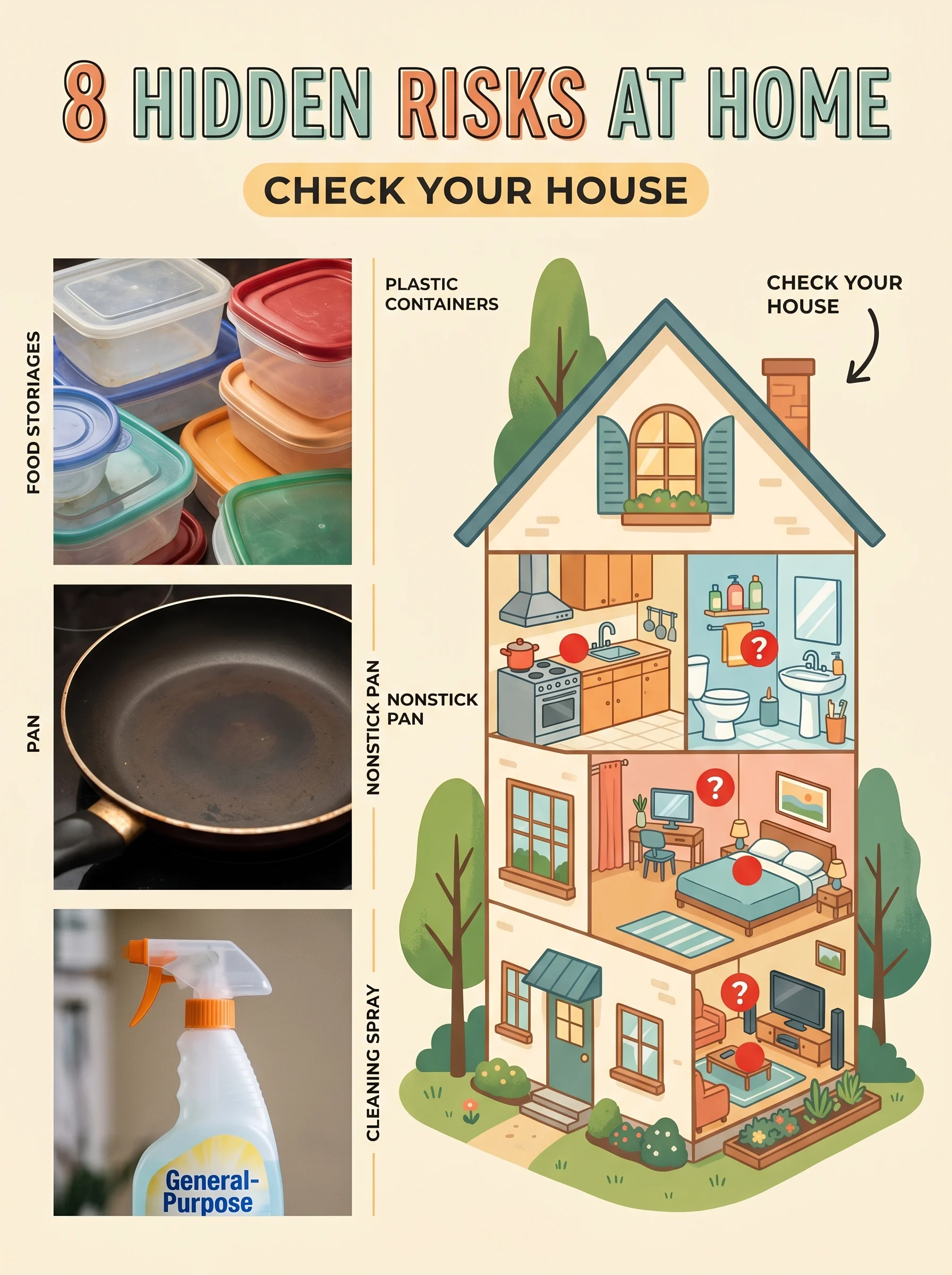
You do not need to overhaul your house. The biggest wins are small and repeatable, and they line up neatly with what cancer doctors say they do in their own kitchens and bathrooms. Take a quick inventory and swap out the easy ones first.
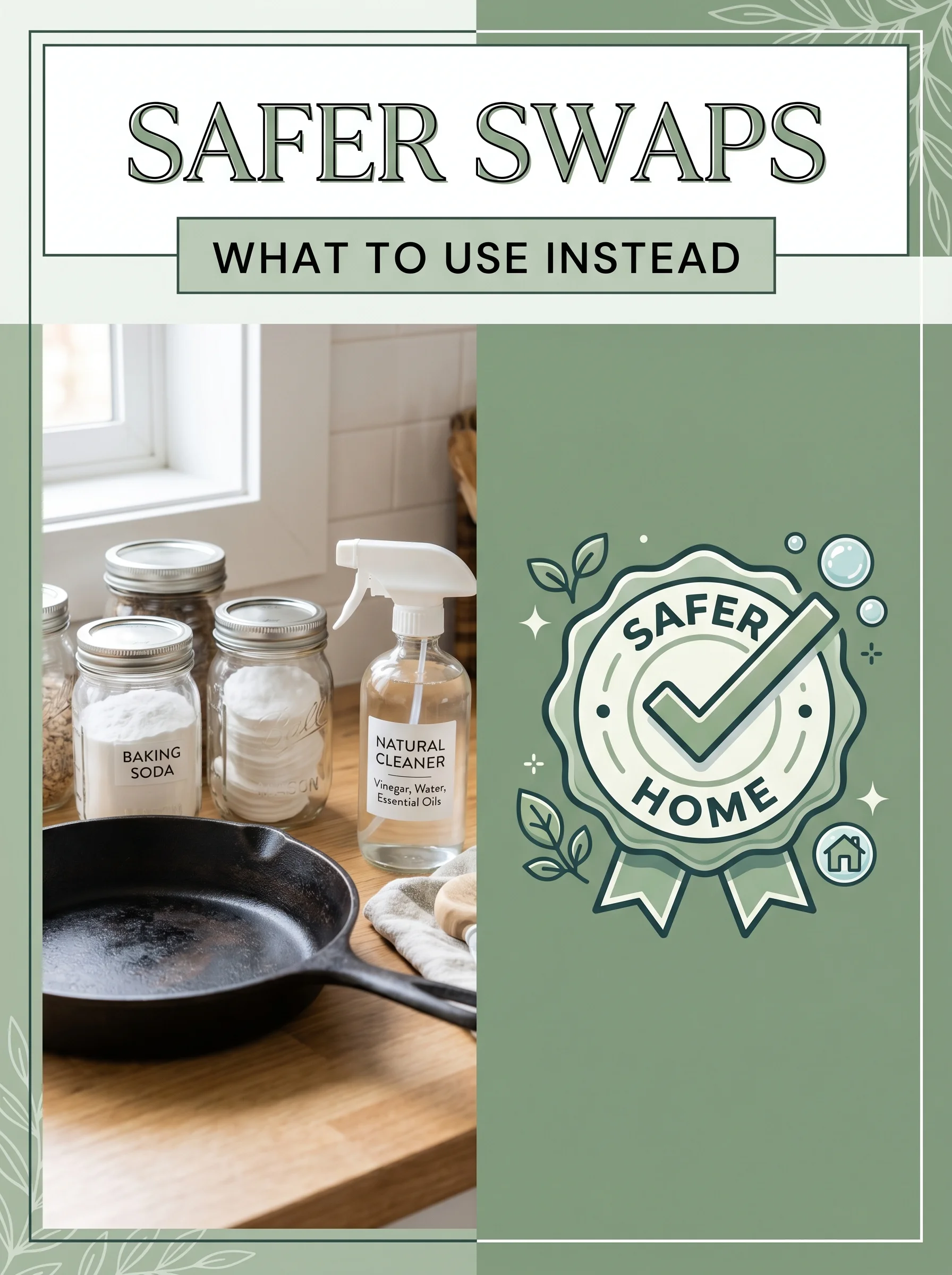
- Stop heating or storing food in plastic. Use glass or stainless steel, and never microwave plastic.
- Filter your drinking water to cut down on PFAS and other contaminants.
- Improve indoor air: open windows daily, and skip plug-in air fresheners and heavy fragrance.
- Replace chipped or peeling nonstick pans with cast iron, stainless steel, or ceramic.
- Use scented candles sparingly, never in the bedroom, and ventilate instead.
- Clean your humidifier’s reservoir every 3 to 4 days and leave it dry when unused.
- Air dry cleaned clothes out of the plastic for a few hours before they go in the closet.
- Keep receipts out of your wallet, decline printed copies, and wash your hands after handling them.
- Skip triclosan soaps. Plain soap and water work fine.
How worried should you actually be?
Honestly, less than the scary headlines suggest. These are exposures that matter over years, and your body clears a lot of them when you cut the steady drip. Harvard Health’s framing is the calm one to hold onto: the link is to increased risk, and dose and context matter.
So skip the all-or-nothing panic. Lowering your load a little, consistently, is what helps. And because prevention and awareness go together, it is worth knowing the early signs of cancer so you can act early if anything ever feels off.
A gentle closing thought
Guard your wellbeing by creating a safer, calmer home. Handle plastics and receipts more carefully. Ventilate rooms. Filter your water. Choose greener cleaning and self-care routines. None of it has to happen at once. I hope this empowers you to make a few easy changes and live a little more consciously.
If this was eye-opening, the newsletter lands in your inbox every Friday. One tiny essay, a handful of good links, and quiet nudges like this one. As always, take care of yourself.
Frequently asked questions
What everyday household items increase cancer risk?
The most common ones are scented candles and air fresheners, thermal receipts, dry cleaning solvents, worn nonstick pans, antibacterial soaps with triclosan, and heated plastic food containers. Most add risk gradually through fragrance chemicals, endocrine disruptors, or PFAS. Cutting steady, repeated exposure matters more than any single use.
Is heating food in plastic dangerous?
Yes, this is one to take seriously. Even BPA-free plastic can leach estrogen-like chemicals, and heat speeds up that migration into your food, along with microplastics. Never microwave food in plastic, move leftovers to glass or stainless steel before reheating, and keep plastic away from fatty or acidic foods.
Do scented candles and air fresheners cause cancer?
They do not directly cause cancer, but they can add to your chemical load. Scented candles can release formaldehyde and phthalates, and air fresheners raise indoor phthalate levels that cling to dust. Use them sparingly, ventilate by opening windows, and lean on houseplants and simple cleaners instead.
How can I reduce everyday chemical exposure at home?
Focus on a few high-impact swaps. Stop heating food in plastic, filter your drinking water, improve indoor air by ventilating and skipping fragranced products, and replace worn nonstick pans with stainless steel or cast iron. These are the same practical fixes many oncologists use in their own homes.
Can BPA really absorb through your skin from receipts?
Yes, and oil makes it worse. BPA crosses into skin much more easily with oil than water, so handling a receipt right after lotion or sanitizer raises uptake significantly. Decline printed receipts when you can, keep them out of your wallet, wash your hands after, and wear gloves if you handle them all day for work.
Are nonstick pans and PFAS safe to cook with?
Newer PFOA-free pans are safer, but a scratched or flaking nonstick pan can shed PFAS forever chemicals that linger in the body for years. Retire worn pans, cook with cast iron, stainless steel, or ceramic, keep heat moderate, and avoid metal utensils and harsh scouring pads on any nonstick you keep.
How worried should I actually be about these items?
Less than the headlines suggest. Harvard Health frames these as linked to increased risk, with dose and context mattering a great deal. They affect health over years, not a single use, and your body clears much of it when you cut the steady exposure. Calm, consistent swaps help far more than panic.
Share this article